



Buy-now-pay-later for 106 baht bubble tea highlights Thailand’s household debt risk
The central bank chief estimates the number of BNPL accounts climbed to about six million in 2025

[BANGKOK] Instalment plans used to fund everything from bubble tea to chicken rice have caught the attention of Thailand’s central bank chief.
Governor Vitai Ratanakorn is moving to curb the rapid growth of buy-now-pay-later (BNPL) services, which increasingly allow consumers to split everyday purchases into instalments.
He worries that easy access to digital credit is encouraging borrowing in a country already burdened by one of Asia’s highest household debt levels.
“There are some things that simply should not be bought on credit, whether it’s a 106 baht (S$4) bubble tea or a 50-baht plate of chicken rice,” Vitai told reporters at a recent press event in Bangkok.
“We may have gone too far; when people start financing small purchases, it creates a habit of spending money they do not have.”
Thai household debt is equivalent to about 87 per cent of gross domestic product, high relative to the rest of the region and unusually exposed to consumer spending rather than housing, which can act as a store of value.
That leaves people with little buffer against economic shocks and makes debt one of Thailand’s biggest economic vulnerabilities.
For years, the debt overhang has weighed on consumption and complicated efforts to revive growth, and the fear is that the rapid spread of BNPL services could deepen an already entrenched problem. Vitai estimates that the number of BNPL accounts climbed to about six million last year, nearly 10 times from 2021.
The boom has been fuelled by Thailand’s rapid adoption of e-commerce and digital payments.
SEE ALSO





Consumers shopping online or paying through mobile apps can choose a pay-later option at checkout and convert purchases into instalments with just a few taps on their phones. Qualification requirements are generally less stringent than for credit cards or traditional loans.
While many BNPL plans advertise zero interest for repayment periods of one to three months, longer-term instalment plans can carry annual interest rates of as much as 25 per cent. Consumers also face fees and penalties for missed or late payments.
Nearly 40 per cent of Thais, or about 25.5 million people, carry debt. Among those ages 20 to 35, the figure rises to about half. The same group accounts for more than a quarter of non-performing loans, underscoring concerns about debt accumulation early in adulthood.
For 23-year-old Thanwadee Kunasut, BNPL became part of daily life soon after she started her first job. She has used the service to split the cost of a 200 baht mala hotpot meal over three months, and now relies on it for purchases ranging from food to cosmetics and household goods.
“It helps when I’m short on cash,” she said. “I do not want to ask my mom for money, so it gives me some flexibility.”
As she used the service more frequently, her credit limit rose to 14,000 baht from 6,000 baht. About 2,000 baht of her 17,000 baht monthly salary now goes towards debt repayments.
“It definitely makes spending more tempting,” she added.
Thanwadee is among more than a million consumers using Shopee, one of Thailand’s largest BNPL providers. Shopee Thailand declined to comment.
Luxmon Attapich, CEO of the National Credit Bureau, estimates most users are in their 20s and 30s, younger than the typical 30-to-50 age range for conventional personal loans.
“BNPL is becoming part of daily life for younger consumers,” Luxmon said. “But financial literacy has not kept pace with how quickly access to credit has expanded.”
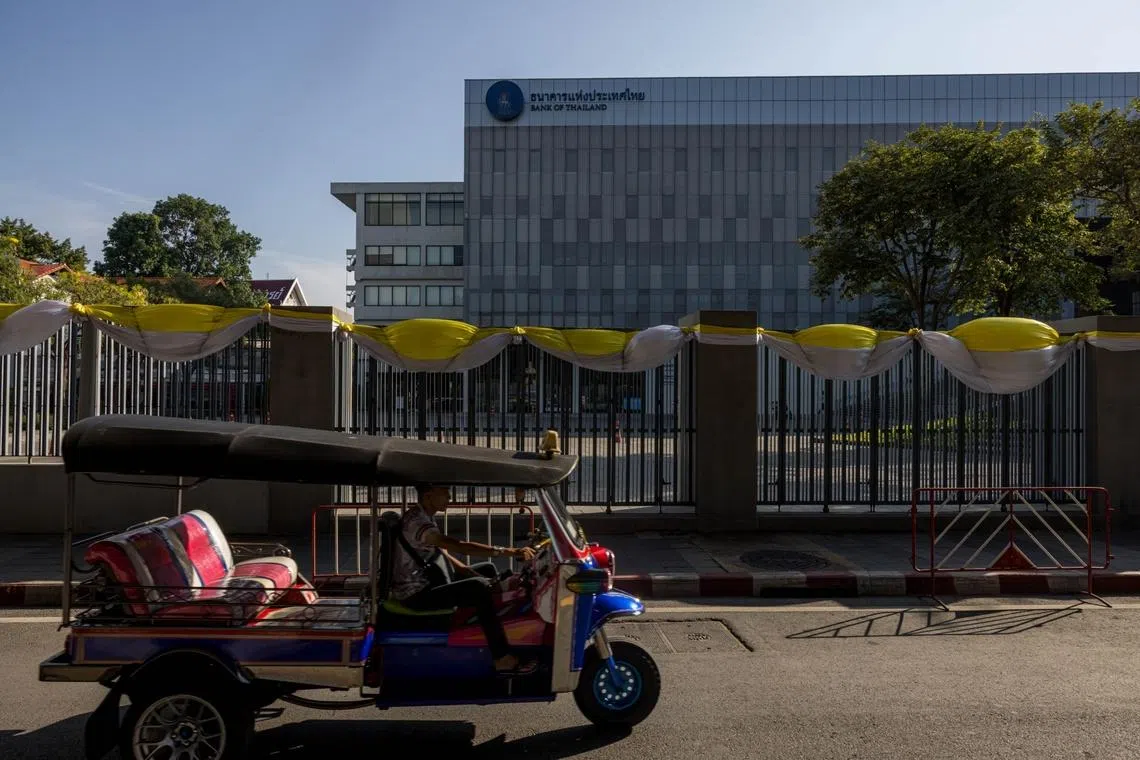
The Bank of Thailand (BOT) is drafting rules for BNPL providers that offer instalment loans through online platforms, Vitai said on Jun 2.
Proposed measures include restrictions based on age and income, limits on eligible products, minimum purchase values and caps on charges. The rules could be issued by year-end.
Atome, another BNPL provider, said that it welcomes a clearer regulatory framework. “We see BNPL as a financial management tool rather than a prompt to spend,” the company said. “Used responsibly, it helps consumers manage cash flow and plan expenses.”
“Long-term pain”
The central bank’s scrutiny comes as Thai households face renewed financial pressure. Average monthly household income fell 2.5 per cent last year to 28,308 baht, the first decline since 2019, according to the National Statistical Office, while spending dropped 5.4 per cent.
Economists say that BNPL reflects both the convenience of digital credit and deeper strains in household finances.
“It’s short-term gain and long-term pain,” said Thitima Chucherd, head of economic and financial market research at Siam Commercial Bank.
“It may help people get through a cash crunch in the short term, but it can also encourage unnecessary spending and create debt that weighs on future spending.”
Regulating BNPL may help contain the risks, but addressing the root causes will require stronger income growth and better financial literacy, she noted.
For some users, however, the service has already become part of everyday cash management. Ratree Tangjaiyoo, a 37-year-old office worker who earns about 30,000 baht a month, recently used BNPL to pay for a 40 baht matcha drink over three months.
“I choose instalments when I think I might run short of cash, or when I want to keep money aside for other things,” she said. “It makes things feel more affordable.” BLOOMBERG
Decoding Asia newsletter: your guide to navigating Asia in a new global order. Sign up here to get Decoding Asia newsletter. Delivered to your inbox. Free.
Share with us your feedback on BT's products and services
TRENDING NOW

Government to bring forward raising of retirement age, give employers more financial support to create flexi-load jobs

If Europe goes to war, the fallout will be felt in East Asia

Indonesia stocks suffer worst plunge in nearly 30 years as MSCI proposes standalone status

Vietnam’s northern provinces, not Hanoi or Ho Chi Minh City, are powering near 10% GDP growth

