Cabinet reshuffle, funding for new capital among political, economic challenges for Indonesia in 2023
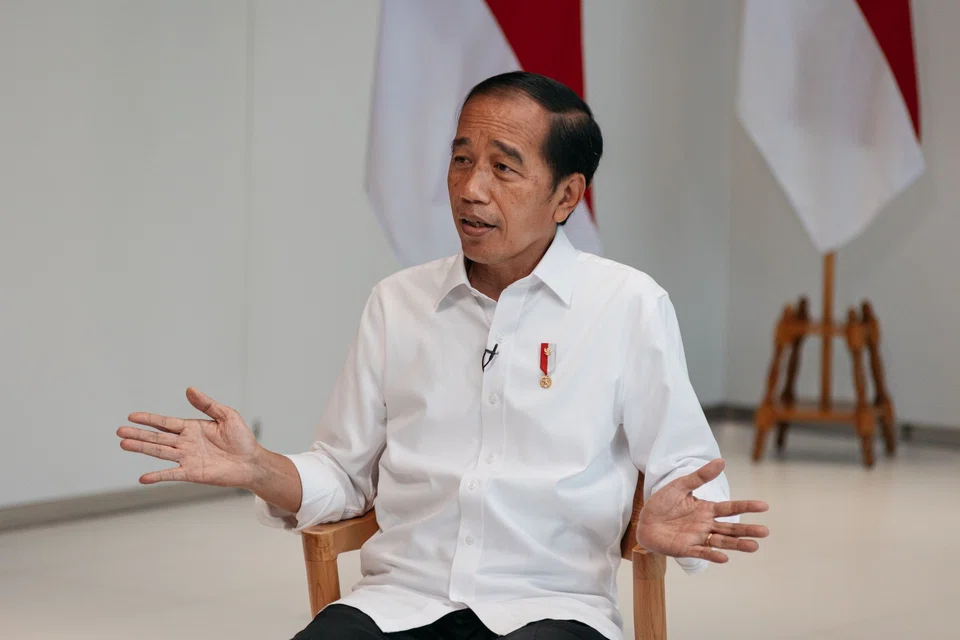
[JAKARTA] A NEW Indonesian cabinet would have some significant challenges ahead of it, as the momentum of foreign direct investment (FDI) inflows slows. On the plus side, the country’s digital sector is expected to remain strong.
The country’s current government and cabinet, comprising a coalition of seven political parties, has begun to fray. And President Joko Widodo recently confirmed that he does indeed plan to reshuffle his cabinet.
Speculation about a reshuffle emerged after coalition partner Nasdem announced it would back former Jakarta governor Anies Baswedan in the 2024 presidential elections. A reshuffle would be the fourth in Jokowi’s second and final term in office, and comes at a difficult time for the country.
From economics to politics, Indonesia faces new headwinds in 2023. The stock market fell 3.5 per cent in the first week of January; and with the next general election just 12 months away, much of the country’s focus will be on Jokowi’s successor. No frontrunner has yet emerged.
Meanwhile, the president needs to see through some of the projects introduced during his time in office.
Chief among these is getting the new capital, Nusantara, off the ground. The government hopes to develop the new capital into a low-carbon superhub that will support the healthcare and technology sectors, as well as promote sustainable growth beyond Java island.
The new capital will require a major injection of FDIs, with the government able to fund only just under 60 per cent of the estimated US$35 billion required for construction.
Attracting the needed foreign capital will, however, prove challenging, as both global and domestic economic conditions shift from positive to uncertain. Commodity prices are coming off their highs and inflation continues to rise.
“The single biggest event that will influence the markets in 2023 is what will happen to commodity prices,” said Harry Su, head of equity capital markets at Samuel Sekuritas Indonesia. “If prices reverse, that would be bad news for Indonesia.”
Without the income from commodity prices, the government current account is likely to fall into deficit. This will, in turn, impact the rupiah and GDP growth. Corporate earnings will also fall, putting pressure on employment.
Su added that FDIs may also be impacted by China’s reopening and any lessening of tensions between the US and China over Taiwan.
“Over the past two years, capital has flowed from North Asia into South-east Asia, including Indonesia, but starting in October 2022, inflows have slowed as money started flowing back north,” he said.
FDI jumped 63.6 per cent annually to 168.9 trillion rupiah (S$15 billion) in the third quarter of 2022, hitting a multi-decade high, but that trend is unlikely to continue this year.
Investment Minister Bahlil Lahadalia told an investment forum late last year that while the government was optimistic about achieving its 2022 investment target, this year would be a challenging one.
“Honestly, (2023) is rather bleak, as seen in the economic projections,” he noted. “This is very serious.”
One bright spot that is likely to continue to grow in 2023 is the digital sector. South-east Asia remains a world leader in adopting new technologies such as 5G, media streaming, wireless communications, artificial intelligence and big data.
Venture capital firm East Ventures in its latest report noted that Indonesia’s digital economy in 2023 will continue to grow despite the looming global economic turbulence.
“The GMV (gross merchandise value) growth of Indonesia’s digital economy is roughly double its GDP growth. We believe that the growth will be robust for a few more years,” said Roderick Purwana, managing partner at East Ventures.
According to the e-Conomy SEA 2022 report by Google, Temasek and Bain & Co, Indonesia’s digital economy is projected to reach US$130 billion in GMV by 2025 with a compounded annual growth rate of 19 per cent.
Indonesia’s chairmanship of Asean this year is also likely to give a boost to the domestic economy. With the theme “Asean matters: Epicentrum of growth”, Indonesia intends to promote Asean’s relevance to its own people, to the Indo-Pacific and the world.
“Asean must be a region with robust, inclusive and sustainable economic growth. Economic growth has been and will always be the story of Asean,” Jokowi said at the handover ceremony in Phnom Penh last November.
Indonesia will kick off its chairmanship by hosting the Asean Tourism Forum in February. The forum provides a platform for collaboration between Asean member states and promotes the region holistically as one enchanting destination, with many diverse cultures, natural attractions, and communities. It is expected to attract over 1,000 participants from the region and beyond.
TRENDING NOW
Why US$100 oil, 5% US yields affect Singdollar, ringgit differently vs other Asean currencies
Anthropic to open Singapore office in October, sees it as ‘standout market’ for Claude
Singapore’s covered bond boom is largely a DBS story
Malaysian developer Eco World tops bids for Sin Ming area housing plot with S$1,612 psf ppr offer