Carsome charges into EV resale market as electric cars gain traction in South-east Asia
With EV depreciation outpacing that of conventional cars, the e-commerce platform wants to plug the gaps for its next growth play

[KUALA LUMPUR] As electric vehicles (EVs) gain popularity in South-east Asia’s showrooms, their real test lies after the sale.
Malaysia’s first tech unicorn, Carsome, now wants to tackle the EV market’s biggest constraints: uncertain resale values and thin liquidity in the secondary market.
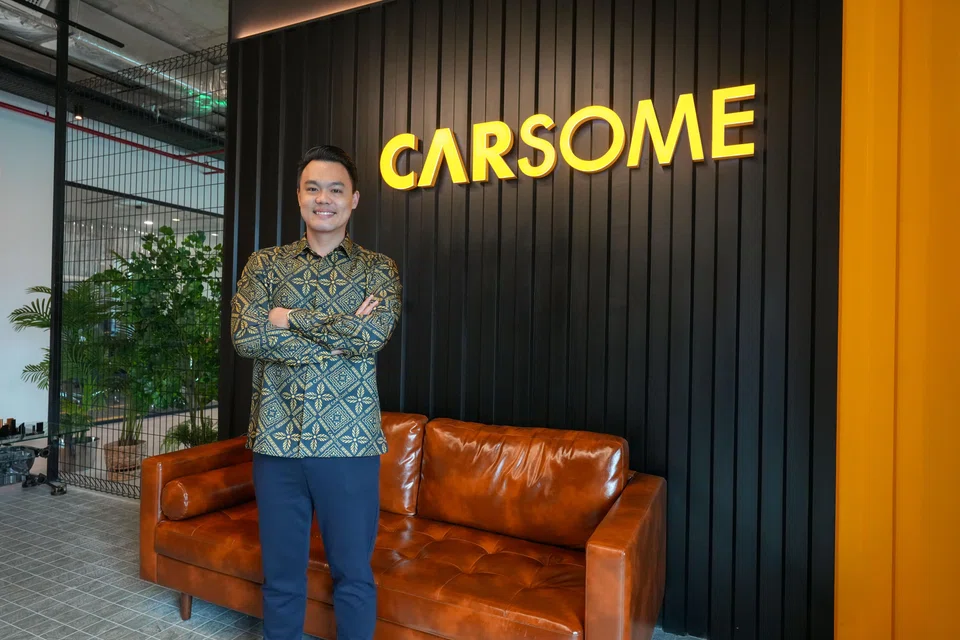
Carsome’s chief business officer Aaron Kee said the real hurdle is not in selling people on EVs, but in ensuring that they do not lose so much money when they sell them that it scares off the next generation of buyers.
“The last thing you want is to buy an EV and find there is no liquidity when you want to sell. If resale doesn’t work, adoption will stall,” he told The Business Times.
Wanting to fix that gap is Carsome’s next strategic push. The used-car platform that helped improve liquidity and price transparency in South-east Asia’s fragmented resale market operates in over 120 physical locations across Malaysia, Singapore, Indonesia and Thailand.
In its home base, Carsome is the exclusive trading partner for national carmaker Proton’s new e.MAS EV, a role that extends beyond transactions into the mechanics of resale value, trade-ins and secondary-market pricing.
EV resale next stress test
Kee said the used EV market in Malaysia remains nascent and faces structural challenges that are less pronounced in the internal combustion engine (ICE) segment.
He observed that EVs tend to depreciate faster than conventional vehicles in their first three to five years, reflecting uncertainty around battery health, rapid technological advances and a lack of comparable used EV transactions to anchor pricing.
Concerns over brand reliability and longevity have also weighed on buyer confidence in the secondary market.
Competitive pricing pressures from new EV models have compounded the issue. Aggressive price cuts in the primary market can quickly erode the value of existing vehicles, pushing some owners into negative equity and discouraging them from selling.
“This uncertainty affects the appraised value and the maturity of the secondary EV market,” Kee said.
Carsome’s internal research shows that while ICE vehicles typically lose about 40 to 50 per cent of their value over the first three to five years, the resale value of used EVs can slide by as much as 60 to 70 per cent over the same period.
Even so, Kee expects the dynamics to improve as adoption increases. More transactions, clearer pricing benchmarks and improved data on battery performance should help stabilise residual values over time, he said.
By working directly with the car producers and other original equipment manufacturers, Carsome aims to align pricing, trade-in mechanisms and remarketing strategies earlier in the ownership cycle, rather than trying to fix resale distortions after they emerge.
Built for liquidity

Kee said the group’s defining achievement is recognising a “fragmented, stressful and opaque” market and imposing structure where none existed before.
When Kee, 36, joined the company in 2017 as Employee No 115, Carsome was only two years into the business. “Back then, the mission was very singular: Change the way people sell cars,” he said.
A former equity analyst and CFA charterholder, Kee was promoted to chief operating officer in 2023, when he led the supply-chain optimisation across the region before moving into his current position in March 2024.
Founded in 2015 by Eric Cheng and Teoh Jiun Ee, Carsome evolved from a car comparison site into a data-driven platform transforming South-east Asia’s used-car market.
Expanding into four countries, it digitalised inspections and ownership, launched talent and refurbishment initiatives, and reached a US$1.7 billion valuation after its 2022 Series E round.
Beyond one-off transactions
While wholesale and retail transactions still drive a large portion of revenue, Kee said, there are big opportunities in deeper supply-chain integration.
The pivot began with retail. As Carsome grew into the region’s largest used-car inventory aggregator, it made strategic sense to allocate part of that stock to direct consumer sales.
That gave rise to Carsome experience centres, including the flagship PJ Automall outlet in Kelana Jaya, Selangor.
Kee cited its May 2022 opening as a turning point. The 100,000-square-foot facility, displaying over 200 cars, was a bold offline leap for the digital-native platform.
“The first day, we got a booking for a five-year-old Honda CRV. We were surprised and excited,” he recalled.
The pace of Carsome’s earnings growth is revving up. In the third quarter of 2025 alone, the group generated more than US$6.4 million in earnings before interest, taxes, depreciation and amortisation (Ebitda), lifting its nine-month total to over US$15 million – already ahead of its full-year 2024 adjusted Ebitda of US$10.5 million.
Where speed ends, trust begins
That first retail transaction validated something more important than sales volume: brand trust. “Selling to dealers is largely about speed and price. Selling to consumers is about peace of mind,” Kee added.
Carsome began distinguishing itself with guarantees rarely seen in a market long associated with trust deficits, including a 14-day money-back promise, certification for major accident-free vehicles and strict “no flood, no fire” policies in a region plagued by flood-damaged cars.
“The used-car industry has always had a bad reputation. People focus on the sale, not the after-sales. What we are doing is shining a spotlight on how to operate this industry in a more structured and trusted way,” Kee said.
Automotive operating system
As the group captured more of the transaction journey, adjacent gaps became unavoidable, prompting Carsome’s evolution as an “automotive operating system”.
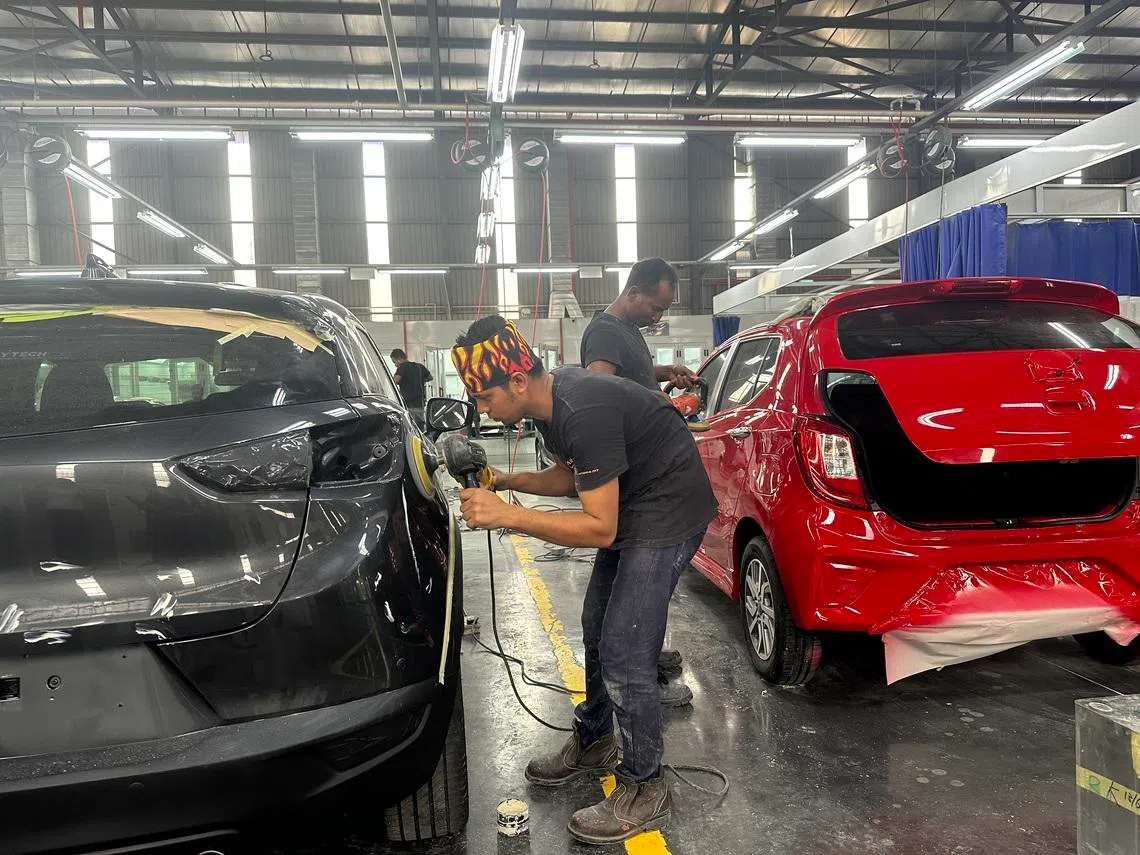
Buyers needed financing and insurance. Dealers required working capital. Staff needed training. Carsome began building and acquiring the verticals to fill those gaps.
On financing, the strategic constraint was clear. “We are not a balance-sheet company,” Kee said. To scale Carsome Capital without overstretching its own books, the group sold a 49 per cent stake to Japanese consumer finance firm JACCS, a subsidiary of MUFG, in early 2025.
The joint venture plugged the startup into deeper funding pools and Japanese credit expertise, while Carsome contributed its data, technology and origination platform.
Today, the company finances less than 20 per cent of its own retail transactions, leaving what Kee describes as substantial headroom, as more transactions create more loan demand.
Greater financing access improves affordability for buyers and inventory turnover for dealers, he added.
The same logic underpins Carsome’s insurance distribution, after-sales and training businesses. The group’s after-sales network and Carsome Academy remain at early but expanding stages.
Content and classifieds add another layer. Carsome’s 2022 acquisitions of iCar Asia and WapCar brought in automotive media, listings and behavioural data that feed directly into the group’s transaction and financing funnels.
Kee drew a sharp contrast between Carsome and some rivals. “We are much more transaction-driven,” he said. “With scale, we then layer ancillary revenue such as financing and insurance. Some competitors are more ancillary-driven from the start.”
Measured choices
Malaysia and Singapore together account for about 80 to 85 per cent of revenue, with Malaysia contributing more than half. Singapore remains resilient despite its smaller size, the result of high-ticket values.
Indonesia and Thailand remain strategic, but are being approached cautiously due to high household debt and softer industry volumes.
Not every expansion effort has endured. Kee said Carsome exited the Philippines – a proof-of-concept market – after concluding that the tax regime is unfavourable for its operations, compared with other markets.
Carsome’s emphasis is on deepening its footprint in existing markets, expanding physical centres and lifting productivity through artificial intelligence in pricing, inspections and call-centre operations, said Kee.