Chasing global capital: South-east Asia markets turn to ‘value up’ reforms
Singapore, Thailand and Malaysia push firms beyond compliance to lift valuations

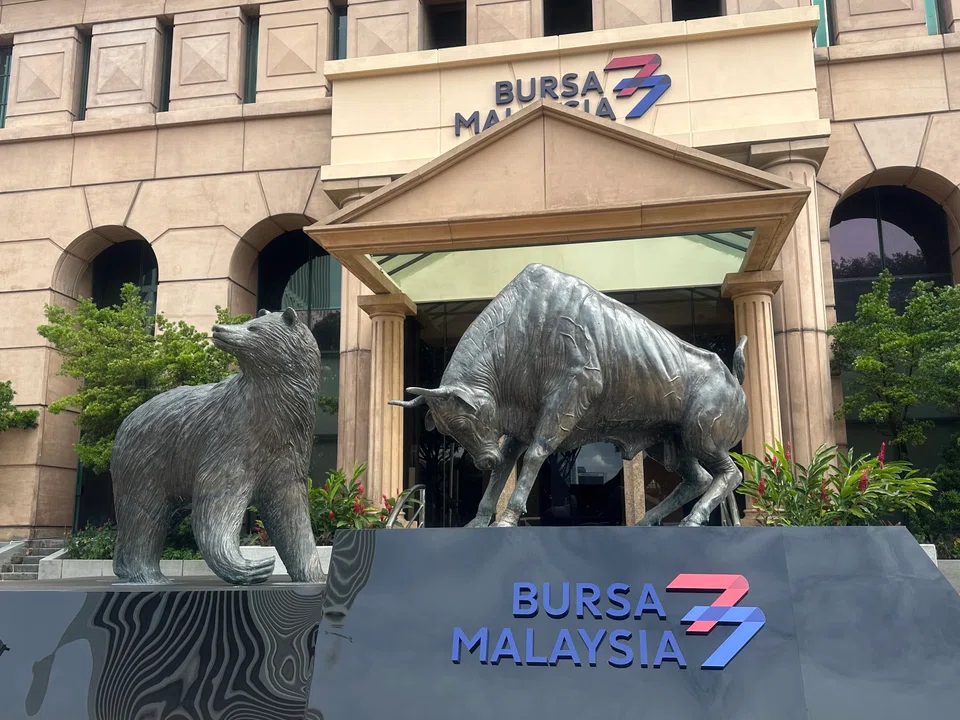
[KUALA LUMPUR] South-east Asian stock markets in Singapore, Thailand and Malaysia are stepping up efforts to close valuation discounts and win more capital.
This comes as Asia’s private wealth grows and investors place a rising premium on stronger returns and more disciplined use of capital.
The regional shift reflects a recognition that basic regulatory compliance alone is no longer enough to command investor interest or lift market valuations.
It follows significant market reforms already under way in Japan and South Korea.
Gary Tan, portfolio manager for the intrinsic emerging markets equity team at Allspring Global Investments, observed that the market landscape in 2026 represents a critical convergence of structural headwinds.
He said that South-east Asian markets are grappling with slower long-term growth as key sectors face disruption from artificial intelligence, all while competing globally for increasingly selective capital.
Concurrently, domestic ageing demographics approaching a 2030 inflection point have intensified local investor scrutiny on shareholder returns.
“In response, regional regulators are pivoting from compliance-led frameworks towards proactive value creation to attract capital inflows and narrow valuation discounts,” he told The Business Times.
Dr Ray Choy, chief economist at Malaysian Rating Corp, echoed the sentiment.
He noted that the urgency is heightening due to a rising density of private banks, wealth managers and family offices, as wealth creation continues to accelerate.
“Asia is growing above the global growth rate by many measures, whether it is gross domestic product, corporate earnings or population growth.”
Dr Choy added that rising wealth across Asia has led to substantial cash reserves being accumulated, which is driving increased domestic interest in capital market investments.
Breaking cash hoards and market discounts
In 2023, the Tokyo Stock Exchange (TSE) launched capital efficiency reforms to challenge cash-hoarding companies trading below book value to formally address their weak returns on equity.
Rather than relying on statutory laws, this market-led mandate utilised targeted peer pressure to trigger an unprecedented wave of corporate share buybacks, elevated dividend payouts and the systemic unwinding of defensive cross-shareholdings.
In 2024, South Korea’s Financial Services Commission and the Korea Exchange launched the Corporate Value-Up Programme to tackle a longstanding market hurdle.
For years, the domestic market suffered from the “Korea discount” – a chronic undervaluation driven by weak minority shareholder protections, poor capital allocation and the dominant influence of family-run conglomerates, or chaebols.
Through its value-up programme, Seoul combined governance reforms with incentives designed to encourage companies to improve shareholder returns and narrow valuation discounts.
Liao Yi Ping, portfolio manager at Templeton Global Investments, said South Korea’s approach has been more state-led and incentive-driven, reflecting concerns around concentrated ownership structures and minority shareholder rights.
South-east Asia chooses carrots over sticks
Unlike Japan and South Korea, South-east Asia is adopting a hybrid model, leaning towards incentives and guidance rather than mandates, noted Allspring’s Tan.
The Monetary Authority of Singapore and Singapore Exchange launched the Equity Market Development Programme (EQDP) and Value Unlock initiative in 2025. This was to counter the chronic undervaluation of the Republic’s small and mid-cap stocks caused by low liquidity.
The Value Unlock programme uses grants to optimise capital efficiency, while the S$6.5 billion EQDP mandates asset managers to invest in under-represented segments to revitalise market liquidity.
In 2025, Thailand’s Securities and Exchange Commission and stock exchange unveiled both the Corporate Value-Up and Jump+ programmes.
They aimed to revive the country’s stagnant economy and rebuild investor trust following recent corporate accounting scandals.
Malaysia joined the regional value-creation push in April 2026 with the launch of the MY Value Up programme, aimed at boosting market quality and narrowing valuation discounts.
The initiative initially targets 88 of Bursa Malaysia’s largest listed companies, encouraging them to focus on long-term value creation.
Supporting the effort, major government-linked investors – the Employees Provident Fund (EPF), Permodalan Nasional Bhd (PNB) and Kumpulan Wang Persaraan (Kwap) – will channel capital towards companies that adhere to MY Value Up’s principles.
Valuation gap
A valuation gap exists between South-east Asian and North Asian markets, which is largely driven by earnings fundamentals rather than perception, noted Templeton’s Liao.
She added that the main differentiator between the markets is the earnings outlook, driven by North Asia’s technology dominance.
While the MSCI Korea Index trades at around 25 times trailing earnings, it trades at roughly 8.5 times forward earnings because investors expect substantial profit growth from companies such as Samsung Electronics and SK Hynix.
By comparison, the MSCI Asean Index trades at around 14.6 times trailing earnings, but faces a more challenging earnings outlook due to its lower technology exposure.
That suggests governance reforms alone may not be enough to deliver a sustained market rerating.
Liao said: “Regulators are also seeking to attract domestic savings into financial assets, deepen local capital markets and improve market competitiveness at a time when capital is becoming more selective.”
Opportunities and limitations
Malaysia’s experience illustrates both the opportunities and limitations of the value-up approach.
At the recent Invest Malaysia conference, Bursa Malaysia CEO Fad’l Mohamed noted that the FTSE Bursa Malaysia Kuala Lumpur Composite Index remains fundamentally stable. The index currently trades at 1.59 times price-to-book with a 10.1 per cent average return on equity. However, he also said that the country still struggles to attract global active capital.
Part of the challenge is Malaysia’s shrinking international visibility; its weight in the MSCI Emerging Markets Index, tracked by US$17 trillion in assets, has fallen to around 1 per cent.
Fad’l added that 28 per cent of Bursa Malaysia-listed companies trade below book value. This is significant, but healthier than the baseline levels of Japan and South Korea when they launched their reforms.
The MY Value Up initiative supports a broader ambition to boost Malaysia’s market capitalisation from RM4.3 trillion (S$1.4 trillion) to between RM5.8 trillion and RM6.3 trillion by 2030.
Dr Choy noted that Malaysia’s price-to-earnings ratio of around 14.6 times is below both its 10-year average of 16.2 times and MSCI Asia’s 20.7 times.
While this suggests that Bursa Malaysia trades at a discount, he argued that broader market factors remain critical.
“To improve institutional investment and liquidity, there needs to be macroeconomic and market-based measures,” he said, pointing to liquidity, market size, sovereign credit ratings and index inclusion criteria as important determinants of foreign investor participation.
Structural challenge
Raman Aylur Subramanian, managing director of research and development at MSCI, concurred.
He noted that while programmes such as MY Value Up could improve valuations and liquidity, a major structural challenge remains the free float.
He said that concentrated ownership by families, founders or states across South-east Asia limits the amount of free-float stock available to international investors and global index providers.
Peter Kong, head of research at Kenanga Investment Bank, said that a significant differentiator is the involvement of domestic institutional investors.
EPF, PNB and Kwap collectively own an estimated RM430 billion worth of shares in the 88 companies targeted under MY Value Up, representing about 26 per cent of their combined market capitalisation, he noted.
By indicating that they will allocate capital towards firms committed to value creation, these massive domestic institutions wield considerable influence in rewarding compliant companies.
For investors, however, the ultimate test remains execution.
PNB acting president and group CEO Rizal Rickman Ramli said that companies must improve capital productivity and articulate clear value-creation plans.
While Malaysian corporate margins and leverage remain competitive, capital allocation requires discipline.
Ultimately, global investors will judge the value-up movement by tangible outcomes – such as stronger earnings and higher returns on capital – rather than mere plan publication, he added.
As selective international capital demands greater corporate accountability, the mandate for regional leadership is clear.
Rizal said: “If management cannot deploy capital effectively, they should return it to shareholders.”