



Cheap steel may flood Asean, threaten Malaysian producers: industry players
Trade bodies call for measures to safeguard local producers

[KUALA LUMPUR] With the US expanding its tariff net, the potential for a surge in cheap steel imports looms large, placing Malaysian producers at a significant disadvantage, said industry players.
Malaysia’s steel industry has been operating under US tariffs since 2018, when President Donald Trump imposed a 25 per cent duty on iron and steel imports.
However, the new blanket tariff removes previous exemptions for key exporters such as Brazil, Canada, Mexico and South Korea, escalating trade tensions.
Roshan Mahendran Abdullah, president of the Malaysian Iron and Steel Industry Federation (Misif), said the latest US tariff move could lead to major trade diversions, increasing competition in South-east Asia.
“The US imported over 26 million tonnes of steel in 2023. With these tariffs in place, we estimate that up to 50 per cent of those imports may no longer enter the US. This surplus steel will need to find new markets, and Asean is a prime target,” he warned.
The European Union (EU) has enforced steel safeguards since 2018, limiting trade diversion, while South Korea and Vietnam have imposed anti-dumping duties of 19 to 38 per cent on Chinese steel, tightening export restrictions.
Downstream players face higher risks
Malaysia, which consumed more than seven million tonnes of steel in 2023, faces the risk of a flood of cheap imports, undermining local producers.
Misif urges government support but stresses it is not seeking blanket tariffs, which could hurt downstream industries such as automotive and technology that rely on imported steel.
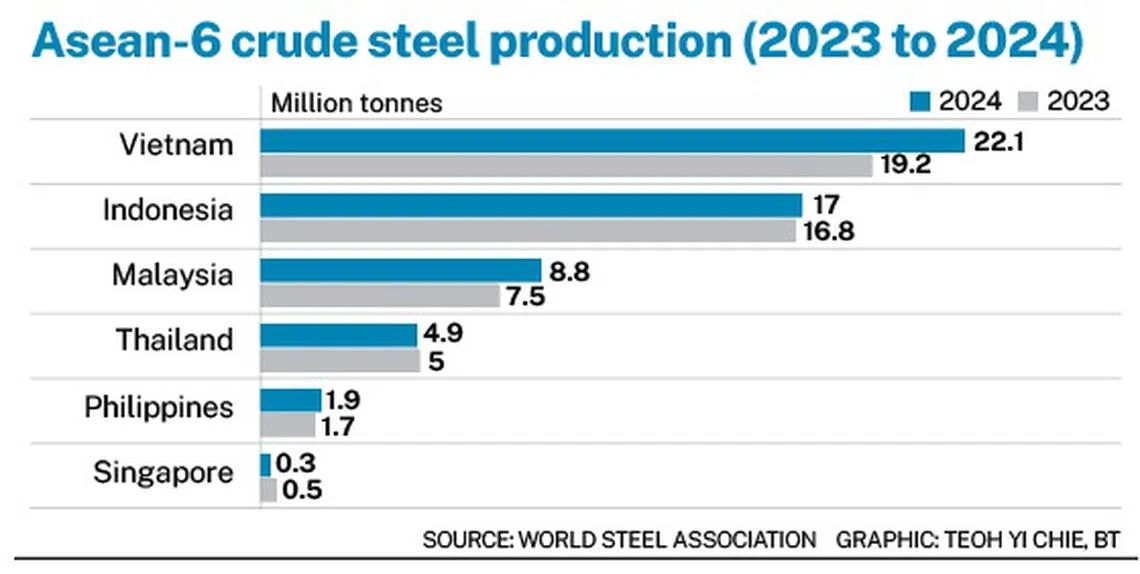
Malaysia’s crude steel production reached 7.5 million tonnes in 2023, surpassing pre-pandemic levels for the third straight year, though capacity utilisation remained low at 39.1 per cent.
Malaysia Steel Works (Masteel) warns that downstream manufacturers – producers of pipes, wires and cold-rolled steel – face the greatest risk from trade diversion.
Rather than price wars, Masteel advocates for a green steel standard and carbon border adjustment mechanism (CBAM), alongside import safeguard duties, to protect local players. This comes as the EU prepares to fully implement its CBAM in 2026, imposing a carbon price on steel imports.
TRENDING NOW
Singapore identifies 7 firms responsible for haze fires, notices issued urging action: Grace Fu

Could stablecoins be the future of money?

Singapore should prepare for prolonged haze until November, says Grace Fu

High Court rules against Julius Baer’s Singapore trust arm in US$50 million family trust dispute

