Chicken, coffee and boycotts: Can global F&B brands bounce back in S-E Asia’s Muslim markets?
Boycotts sparked by the Middle East conflict put Starbucks, McDonald’s and other global F&B brands on the back foot in Indonesia and Malaysia

[JAKARTA] Western food and beverage (F&B) franchises in Indonesia and Malaysia are facing one of their toughest challenges in years, caught between consumer boycotts tied to the Middle East conflict and a broader slowdown in household spending, with analysts warning that a full recovery could take some time.
“Foreign brands are confronting two challenges at once: government restrictions and unhappy consumers. When both persist, recovery becomes much harder,” said Roshan Raj, partner at Redseer Strategy Consultants. “Brands usually rebound only when facing a single issue, or when the challenge is short-lived.”
Boycott movements linked to the Gaza conflict have been gaining traction across South-east Asia, though their impact has varied by country. While consumer response in Thailand and Vietnam has been limited, Indonesia and Malaysia have been hit the hardest.
In these Muslim-majority markets, global brands such as Starbucks, McDonald’s, Pizza Hut and KFC are facing the dual pressures of reputational fallout and falling sales.
In Jakarta, consumer Marsya said she has avoided brands listed by the Palestinian-led Boycott, Divestment and Sanctions (BDS) movement – including Starbucks, McDonald’s and KFC – since the Israel-Palestine conflict escalated on Oct 7, 2023.
“Boycotting is the simplest, most direct, and effective way to show support, as it can directly impact these companies’ businesses,” she explained.
That sentiment is increasingly being felt in corporate boardrooms. Coca-Cola Europacific Partners, also named on the BDS list, recently lowered its annual revenue outlook, citing weaker demand in Indonesia driven by Middle East-related tensions and a tough macroeconomic climate.
Kurniadi Sulistyomo, corporate secretary of Sarimelati Kencana, described the current situation for Pizza Hut in Indonesia as “tougher than during Covid-19”. Sarimelati Kencana, which holds the Pizza Hut licence in Indonesia, operates 615 outlets and employs 13,000 Indonesians.
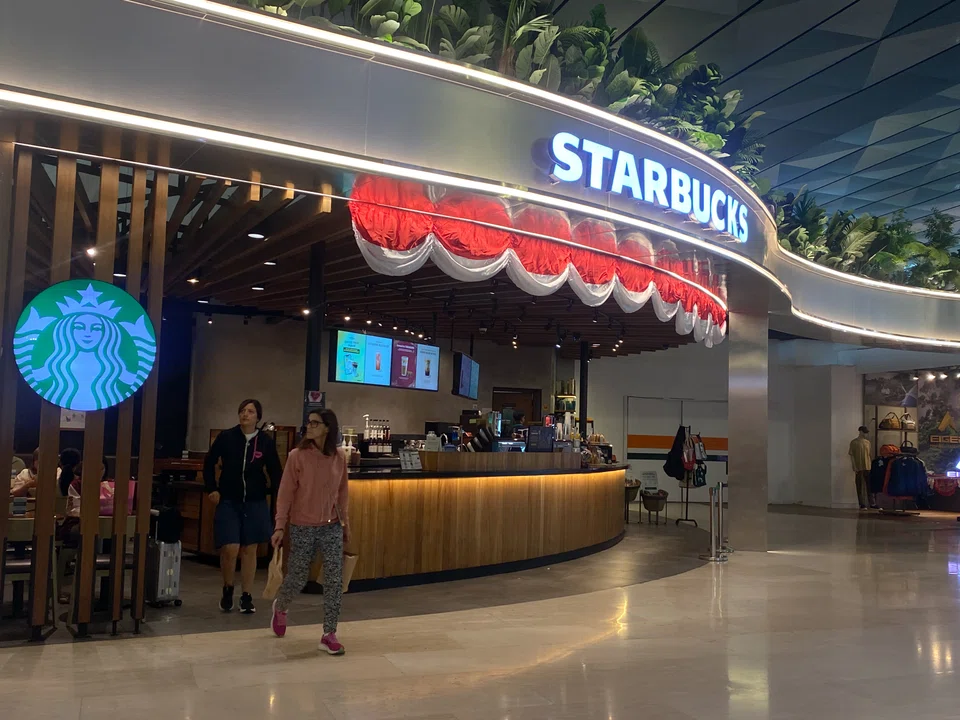
Starbucks’ Indonesian operator, Map Boga Adiperkasa, said the boycott has forced it to slow expansion plans.
In a July filing to the stock exchange, the company reported closing 11 outlets this year, citing weaker demand and the impact of the campaign, despite it already clarifying its stance on the Israel-Hamas war. Starbucks entered Indonesia in 2002 and has since grown it into one of its biggest markets in South-east Asia, with more than 500 stores nationwide by the end of last year.
In Malaysia, Starbucks operator Berjaya Food posted a pre-tax loss of RM67.09 million (S$20.5 million) for the six months ending Dec 31, 2024, with revenue falling to RM247.3 million from RM461.09 million a year earlier. The company plans to reduce its store network from around 350 outlets to fewer than 300 by 2026.
Deep wound
The fallout extends beyond corporate balance sheets, rippling through the wider industry. In Indonesia, franchisees and frontline staff are left to bear the brunt of the slowdown.
Over the past two years, layoffs in Indonesia’s F&B sector have been on the rise, driven by the combined pressures of consumer boycotts and weakening household purchasing power, said Roy Nicholas Mandey, chairman of the Indonesian Retail Entrepreneurs Association.
Indonesia’s F&B sector grew 8.04 per cent in the second quarter of 2025, easing from 10.17 per cent a year earlier, as pressures on household purchasing power weighed on consumer spending.
Esther Sri Astuti, executive director of the Institute for Development of Economics and Finance, noted that while multinational companies may weather such challenges with strong financial backing, the real casualties in Indonesia are often franchisees and their local stakeholders, including staff on the ground.
She added that government intervention is needed to manage prolonged boycott campaigns and provide stimulus to support the purchasing power of consumers who are not participating in the boycott.
To date, the Indonesian government has not published an official list of products linked to, or allegedly affiliated with, Israel, leaving consumers and businesses to navigate the boycott largely on their own, even though the country’s main Islamic scholarly body issued a formal religious ruling calling for the boycott last year.
Local players emerge
While Western chains face prolonged recovery, local brands are seizing the moment, drawing cost-conscious families with cheaper menus and a sense of home-grown identity.
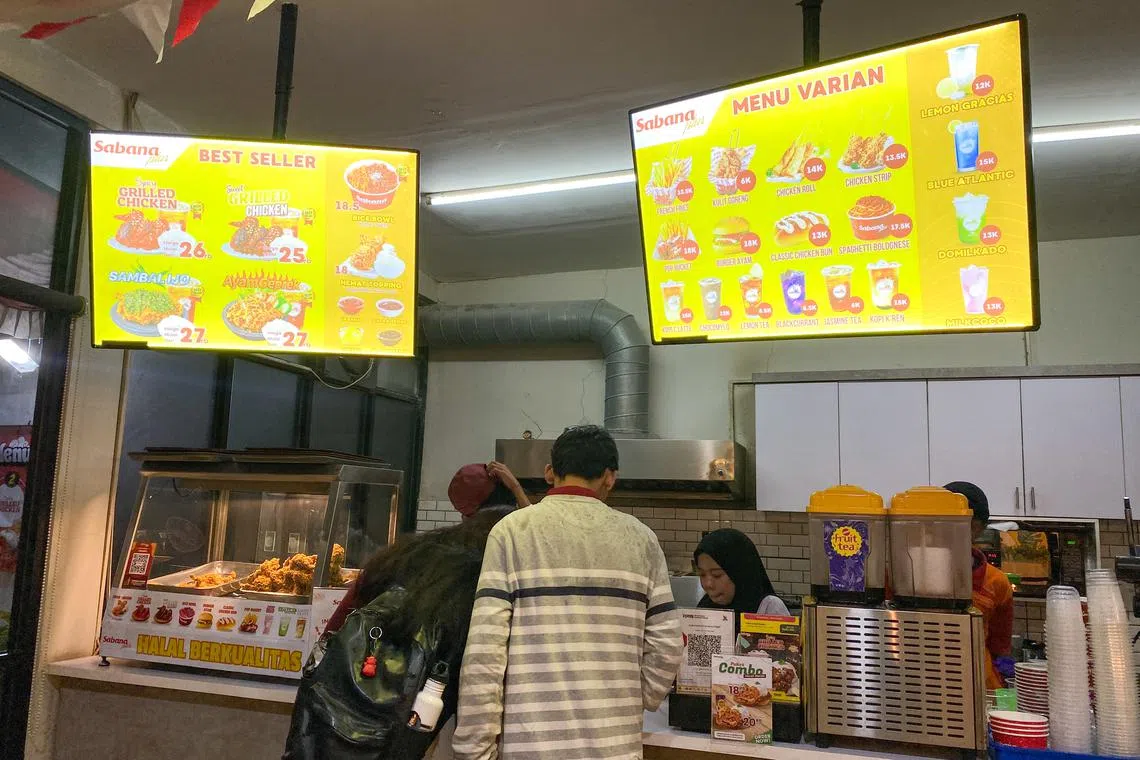
Indonesian fried chicken chain Sabana Fried Chicken has emerged as a clear winner amid the boycott, experiencing a surge in demand as families look for more affordable protein options free of political controversy.
The home-grown quick-service brand serves KFC-style fried chicken with rice, often paired with Indonesian-style sambal, for just 25,000 rupiah (S$1.98), roughly half the price of similar meals at foreign chains such as McDonald’s and KFC. Operating under a franchise model, Sabana Fried Chicken now boasts over 3,000 outlets across Indonesia.
At a compact Sabana outlet in Bekasi, manager Yuliarti Sanjaya sees a steady stream of families, selling over two dozen chickens daily. The chain prominently displays its halal certification and “Indonesian-owned” status, while attracting budget-conscious customers with monthly meal bundles that include a drink at discounted prices, appealing to diners navigating a tight economic climate.
“Indonesian consumers are very price-sensitive, especially in a challenging economy like this. Even a difference of just 2,000 rupiah can make them switch,” she said.
The boycott has also created opportunities for Malaysian entrepreneurs. Home-grown chain Darsa Fried Chicken has positioned itself as a patriotic, halal-certified alternative to American brands, while Malaysian coffee brand Artisan Roast Coffee has reported a 10 to 20 per cent boost in sales since the boycott began.
Long path to recovery
For foreign franchises in Indonesia, the road to recovery may depend on how convincingly they can show they are truly part of the local community.
Raj from Redseer noted that brands facing geopolitical backlash can reclaim market share by demonstrating genuine local commitment across multiple fronts.
“The most effective strategy involves showcasing tangible local ownership and impact through job creation, supply-chain integration, economic contribution, and community investments.” he said.
Some chains have already adjusted their messaging. In Malaysia, McDonald’s highlighted that its outlets are owned by a local sovereign fund, while Starbucks Malaysia’s owner, Vincent Tan, urged an end to the boycott, stressing that the company is locally owned and staffed, with 80 to 85 per cent of employees being Muslim.
In Indonesia, McDonald’s organised social initiatives at several mosques across the country during Ramadan.
The durability of boycott sentiment remains a key question for foreign F&B operators. While consumer activism often wanes over time, Raj warns that prolonged disruptions risk permanently altering market dynamics.
“Foreign brands that quickly deploy factors like local investment and authentic community support can recapture their market share,” he said. “The longer it drags, the more difficult it becomes to change customer perception.”
Additional reporting by Tan Ai Leng in Kuala Lumpur