China brings EV price war to Thailand, dangling 38% discounts
The steep cuts have fuelled a sales surge of over 20% in October and November
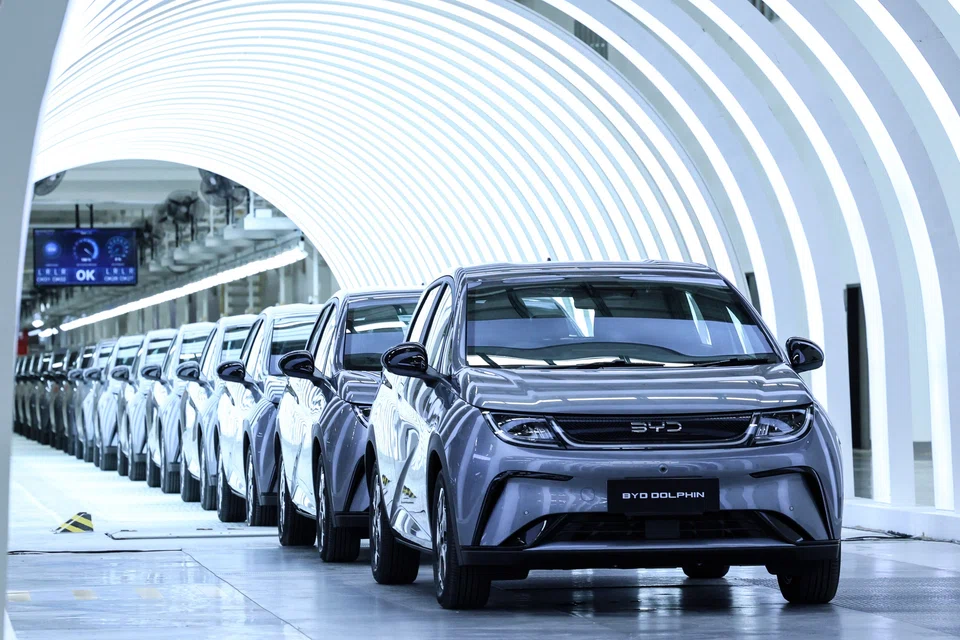
[BANGKOK] Chinese electric vehicle (EV) makers, already struggling with bruising competition at home, have brought their aggressive discounting to Thailand as they look to win over budget-conscious buyers.
The savings are eye-catching: BYD slashed as much as 38 per cent from the sticker price for its Seal electric sedan in October, and is offering compensation if there are more price cuts this year on some of its other models.
Meanwhile, Saic Motor is selling its MG4 electric hatchback for a 27 per cent reduction, and Chery Automobile’s splashy debut of the Jaecoo J5, with promotional pricing, locked in almost 20,000 orders despite a two-month wait for delivery.
“I have never been this busy,” said Thawee Chongkavanit, who owns a BYD showroom in Bangkok.
The steep discounts have fuelled a more than 20 per cent surge in sales in both October and November, and are accelerating a move away from legacy Japanese brands – historically the most popular in South-east Asia’s third-biggest auto market – towards Chinese EV makers.
But it also highlights a stress point for the sector. Manufacturers are relying on price cuts to clear inventory as they race to meet ambitious Thai production targets.
While that’s a short-term boost to sales, carmakers are risking a longer-term impact from oversupply as would-be buyers, anticipating even bigger discounts to come, threaten to hit pause on their purchases.
“These repeated reductions are damaging to the market, creating fear among buyers who worry that EV prices will drop even further if they purchase now,” said Krisda Utamote, a senior adviser at the Electric Vehicle Association of Thailand.
“EV production exceeds demand, and supply is not aligning with market needs due to the economic environment and tighter auto-loan controls imposed by financial institutions.”
Signs of strain are already starting to emerge. Just last month, the government extended the deadline for EV manufacturers to meet local production requirements, giving them until Jun 30, an additional six months, to get credits in order to export vehicles.
It also extended the deadline for buyers to register for subsidies by a month, to the end of January.
Those moves are in response to concerns about oversupply, another feature of the EV market in China, where less-competitive players are being squeezed out.
In Thailand, Neta has exemplified the boom-to-bust risk of the sector, struggling to meet the government production targets even before its parent Hozon New Energy Automobile began bankruptcy proceedings in China, according to reports from the Bangkok Post and Yicai Global.
Some dealers are now selling EV models at cost, or even at a loss, to keep volumes moving, said Jaruaypornphatra Leesomsiri, who owns three showrooms that sell MG brand vehicles in Nakhon Ratchasima province.
“There have been some complaints about automakers’ sole focus on sales while offering very bad services,” she said. “That will hurt the brand in the future.”
Buyers have taken to social media to express their anger at seeing prices plunge quickly after they made purchases.
One poster in a BYD Facebook community group said that their car lost a fifth of its value in just a month, while another said their year-old vehicle has an outstanding loan that exceeds the cost of buying the same model new today.
A third person urged buyers to beware, pointing to the likelihood of further price reductions as carmakers look to make sales targets.
Some shoppers are already heeding that warning.
“I’m thinking of switching, but I’m hesitant to make a decision because prices might fall even further,” said 31-year-old marketing officer Supreeya Watcharakorn, who is considering swapping her gas-guzzling Toyota Motor Vios sedan for a new BYD Dolphin hatchback.
EV subsidies
At the centre of industry pressure are the generous handouts launched by Thailand, already South-east Asia’s largest auto manufacturing hub, in 2022 to build its EV prowess.
That includes subsidies of as much as 150,000 baht (S$6,152) per EV on the condition that carmakers build at least three vehicles domestically for every two they import before the end of this year. The government has another programme that runs to 2027 with rebates of up to 100,000 baht for models priced below two million baht with larger battery capacities.
But the money comes with a major caveat: Companies must pay back the subsidies if they don’t meet their manufacturing commitments.
All in all, EV makers in Thailand must collectively produce about 30,000 vehicles locally in the final two months of this year, said Surapong Paisitpatnapong, a spokesperson for the automobile industry group at the Federation of Thai Industries.
Chinese brands, seeking much-needed growth abroad, have led the charge to Thailand. BYD’s factory is designed to produce 150,000 vehicles annually for both the domestic and export markets. Chongqing Changan Automobile can make 100,000 vehicles a year in the country, while 80,000 cars could roll off Chery’s assembly line annually.
That has seen Chinese EV makers carve out greater market share. The likes of Toyota and Honda Motor offer few electric cars, so they do not benefit from the subsidies on their gas-powered and hybrid models and cannot match the aggressive pricing of the Chinese.
Unlike in China, Thai authorities have taken little action to stamp out aggressive discounting. And EV makers will still face prolonged pressure from Thailand’s policies that see their production obligations increase and subsidies decline in the coming years, potentially opening the door for a prolonged period of low prices.
The recent price cuts may stabilise once quotas are met, Bloomberg Intelligence analyst Joanna Chen said.
“Thailand’s EV policies are getting stricter and automakers will face even higher production quotas – and rising competition – in the next few years.” BLOOMBERG
Decoding Asia newsletter: your guide to navigating Asia in a new global order. Sign up here to get Decoding Asia newsletter. Delivered to your inbox. Free.
Share with us your feedback on BT's products and services