



China-led deflation looms as Thailand, Indonesia and Malaysia see declining inflation
But experts say concerns may be premature, and led more by easing supply-side pressures than weakening demand

[SINGAPORE] After years of stable inflation, Asean economies that once battled surging prices post-pandemic may now be facing the opposite threat of deflation, as global trade tensions and slowing growth weigh on demand.
Thailand’s annual inflation in May reflected negative growth for the second straight month, the commerce ministry reported on Friday (Jun 6). The consumer price index fell 0.57 per cent, following a 0.22 per cent fall in April – the first two negative prints since March the previous year.
“Core inflation remains below target, reinforcing the presence of slack in the economy,” said Bank of America (BOA) emerging Asia economist Pipat Luengnaruemitchai in a report following April’s data.
Indonesia announced in May that core inflation dropped to 2.4 per cent, missing economists’ expectations of 2.5 per cent. Indonesia had already recorded falling prices in February, the first in 25 years, sparking concerns of weakening purchasing power in the country.
The Philippines and Malaysia recorded similar trends. Headline inflation in April fell to 1.4 per cent on the year in the Philippines, its lowest level since October 2019, while Malaysia reported headline inflation of 1.4 per cent in April. This was consistent with the figure recorded in the previous month, which was the lowest print since February 2021.
These patterns have stoked concerns that deflationary spirals – much like China’s struggles as consumer demand stalls – may arise, eroding incomes and corporate profits.
But fears of deflation may be premature, given that the disinflation is largely due to easing supply-side pressures and not weakening demand, said Rahul Bajoria, Asean economist at BOA. “Food and energy prices have come down, labour markets have cooled and currencies have stabilised. All of this is translating into lower inflation,” he told The Business Times.
Made in China
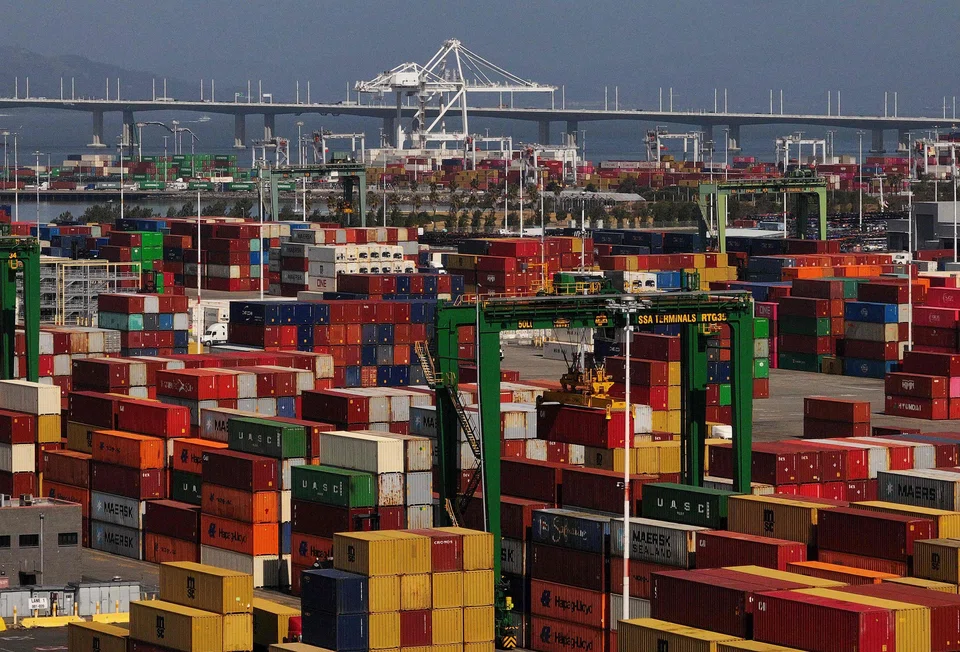
Nevertheless, concerns are beginning to creep into Asean countries as global trade tensions rise. Nomura chief Asean economist Euben Paracuelles told BT: “There are signs of structural forces at play, particularly disinflationary pressures from China’s overcapacity and influx into the region of cheaper imports, which can accelerate if US tariffs remain high.”
Bank of Thailand governor Sethaput Suthiwartnarueput warned on Jun 2 that diverted exports from China that had failed to enter the US may be dumped into Thai markets, The Nikkei reported.
He highlighted industries in furniture, textiles and apparel, plastics, petrochemicals and steel that would be particularly vulnerable, with small and medium-sized enterprises and their employees facing threats.
“A sudden flood of Chinese imports into emerging market economies can be very disruptive,” said Nomura economists Rob Subbaraman and Chen Yiru. “Faced with growing cut-throat import competition, the likely initial response by local firms would be to cut prices to maintain market share, but at the cost of reduced profits...
“This can be good news for consumers but over time, as local firms accumulate financial losses, they would need to downsize, cut back on jobs and capex, and ultimately many may need to close down.”
China’s latest manufacturing data may suggest that these upcoming fears are not entirely misplaced. Caixin China’s manufacturing purchasing managers’ index, a private survey which tracks business conditions in the sector, reported a score of 48.3 on May 31, missing analyst expectations and reflecting an unexpected contraction – the country’s first since September 2024. “Stocks of finished goods accumulated for the first time in four months,” Caixin’s report found. “Survey respondents indicated that this was due to both falling sales and delays in outbound shipments of products.”
As inventories build, the tariffs may force producers to cut prices in export markets besides the US – possibly Asean countries. “As China’s producers will likely push excess capacity to the rest of the world, the spillover of China’s deflationary pressures to the rest of Asia will worsen,” wrote Morgan Stanley economist Chetan Ahya in the bank’s mid-year outlook for the region.
Yet, BOA’s Bajoria does not think of such pressures as a novel shock. “This is a latent risk that’s not just appearing now; it’s been the case going back five or 10 years in South-east Asia.”
A study by Nomura of the phenomenon in April may support this idea, finding that Chinese dumping had already been present as far back as 2019. “Most of the countries that have experienced a slowdown in manufacturing growth also have an increasing share of manufactured imports from China,” said Nomura economists Subbaraman and Chen, who authored the study.
Among the countries ranking the highest in both categories were Asean economies Indonesia, the Philippines, Thailand and Vietnam.
Nonetheless, BOA’s Bajoria believes that it may be premature to condemn Chinese presence in the region as unwelcome, as the benefits may outweigh the costs. “While consumption and inflation are impacted, the Chinese have also been reasonably large investors into the region, which may balance out the dumping concerns,” he added.
He noted that cheaper exports can also offset some disinflation concerns by enhancing consumer purchasing power. It may also be difficult to attribute cheaper imports to deflated prices, rather than more competitive products.
“In Thailand for instance, imports from China have increased in competitive sectors like automobiles,” he said.
Easing policy
Regardless of the causes of Asean’s slowing prices, the region’s central banks have taken advantage of lower inflation to boost growth through rate cuts, as the resultant higher prices become more manageable.
Coupled with less risk of capital flight due to a weakening US dollar, disinflation has allowed central banks to be more accommodative in their monetary policies even as the US Federal Reserve maintains its rates, said Bajoria. Singapore has already eased its policy slope, while Indonesia, the Philippines and Thailand have delivered rate cuts in recent months. Bank Negara Malaysia, after holding rates in March, is expected to cut its policy rate further in the third quarter as growth eases, said ANZ economist Arindam Chakraborty.
Still, central bank policy options vary by country. In Indonesia, large rate cuts could threaten the rupiah due to the risk of capital flight, BOA’s Bajoria said. As a result, the Indonesian government has turned to fiscal policy, offering toll concessions and subsidies to ease living costs.
Yet, more insidious causes behind the region’s low inflation, such as weakening consumer confidence and loss of manufacturing competitiveness, may translate into slower growth prospects.
Nomura’s Paracuelles said slower inflation may signal the presence of ailing demand, with tariff uncertainty weighing on investment and consumer spending, prompting producers to scale back on production. “Output gaps are starting to be negative, partly on the back of global trade policy uncertainty already starting to weigh on domestic demand,” he said.
“The longer-term solution is for these countries to implement reforms, to promote a more competitive manufacturing base that leverages their respective comparative advantages,” he added.
TRENDING NOW

Once staunchly pro-China, Malaysian Chinese businesses are now distancing themselves from Beijing

Britain’s mansion tax shows the difficulty of targeting wealth

Three hats, one goal: How Ng Kian Swan runs sustainability at NUHS

COE review: The gap between luxury and mass-market cars isn’t the only one worth bridging

