Asean Business logo
SPONSORED BYUOB logo

China’s healthcare businesses wade into South-east Asia for cost-efficiency, growth

Beijing-based healthcare private equity firm with US$3.4 billion AUM aims to set up a fund for Chinese companies to expand into region

Megan Cheah
Published Thu, Nov 21, 2024 · 12:39 PM
    • Healthcare companies from China looking to increase their reach overseas are generally small and medium-sized enterprises involved in medical devices, diagnostics, phamaceuticals and life sciences tools, says GL Capital partner Wang Yifei.
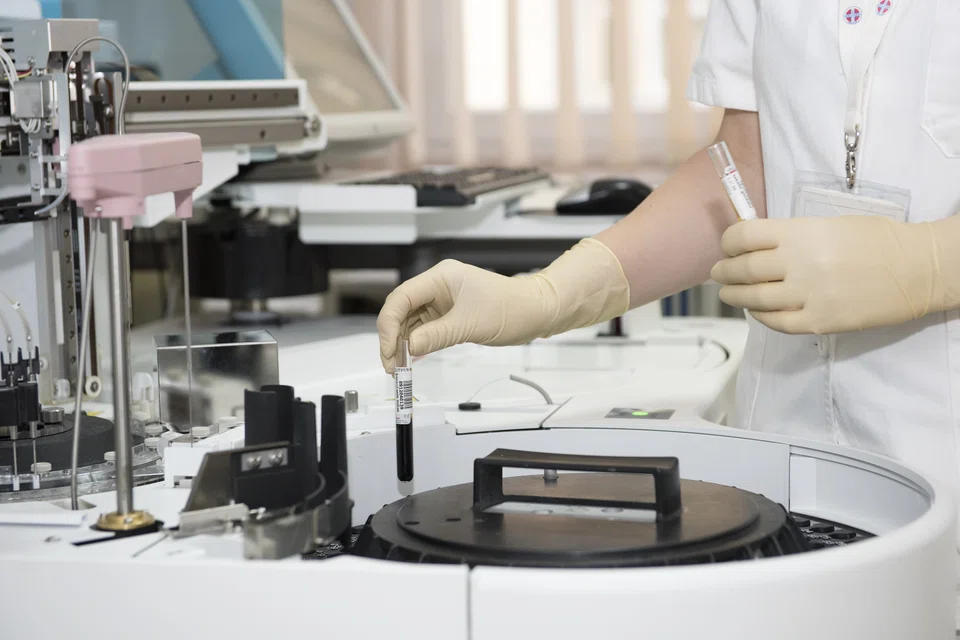
    • Healthcare companies from China looking to increase their reach overseas are generally small and medium-sized enterprises involved in medical devices, diagnostics, phamaceuticals and life sciences tools, says GL Capital partner Wang Yifei. PHOTO: PIXABAY

    [HAIKOU] Geopolitical tensions are driving healthcare companies from China to hunt for new markets to expand into. And more are now headed south – into South-east Asia’s emerging markets.

    To capture a slice of this rising trend, Beijing-based healthcare private equity firm GL Capital Group is aiming to start a fund for Chinese companies setting up operations in South-east Asia.

    “We think we could use capital (from the fund) to help these businesses to expand globally… as well as (share) the knowledge, the connections we have with the local regulators and businesses,” said the firm’s partner Wang Yifei.


    He noted that these healthcare companies from China looking to increase their reach overseas are generally small and medium-sized enterprises involved in medical devices, diagnostics, pharmaceuticals and life-sciences tools.

    “They don’t necessarily have the scale or capability to do the expansion. We want to lower the barrier for them to expand into the region,” he told The Business Times on the sidelines of the 2024 CGS South-east Asia Bilateral Investment Forum, held in Haikou, China, in October.

    GL Capital invests in healthcare in China, and has more than US$3.4 billion in assets under management (AUM).

    GL Capital partner Wang Yifei says: “We think we could use capital (from the fund) to help these businesses to expand globally… as well as (share) the knowledge, the connections we have with the local regulators and businesses.” PHOTO: GL CAPITAL

    According to Wang, the firm specialises in buyout deals or acquiring majority stakes in healthcare companies. In July, for example, it took then Hong Kong-listed SciClone Pharmaceuticals private for HK$8.8 billion (S$1.4 billion).

    Eyeing new markets

    Chinese healthcare manufacturing is trending upwards, noted Wang. In China, these local suppliers have become increasingly successful at gaining market share in their respective segments compared with multinational corporations (MNCs).

    “If we do a very broad calculation, we think about 40 to 50 per cent of the medical devices and diagnostic products sold in China are supplied by local manufacturers,” he said.

    One area where Chinese manufacturers have an edge over international peers is in pricing, with these locally produced products more attractively priced, Wang added. In his view, the discount of a Chinese medical product compared with one made by an MNC can be 20 to 40 per cent, depending on the product.

    “Yet, (Chinese companies) are still making money because they have the cost advantage in production, are more efficiently managed and have innovations that can save costs while improving the quality,” he said.

    The emerging markets of South-east Asia, which are more price-sensitive, are therefore instinctive choices as locations for expansion for these Chinese manufacturers.

    Chinese healthcare companies are also looking into setting up local manufacturing points in South-east Asia to serve these emerging markets, which could help to bring costs even lower.

    “(The majority of) South-east Asia’s markets are still developing. They need a developing-market solution for developing-market healthcare needs, rather than highly priced products from MNCs,” Wang observed.

    This point was echoed by Pu Fei, director at Shenzhen-listed medical devices group Lepu Medical, who said in a panel at the forum that products need to have a “good price” to survive fierce competition in the biopharmaceuticals industry.

    Lepu Medical director Pu Fei (second from left) at a panel at the 2024 CGS South-east Asia Bilateral Investment Forum. She says that products need to have a “good price” to survive fierce competition in the biopharmaceuticals industry. PHOTO: CGS INTERNATIONAL

    In addition, these markets offer further growth opportunities, and are geographically and culturally closer compared with the West. “South-east Asia is almost the natural first step (for Chinese companies),” said Wang.

    Seizing opportunities

    Amid these moves from Chinese companies, there are ample opportunities in South-east Asia for GL Capital, said its partners.

    Founding partner and chief executive Jeffrey Li said that in addition to the upcoming fund, it is aiming to create a platform that will provide “flexible and diversified services for Chinese medical enterprises in South-east Asia”.

    It has also started discussing the fund’s establishment with financial institutions in the region, as well as Chinese family industry groups, he added.

    “In the current golden period of medical cooperation between China and South-east Asia, we must follow the trend and do our best to promote the development of Chinese medical enterprises in South-east Asia,” noted Li in a keynote speech at the forum.

    He highlighted that China’s medical products are “close to the international advanced level” and have an excellent price-to-performance ratio, while South-east Asia needs innovative medical technology and cost-effective products.

    At the same time, China’s healthcare sector is slowing down and requires new growth drivers, which can be found in South-east Asia due to its large population and market potential.

    In Li’s view, “what South-east Asia needs, China has; what China needs, South-east Asia has”.

    Jeffrey Li, founding partner and CEO of GL Capital, notes: “Medical cooperation between China and South-east Asia is in the interest of both sides and has a bright future for mutual benefit.” PHOTO: CGS INTERNATIONAL

    “Medical cooperation between China and South-east Asia is in the interest of both sides and has a bright future for mutual benefit,” he said.

    Wang believes that as a region, South-east Asia will continue to spend more to grow its healthcare capabilities, as its gross domestic product grows.

    An increase in affordability will also push more innovative products to enter the region. “This is where Chinese businesses can play a significant role,” he said.