



Chinese fixed asset investments in Singapore surged last year, but it’s too early to call it a trend
It remains to be seen if the level of investments – driven partly by China’s weaker domestic demand – is sustainable

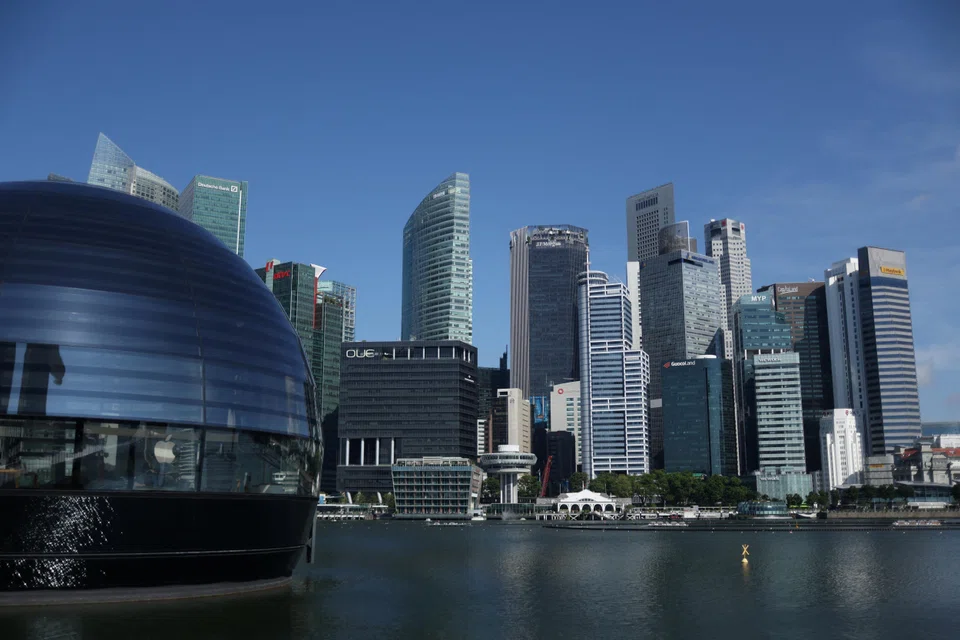
[SINGAPORE] Chinese food and beverage businesses such as Chagee, Mixue and Luckin Coffee are now commonplace across Singapore.
Big Tech firms including Mihoyo or ByteDance also have operations in the city-state.
Big Tech, F&B and even retail are arguably the most visual aspects of Chinese investments into Singapore. But according to the latest data from the Economic Development Board (EDB), other Chinese companies beyond those industries are also setting up shop here, leading to a shift in sources of fixed asset investments (FAI) Singapore received in 2025.
EDB’s data showed that FAI from Chinese companies made up 20.6 per cent of the S$14.2 billion Singapore received last year – a surge from 2.5 per cent in 2024.
FAI from Chinese firms also outpaced those from US businesses at 17.3 per cent for the first time.
EDB is the lead government agency for engaging businesses to invest in Singapore and positioning the city-state as a global hub.
While the Chinese investment inflow is an eye-catching data point, it is too early to call it a trend, and it remains to be seen if that level of investments is sustainable.
“The trend of rising foreign investment by Chinese companies into Singapore will likely continue, although year-to-year fluctuations are expected, and the sharp increase that came from a low base may be difficult to sustain,” said Chua Han Teng, senior economist at DBS Group Research.
Long-term view
For example, WuXi Group said in 2022 it was committing S$2 billion over 10 years to grow research and development and manufacturing capabilities in Singapore. Hai Robotics and Envision Energy have also raised capital in recent years to support operations here.
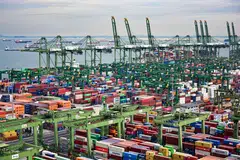
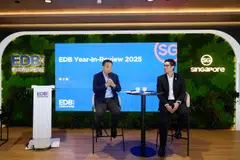

These multibillion-dollar investment commitments are spread out over years, and the EDB does not reveal its calculation of the value of such deal commitments in any given year.
Its definition for FAI refers to a company’s incremental capital investment in facilities, equipment and machinery.
That means WuXi Group’s S$2 billion commitment in 2022 is unlikely to have been calculated as S$2 billion for that year alone.
FAI are also unlike those from F&B and retail. These investments often involve items that are intended for long-term use – such as a building or machinery and equipment – and tend to incur huge capital expenditures.
“FAI are inherently capex-heavy and tend to reflect large greenfield plants or major expansions, which can skew the country mix in any given year,” said Tay Qi Hang, an analyst at the Economist Intelligence Unit who covers Singapore, Malaysia and Indonesia.
The US and Japan are still larger overall investors in Singapore, as companies from those two economies have had a longer history of investing in the city-state.
“FAI figures are often influenced by the timing of a few large projects, so country rankings can shift from year to year without necessarily signalling a permanent change in the investor hierarchy,” Tay said.
Launch pad city-state
But a rising share of Chinese FAI in Singapore also reflects the city-state’s attractiveness as an operations base for companies with regional or even global ambitions, as well as the state of global politics and economics.
“China may be using Singapore as a launch pad for its investments and expansion into the region, which remains more open to Chinese investments than many other parts of the world,” noted Chua Hak Bin, the regional co-head of macro research at Maybank Kim Eng.
“The US and parts of Europe have become more guarded, and less receptive to China investments on national security grounds and fears of dumping.”
The dip in FAI from US companies also coincides with President Donald Trump’s return to the White House for a second term, which in turn has seen an aggressive return to an “America First” policy.
EDB chairman Png Cheong Boon also said in a statement that Chinese companies are looking to expand internationally in response to slower growth domestically.
That is a view shared by Dr Chua from Maybank, who also noted that China’s domestic demand and market have been soft, which may have encouraged more Chinese firms to expand overseas.
Beijing has been trying to boost domestic demand as weak consumption and a long-drawn property slump continue to weigh on the Chinese economy.
“Chinese companies have been citing expansion strategies across South-east Asia and Europe in their earnings calls as they seek growth due to a comparatively lethargic domestic market,” said Heron Lim, an economics lecturer at the Essec Business School Singapore.
He added that a low-interest rate environment in China may have given companies the necessary capital to embark on their foreign expansion plans.
Stable base
And Chinese companies choosing Singapore as a base stems from the country’s reputation, analysts said.
“Crucially, Singapore remains a welcoming investment destination amid heightened geopolitical tensions globally,” noted DBS’ Chua.
“This, combined with the city’s advantages such as political stability, strong rule of law, predictable regulatory landscape and deep talent pool, makes it a preferred launch pad for Chinese firms expanding into South-east Asia.”
His view was also shared by several analysts to whom The Business Times spoke.
And FAI driven by Chinese companies in one year may also be a good thing for brand Singapore as it diversifies the sources of investments.
EDB’s Png said the agency was “glad that companies all over the world have found Singapore a suitable launch pad from which to seek new growth markets”, calling it a “testament” to the city-state’s strength as a global business hub.
He also pointed out that Singapore has a good track record of hosting multinationals globally, and said the agency will continue to look towards the US and Europe to be key sources of investments in terms of stock and flow.
Decoding Asia newsletter: your guide to navigating Asia in a new global order. Sign up here to get Decoding Asia newsletter. Delivered to your inbox. Free.
Copyright SPH Media. All rights reserved.
TRENDING NOW
Prima to move out of historic Keppel Road flour mill building in 2028

Grab CEO’s wife Chloe Tong on life with Anthony Tan and finding her purpose

OCBC sheds S$8 billion in value as shares close nearly 6% down; analysts cautious on banks
As Asia’s food delivery giants rejig the pie, who will win the market?

