



Climate change may have stimulated plankton bloom behind Thai mass fish die-off: expert
 Add BT as a preferred source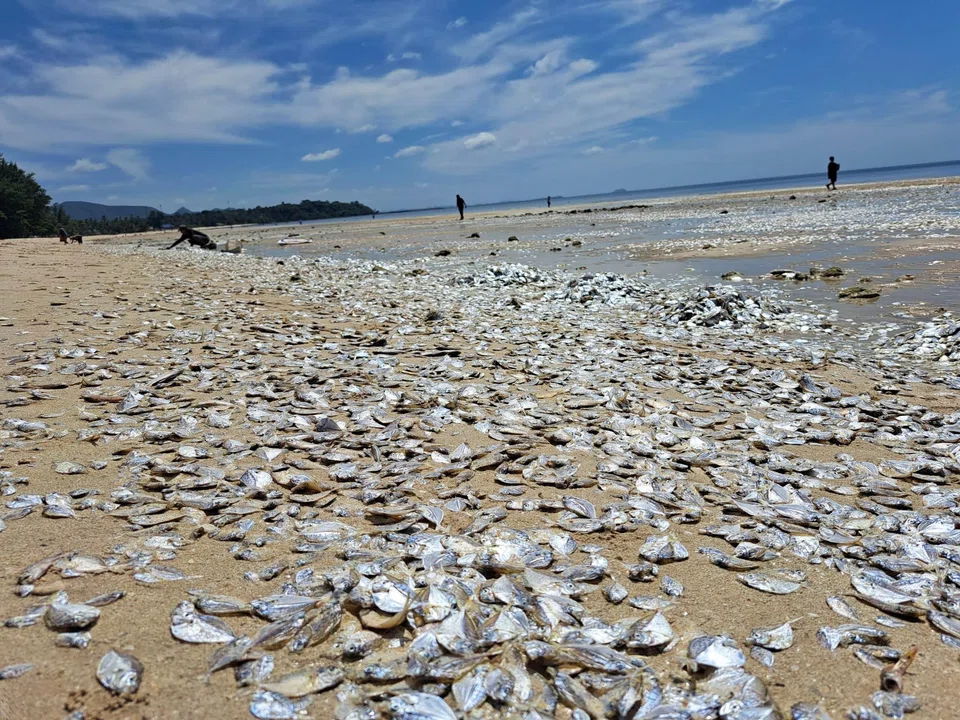
DeeperDive is a beta AI feature. Refer to full articles for the facts.
CLIMATE change might have stimulated a plankton bloom that caused thousands of dead fish to wash up along a 3- to 4-kilometre stretch of beach in Thailand’s southern Chumphon province, an expert said.
Thon Thamrongnawasawat, deputy dean of the Faculty of Fisheries at Kasetsart University, attributed the fish deaths on Thursday (Jun 22) to the bloom – a natural occurrence that lowers oxygen levels in the water and causes fish to suffocate.
“Various natural phenomena, such as coral bleaching or plankton bloom, have naturally occurred for thousands to tens of thousands of years. However, when global warming occurs, it intensifies and increases the frequency of existing phenomena,” he said.
According to local authorities, plankton bloom happen one or two times a year and typically last two to three days.
Officials have collected seawater for further assessment and analysis.
Worldwide, marine heatwaves have become a growing concern this year, with thousands of dead fish washing up on beaches in Texas and experts warning of algal blooms along the British coast as a result of rising sea temperatures.

Navigate Asia in
a new global order
Get the insights delivered to your inbox.
Global sea surface temperatures for April and May were the highest on record for those months, according to the British Met Office.
“Whether it’s Australia and places like the Great Barrier Reef or even places around England which are experiencing quite bad marine heatwaves at the moment, it’s really going to be detrimental to those local ecosystems,” said Sarah Perkins-Kirkpatrick, a climate scientist with the University of New South Wales in Australia. REUTERS
Decoding Asia newsletter: your guide to navigating Asia in a new global order. Sign up here to get Decoding Asia newsletter. Delivered to your inbox. Free.
Share with us your feedback on BT's products and services
TRENDING NOW

Japan stocks look set for new highs in 2025 on earnings, reform

Beijing’s calculated silence on the Iran war

China pips the US if Asean is forced to choose, but analysts warn against reading it like a sports result

Richard Eu on how core values, customers keep Singapore’s TCM chain Eu Yan Sang relevant

