



The clock is ticking for Malaysia to refocus on policy reform in 2024
Tan Ai Leng
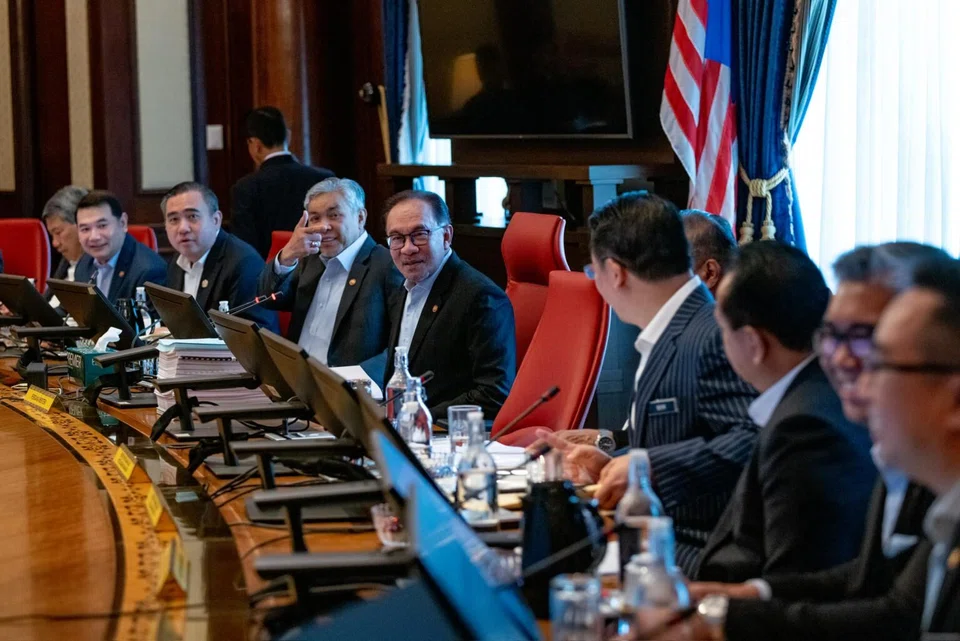
[KUALA LUMPUR] Malaysia Prime Minister Anwar Ibrahim is now in his second year in office after a fairly stable first 12 months on the job, and observers say his government needs to sharpen its focus on economic and fiscal reforms to drive the economy forward in 2024.
While much effort and attention have been put into power balancing for the past year, analysts said it is time for Anwar and his team to execute and implement the many macro blueprints that were announced in recent months.
These include the National Energy Transition Roadmap (NETR) which was unveiled in July, and the New Industrial Master Plan 2030 (NIMP 2030) which was announced in September.
The NETR – which seeks to restructure the economy, achieve sustainable growth, and ensure an equitable distribution of wealth – aims to accelerate Malaysia’s energy transition to achieve net-zero emissions by 2050.
The government had said that the economy should expect to see a 10 to 15 per cent uplift in gross domestic product value from products that are both high-growth and high-value.
As for the NIMP 2030, it has an ambitious target of boosting the manufacturing sector’s GDP by 6.5 per cent annually over the next seven years.
Anwar said this plan will require a total investment of RM95 billion (S$27.2 billion), with funding coming mainly from the private sector. The plan is also expected to create some 3.3 million job opportunities.
On the whole, Malaysia’s economy is in decent shape given the challenging global environment, with GDP expanding in the first three quarters despite weakening exports. In November, central bank governor Abdul Rasheed Ghaffour said the economy is forecast to grow by around 4 per cent in 2023, and between 4 per cent and 5 per cent next year.
Some market observers whom The Business Times spoke to, however, said there are some underlying problems that the government needs to address. More workers are feeling the pinch due to rising inflation and stagnant wage growth, while business owners are becoming more reluctant to expand due to policy uncertainties.
A new survey by the independent pollster Merdeka Center in November showed that Anwar’s approval rating stands at 50 per cent, down from 68 per cent in December 2022 just after he was sworn in. On the whole, the public’s approval level of the government is 41 per cent, from 54 per cent at the end of last year.
Economic issues are the main cause of the dissatisfaction. About 80 per cent of the respondents said the economy was Malaysia’s biggest problem, and a similar number was concerned about the high cost of living and the minimum wage.
Political analyst Liew Wui Chern said many Malaysians are experiencing fatigue with the ongoing political infighting, amid the struggle to make ends meet.
“The macro blueprints are promising, but they lack details on the execution. The clock is ticking, the ruling coalition is expected to focus on execution and policymaking, and ensure they are able to fulfil what they have promised during the last election (in Nov 2022),” he said.
Lee Heng Guie, the executive director of independent think tank Socio-Economic Research Centre, shared a similar view, noting that domestic demand, which has been the main driver of economic growth, has slowed as the trend of revenge spending began to fade.
Callum Chen, the president of the Malaysian Consortium of Mid-Tier Companies, was a bit more upbeat as he noted that most Malaysian companies involved in the export business are doing well and are keen on expanding or adopting new technologies.
Some of them, however, have seen their plans halted due to a lack of investment funds, and he called on the government to step in.
“Most companies exhausted their resources during the Covid-19 pandemic. (Therefore), they need more help from the government to secure investment capital through bank borrowings,” he said.
Earlier this month, the Ministry of Investment, Trade and Industry presented a glowing report card for the year, announcing that Malaysia had garnered RM225 billion worth of approved investments from January to September this year. Of these, nearly 56 per cent were foreign direct investments.
Separately, the ministry also said that Malaysia has attracted RM347 billion in committed investments after completing a series of investment missions this year.
Analysts said that Malaysia’s economy can only continue to grow if the government works hard to ensure that investments that are announced are eventually realised, as this would be a sign of confidence in the country’s longer-term prospects.
“It’s a positive indicator that Malaysia remains attractive, but until the investments are realised, there will not be any impact to the economy,” said Lee.
To regain the trust of the voters and improve the government’s policy execution, Anwar performed a major reshuffle of his Cabinet on Dec 12, including bringing back several experienced ministers and appointing the former Employee Provident Fund chief Amir Hamzah Azizan as second finance minister.
Ringgit rebound
Analysts and business leaders are hopeful that 2024 will be a better year for Malaysia and the ringgit following an improved external environment. They cited China’s recovery, the interest rate hike pause by the US Federal Reserve, and the bottoming-out of the global tech cycle.
“A more stable domestic political environment and the promise of much-needed economic reform will support the ringgit,” said Alexander Chia, head of regional equity research at RHB Investment Bank.
The weakening ringgit has become a major concern for many Malaysians and businesses. The currency hit its lowest point ever at RM4.788 to the US dollar on Oct 25, depreciating by 8.8 per cent since the start of the year. As at Thursday (Dec 21), the ringgit is trading at RM4.65 against the greenback.
Against the Singapore dollar, the ringgit breached the psychological RM3.50 level in end-November and it has stayed around this level since.
Analysts said external-driven factors amid a strong US dollar environment is the main reason for the depreciation of various Asian currencies, with the ringgit taking the hardest hit among its peers due to its higher correlation to China and a relatively bigger negative interest rate differential with the Fed.
UOB Group senior economist Julia Goh said how the ringgit fares in 2024 will largely depend on China’s economic recovery and a peak in US interest rates before the Fed does any rate cuts from the middle of next year.
UOB has forecast that the ringgit will strengthen to RM4.65 against the US dollar in the first quarter of 2024 and to RM4.55 in the second quarter.
Jeff Ng, head of Asia macro strategy for SMBC’s global markets and treasury business, is confident that the ringgit will rebound next year as the Fed is turning towards a dovish outlook while Bank Negara stays neutral on its monetary policy.
He expects the ringgit to trade at around the RM4.50 level at the end of next year.
“The ringgit is relatively weak compared to its real effective exchange rate, indicating a correction rebound. Improving exports may also help boost the current account balance, providing a small boost to the ringgit,” he said.
Being an export-oriented economy, both Chen and Goh are of the view that the ringgit’s depreciation will help stabilise some external shocks by boosting the competitiveness of goods and services sold, as well as in attracting foreign direct investment.
“The currency weakness also makes it less compelling for existing businesses to enter new high-valued growth segments that depend on imported foreign technology, equipment, business advisory and intellectual patents, particularly if there is less clarity on financial returns,” said Goh.
TRENDING NOW
OCBC Q3 profit rises 3% to S$2.04 billion, slightly above expectations
Stocks to watch: OCBC, IHH Healthcare, FLCT, SingPost, Koh Brothers Eco Engineering

From legacy to launch: Francis Yeoh and Yeoh Pei Xien on family unity and YTL’s next‑gen ventures

Wealthy Indonesians snap up government bonds as yields near 8%: OCBC

