



As costs rise, Apac firms turn to Vietnam, Philippines for talent: report
Jamille Tran
[HO CHI MINH CITY] As challenging economic conditions continue to trigger widespread layoffs and tighten business budgets, companies in the Asia-Pacific region are turning to skilled yet affordable talent in developing countries, such as Vietnam and the Philippines.
This is according to Recruitery, a Vietnam-based headhunting and payroll solutions company. Its services provided to foreign clients looking for candidates in the two countries surged 300 per cent year on year in the first quarter of 2023.
Recruitery – which has offices in Singapore, India, Vietnam and Indonesia and serves about 300 clients – said more companies are looking for Vietnamese talent in jobs related to marketing, accounting, software and products. Filipino workers, meanwhile, are also popular because of their education levels, and can fill roles in customer service and sales.
The company’s co-founder and chief executive officer, Nguyen Van Toan, said more companies are keen on acquiring talent from Vietnam, the Philippines and India, to reduce their dependency on China amid rising costs and geopolitical tensions.
This sentiment is partly reflected in foreign investors’ interest in Vietnam. The country is among the top receivers of foreign direct investment (FDI), relative to gross domestic product in South-east Asia.
In the first four months of this year, Vietnam granted licences for 750 new foreign-invested projects valued at over US$4.1 billion. This represents a boost of 65.2 per cent by number, and an increase of 11.1 per cent by value, compared with the same period in 2022, according to data from the country’s Ministry of Planning and Investment.
“The number of projects with capital adjustment (also) rose, affirming investors’ confidence in the country’s investment environment and their decisions to expand,” the ministry said.
Investors from China, Hong Kong, Japan, Singapore, South Korea and Taiwan continued to pour the most money into Vietnam, contributing more than three-quarters of the country’s total FDI in the first four months of 2023.
While these foreign players go on a hiring spree, job openings from domestic companies in Vietnam and the Philippines are down 51 per cent, said Toan.
In Vietnam, there have been sizeable layoffs in the real estate and manufacturing sectors in the past six months. This comes as property developers are still reeling from a cash crunch, legal entanglements and an ongoing anti-graft crackdown.
Meanwhile, manufacturing activity has fallen on the back of declining global orders. This has taken a toll on the country’s export-reliant cities and provinces.
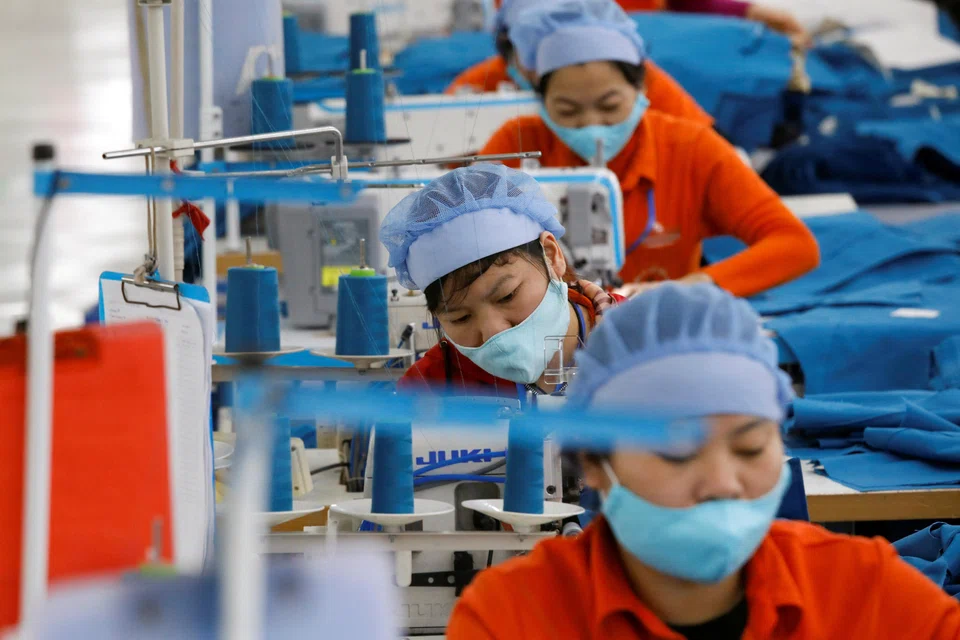
About 149,000 people in Vietnam lost their jobs in the first three months of this year, up from 118,000 in the previous quarter. The sectors that experienced the largest losses were clothing, footwear and electronics, which are among the country’s main export earners.
Among the major employers that slashed headcounts were Vietnam’s leading electronics retailer Mobile World Investment Corporation, which reduced its staff strength by 9,000 – about 12 per cent – in the last six months. The company said it is not hiring replacements for the time being, due to customers’ weaker purchasing power.
The General Statistics Office said that overall, Vietnam’s first-quarter unemployment and under-employment rates – at 2.25 per cent and 1.94 per cent respectively – were still better than previous quarters, thanks to a strong rebound in the services sector.
This trend was reflected in Recruitery’s first-quarter performance. Toan said the company acquired more clients in the food and beverage sector, as well as in the fast-moving consumer goods sector; but there remained a significant slowdown in hiring for the manufacturing and real estate sectors.
Rong-Ni Li, business director of Vietnam-based AI-powered recruitment platform JobHopin, said that many of her clients’ hiring inquiries are “more conservative” and “very price-sensitive” at the moment.
Both Recruitery and JobHopin have observed a sharp drop in tech hiring from both international and Vietnamese companies in recent months. There are more vacancies these days for revenue-related functions, such as business development, account management and marketing.
“Unfortunately, Vietnam’s workforce has yet to fully meet the needs of international businesses for highly skilled workers and higher-level positions,” said Toan.
“(There needs to be) a long-term strategy and more robust approach from the government, to maintain the market’s attractiveness to foreign investors and improve the quality of the country’s overall labour force.”
TRENDING NOW

ComfortDelGro appoints two new independent directors

Once staunchly pro-China, Malaysian Chinese businesses are now distancing themselves from Beijing

NoonTalk needs continued financial support from CEO Dasmond Koh, auditors warn

DP Architects sets the benchmark for sustainability disclosure and design

