Creepy crawlies or culinary delights: The buzz around South-east Asia’s booming bug business
Thailand dominates the industry; Cambodia and Laos among the largest consumers of insects in the region

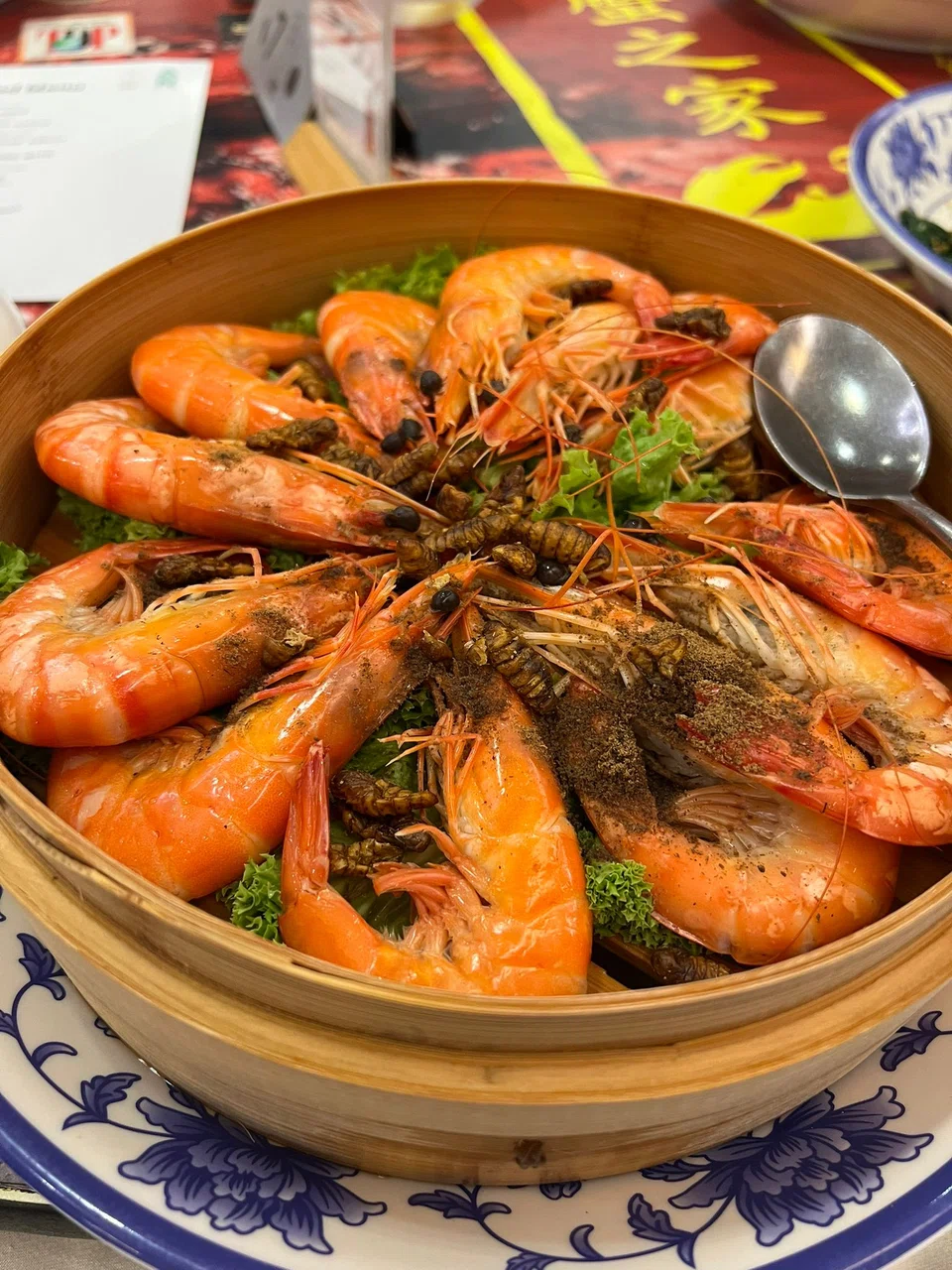
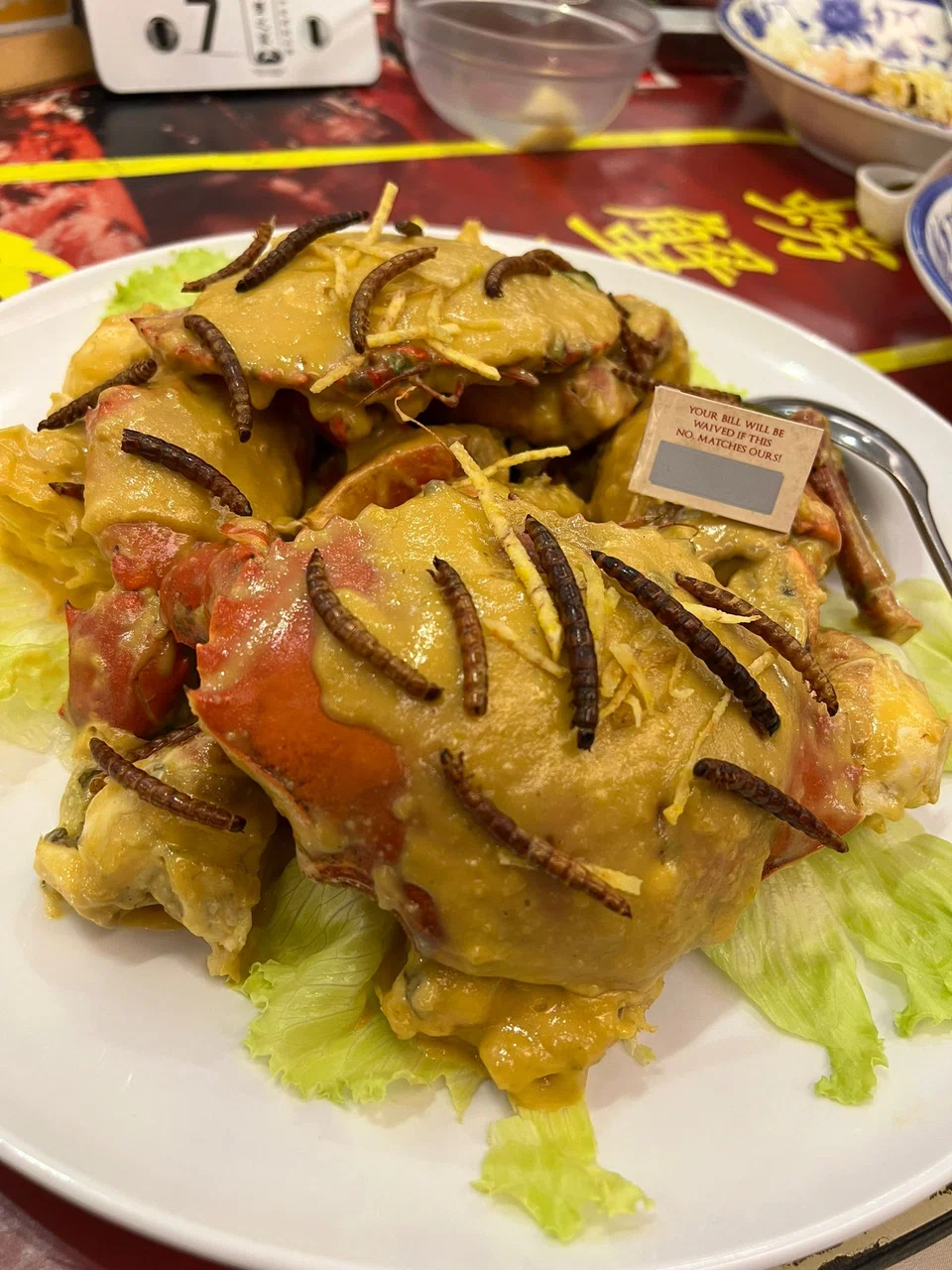
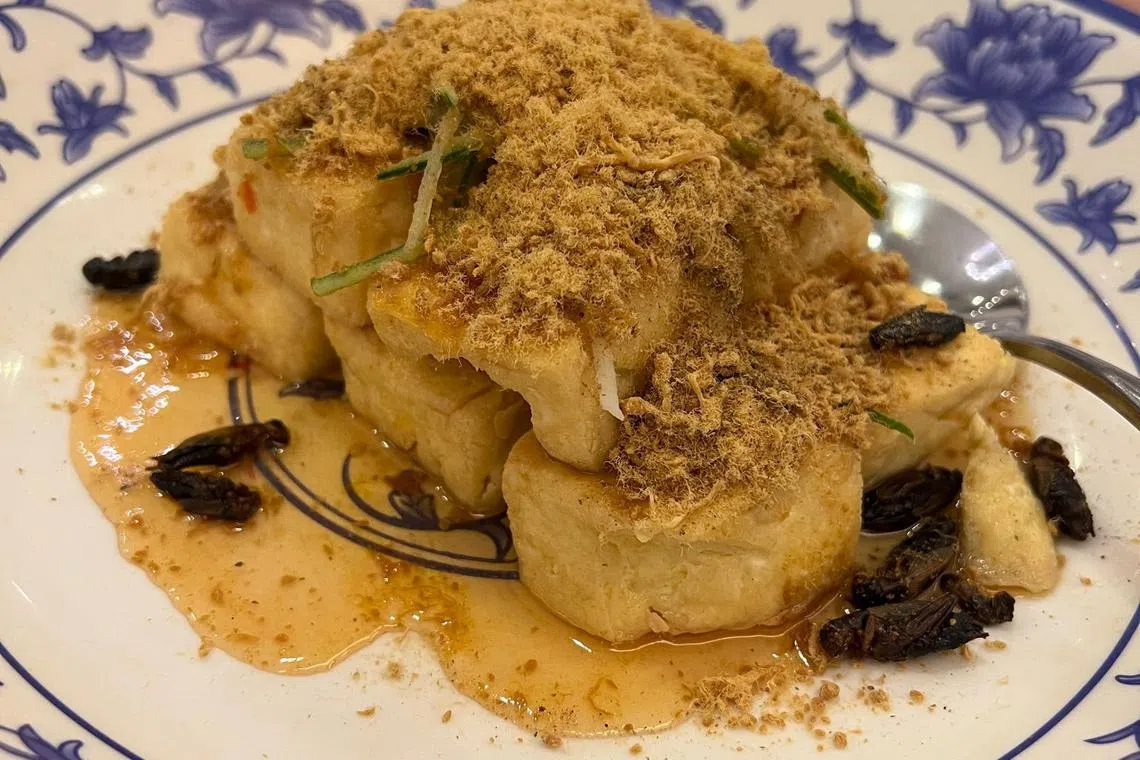
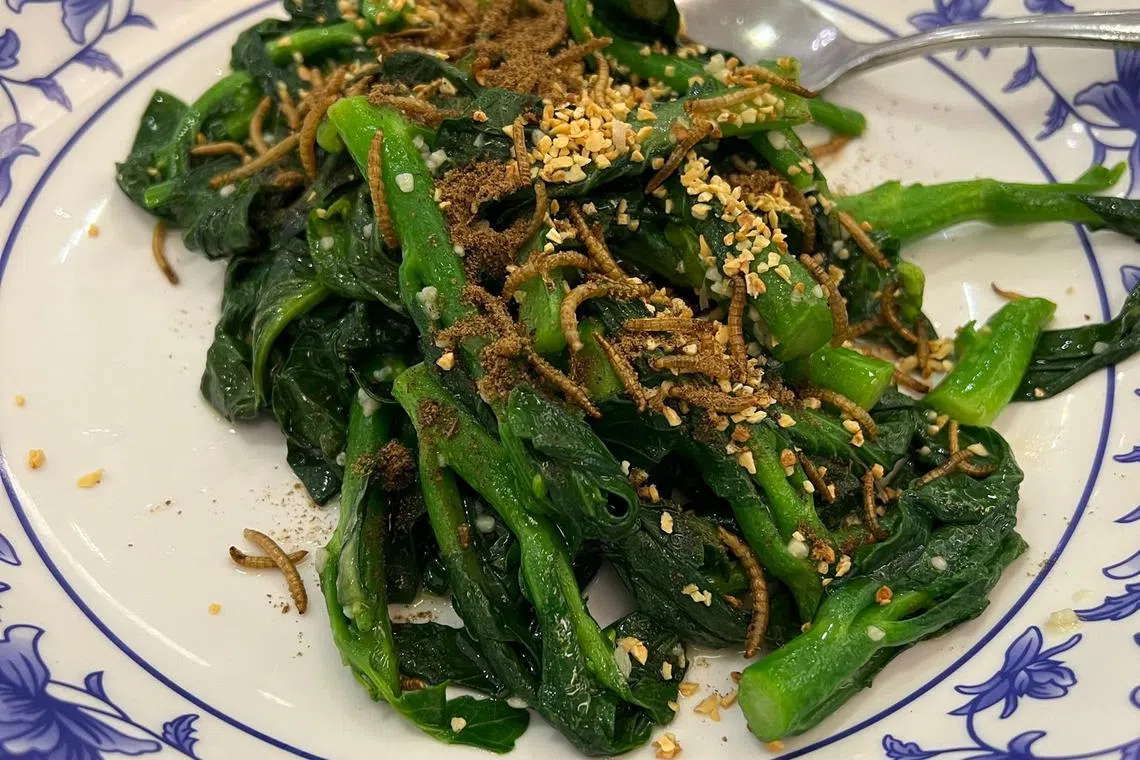
FANCY some crispy beancurd with a side of crunchy black crickets? Perhaps kailan topped with minced garlic and nutty mealworms, or fresh poached prawns garnished with chewy silkworm pupae?
These dishes were part of an eight-course private dining experience organised by Singapore edible insects start-up Altimate Nutrition and local restaurant House of Seafood.
More than 50 participants, including some as young as six years old, registered for the closed-door event held in August. The feedback had one common theme – the insects did not taste as bad as they expected.
Touted as the next superfood, bugs are crawling their way onto menus and driving South-east Asia’s edible insects market into full throttle.
The region’s edible insects market is slated to see a compound annual growth rate of 24.1 per cent from 2023 to 2030 to reach US$1.58 billion, according to Meticulous Research in a July report.
Globally, the sector is expected to hit US$16.4 billion by 2032. In addition, the Asia-Pacific accounts for the lion’s share of the market this year, the market researcher noted in a separate August report.
Likewise, a Research and Markets report in October said the global edible insects market has grown to an estimated US$2.31 billion this year and is projected to reach US$17.9 billion by 2030.
“South-east Asia, as a whole, has quite a strong cultural basis for insect consumption,” said William Chen, director of Nanyang Technological University’s food science and technology programme.
“In the past, people looked for novel food sources whenever there was a crisis, but we should be more proactive now. That’s why a lot of countries promote these alternative food sources so that when the real food crisis hits us, we are prepared,” he added.
Case for critter consumption
Against a backdrop of growing food insecurity, a burgeoning global population and a warming planet, insects are fast emerging as a forerunner in the food race.
Rearing insects not only requires less water and land compared to traditional livestock, but also produces less greenhouse gas emissions.
In fact, 1 kg of edible insect protein requires two to 10 times less agricultural land than that of cattle or pigs, said the Food and Agriculture Organization (FAO) of the United Nations (UN) in a 2021 report.
“Traditionally-produced meat and dairy require huge infusions of water, land, nitrogen fertilisers, and clear-cutting of forests. (It also) produces massive outputs of greenhouse gas emissions,” said Maryruth Belsey-Priebe, a senior fellow at US-based foreign policy research institute Pacific Forum International.
“Turning to alternative sources of protein like edible insects might be one way to collectively lower climate-warming emissions,” she added.
Farming insects requires less time too.
Foo Maosheng, an entomologist from the National University of Singapore’s Lee Kong Chian Natural History Museum, pointed out that it takes around two years before a cow can be slaughtered for its beef.
Conversely, insects – depending on the species – only need about one to two months before they can be harvested.
Consuming insects also helps in the fight against food wastage.
Foo said: “In traditional livestock, there are parts of the animals that cannot be consumed, such as bones, and they will be thrown out or incinerated. But when it comes to insects, almost the whole insect can be consumed, so practically no parts are wasted.”
Insects are known to be highly nutritious too, said industry players. They contain all nine essential amino acids that the human body cannot produce on its own, are rich in unsaturated fat, and are a good source of micronutrients such as vitamins, iron and zinc.
These nutritional benefits make insects a good candidate for alternative protein sources, said Prof Chen, who is also a consultant with the UN’s FAO on global policy related to alternative proteins.
Growth potential
In South-east Asia, it is Thailand, Cambodia and Laos that stand as the largest consumers of insects.
Thailand dominates the South-east Asian market, largely owing to high cultural acceptance and its longstanding culinary tradition of using insects as a food source.
In Cambodia and Laos, the trade, cultivation or harvesting of edible insects form a significant source of income for some poor families.
Prof Chen believes that Singapore can be a viable player in the region too.
“We have the advantage of having a lot of technological gadgets and regional countries look to Singapore as a technology leader in agri-food system developments,” he said.
“Insect protein can be the engine for the future protein source, but the yield and quality can be higher, and this is where Singapore can be a leader.”
Foo pointed out that Singapore’s lack of land for farming compared to neighbouring countries pushes the Republic to think of new ways to sustain its human population.
One example is Altimate Nutrition, the brainchild of a group of polytechnic students in a school entrepreneurship programme.
Founded in 2020, the company currently has two products – cricket protein powder and cricket protein bars in various flavours such as double chocolate, mixed berries, and peanut butter cinnamon.
Their cricket-based products are ready for mass production and distribution, but there is one last hurdle to overcome – regulatory approval.
In April, the Singapore Food Agency announced that 16 species of insects such as crickets, silkworms and grasshoppers, will receive the green light for human consumption in the second half of 2023.
The company, however, is still awaiting approval, said chief operating officer Hiew Yuen Sheng.
In the meantime, Altimate Nutrition continues to work on its research and development, formulating new protein bar flavours like salted caramel and exploring whole edible insect snacks that have flavours like seaweed and even tomyum.
Other plans in the pipeline include reaching out to businesses like restaurants or bakeries to promote the use of their cricket flour or silkworm powder in different food items such as pasta or bread.
Said Hiew: “Our plan is really to focus on Singapore markets because the entry will grant us access to other surrounding countries due to Singapore’s high standards for food regulations.”