



Crypto players find safe haven in Vietnam’s dual-city IFC
Global giants such as Binance, Bybit and Tether are converging on Ho Chi Minh City and Da Nang, where fintech sandboxes are being rolled out

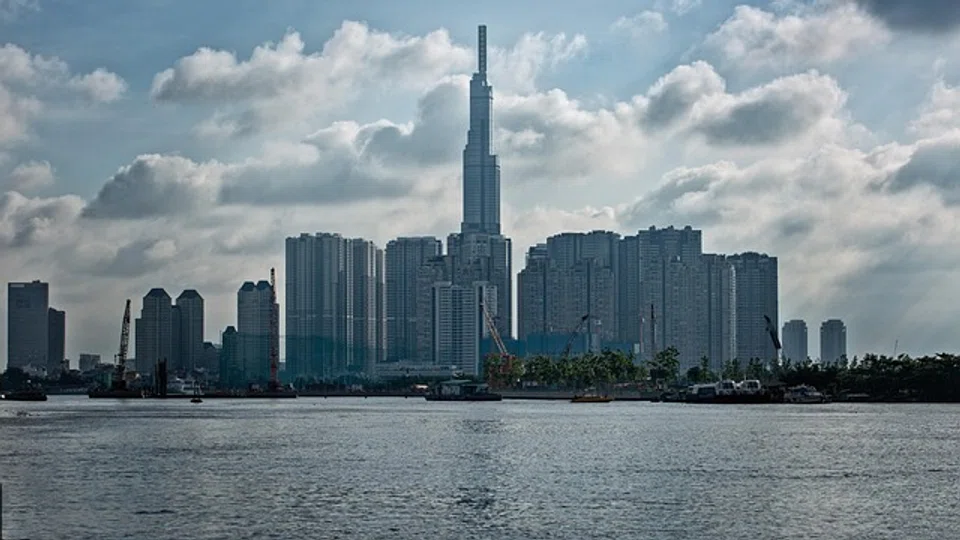
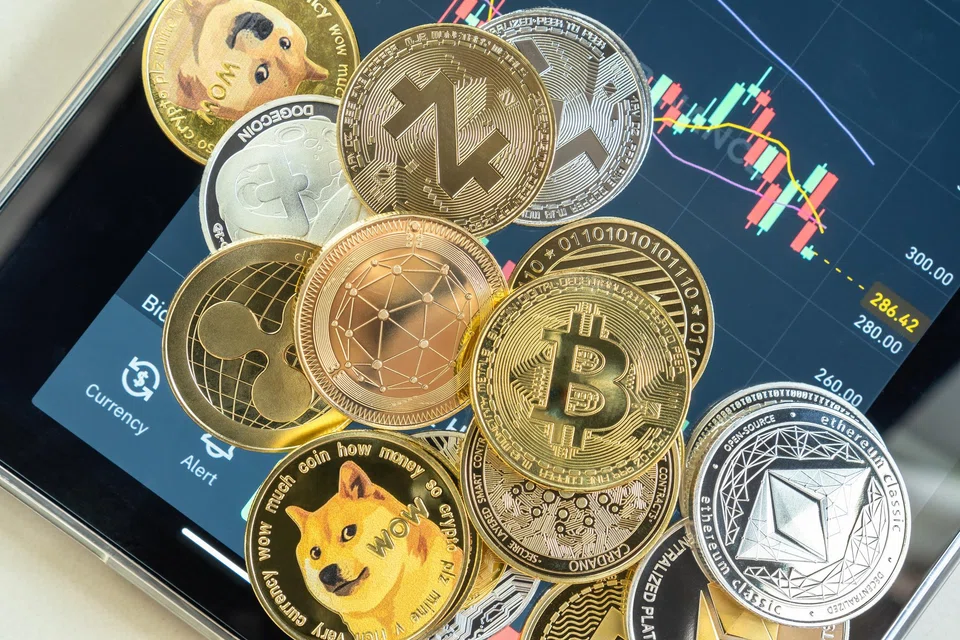
[HO CHI MINH CITY] With perceived flexible regulations, foreign-friendly incentives, and fintech sandboxes, Vietnam’s International Financial Centre (IFC) is becoming a magnet for both global and local digital asset players seeking growth and compliance in one of Asia’s largest crypto markets.
Unlike the regulatory restrictions and crackdowns seen elsewhere, Da Nang and Ho Chi Minh City, where the South-east Asian country is setting up its dual-city IFC, are providing a conducive environment that has already begun pulling in global crypto giants.
The recent launch of the Global On-chain Economy Alliance on Nov 25 in Ho Chi Minh City’s IFC underscores this momentum.
The alliance includes prominent international players such as Tether – the world’s largest issuer of US dollar-pegged stablecoins; Republic – a New York-based financial firm operating a network of retail-focused investment platforms; and Ava Labs – the company behind the open-source Layer-1 blockchain Avalanche.
Local players are also part of the alliance, including Dragon Capital – the oldest independent asset manager in Vietnam; Sky Mavis – Vietnam’s first blockchain unicorn known for its blockbuster game title Axie Infinity; and Viettel Digital Services – the digital infrastructure arm of Vietnam’s largest telecommunications behemoth Viettel Group.
Separately, over the past few months, Binance and Bybit, among the world’s largest crypto exchange operators, have each signed memorandums of understanding with authorities in Da Nang and Ho Chi Minh City to support the IFC formation.
“The IFC is a marketplace where international players come to do business, and the presence of major crypto firms engaging in global trading activities there will make it more vibrant and fuel the centre’s growth,” said Tran Huyen Dinh, head of the fintech application department at the Vietnam Blockchain and Digital Assets Association.
However, it is not just about easing market entry for global digital asset firms. The real value lies in what the Vietnam IFC can offer to these players – especially the ability to tap into the country’s large and growing crypto user base and tech talent pool.
“Vietnam is one of the leading countries globally in crypto adoption, making it an ideal market to offer digital asset services without the need for extensive market education,” Dinh added. “If tech companies want to save on costs, they can also set up offices here and hire local developers.”
SEE ALSO





According to a report by crypto payment gateway Triple-A, more than one in six Vietnamese owned cryptocurrencies in 2024, even when the asset type was not officially legalised in the country back then.
Over the past few years, Vietnam has constantly been among the top 10 markets with the highest crypto adoption rates worldwide, with trading accounts in digital assets quickly surpassing that in the stock market.
A recent report from Chainalysis revealed that the total value of crypto received in Vietnam was at US$220 billion between July 2024 and June 2025, marking a growth of 55 per cent compared with the 2023-2024 period and placing the country third in the Asia-Pacific region, behind India and South Korea.
Safe haven within IFC
In September, Vietnam tightened regulations on crypto asset trading during a five-year pilot programme, restricting trading service providers to a maximum of five domestically licensed exchanges backed by major financial institutions such as banks, insurers or fund management firms.
In October, Hanoi police also launched a high-profile investigation into alleged crypto fraud at AntEx, a decentralised finance project created in 2021 to form a Vietnamese dong-backed stablecoin called VNDT.
These developments, which followed the country’s official recognition of digital assets in a law in June, have caused jitters among local traders and global crypto firms.
They worry that broad restrictions could stifle innovation and create legal uncertainties, potentially driving Vietnamese users away from global platforms and prompting digital asset firms to scale back their presence in the local market.
The only viable pathway for them now lies in Da Nang and Ho Chi Minh City and their respective IFC zones.
According to a National Assembly resolution approved in June, Vietnam’s IFC enables a dedicated fintech sandbox. In this framework, participating organisations and individuals are exempt from administrative, disciplinary, and civil liabilities, provided they adhere to the approved testing procedures.
Members of the IFC also enjoy fewer financial controls, faster approvals and more favourable tax and investment incentives than what are provided under the existing legal frameworks in other parts of the country.
“The mechanisms within the IFC are more flexible and provide greater incentives to attract foreign companies and capital to Vietnam,” Dinh said.
Vietnam has been struggling in its financial competitiveness, with Ho Chi Minh City sitting at 95th place in the latest Global Financial Centres Index (GFCI 38) released in September – far below Asia’s leading hubs of Hong Kong (third) and Singapore (fourth).
In the fintech category, the city slipped two places to 90th, falling behind regional peers such as Jakarta (73rd) and Bangkok (76th).
However, GFCI 38 still listed Ho Chi Minh City among the 15 centres likely to become more significant over the next two to three years – the only South-east Asian representative besides Singapore.
Pilot projects in motion
With greater legal clarity on digital assets, various players have made concrete moves rather than testing regulatory waters or operating in grey areas. They seek to become early leaders in a market worth hundreds of billions of dollars.
In March, Dragon Capital proposed a pilot project to tokenise exchange-traded funds using blockchain, aiming to merge traditional investments with digital assets to boost the country’s capital market.
“The tokenisation project can act as a catalyst for broader digital transformation in the financial sector, encouraging blockchain adoption and enhancing retail investor participation,” the firm said in its proposal. “This directly contributes to the country’s goal of becoming an international financial hub.”
In the following months, major local securities firms and banks also set up crypto exchange arms. One of them was Military Commercial Joint Stock Bank, or MB Bank, which announced a partnership with South Korea’s Dunamu, the operator of Upbit – the world’s third-largest centralised cryptocurrency exchange – to establish a digital asset trading platform in Vietnam.
Notably, in August, Da Nang granted a sandbox licence to Basal Pay, making it the first city in Vietnam to authorise a pilot project for a domestic crypto-to-fiat conversion platform. Developed by AlphaTrue Solutions, Basal Pay allows tourists to convert crypto, especially the USDT stablecoin, into Vietnamese dong within seconds, eliminating intermediary steps and aiming to reduce transaction costs by about 30 per cent compared with traditional channels.
Dinh, who also serves as founder and chief executive at AlphaTrue Solutions, noted that the application has already registered more than 5,000 users so far, 30 per cent of whom are international tourists. Its next goal is to expand into Ho Chi Minh City’s IFC and integrate with crypto exchanges licensed in the local market in the near future.
“The sandbox provides us with the flexibility to innovate while ensuring full regulatory compliance,” said Dinh. “For now, Da Nang and Ho Chi Minh City are large enough to serve as testing grounds for the sandbox model in Vietnam.”
Decoding Asia newsletter: your guide to navigating Asia in a new global order. Sign up here to get Decoding Asia newsletter. Delivered to your inbox. Free.
Copyright SPH Media. All rights reserved.
TRENDING NOW

GCash parent Mynt rises in market debut after South-east Asia’s top 2026 IPO

In the age of AI, what is a university education for?
Singapore to use ‘every legal and regulatory lever’ against companies linked to haze: Shanmugam
‘IPOs are not the only vehicle’: KKR heads for record exits even as firms stay private for longer

