Dearth of tech listings spurs calls for specialised exchange in Vietnam
The country’s stock market has seen little action from the global AI and Big Tech equities frenzy
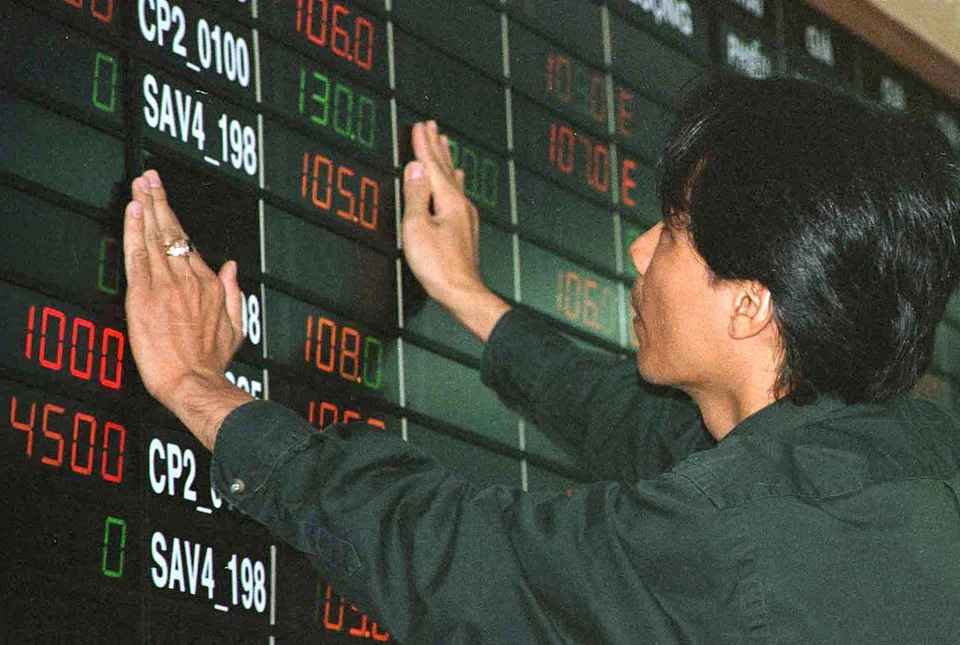
[HO CHI MINH CITY] Le Van Nam, an investor in Vietnam, has been meticulously scouring the Vietnamese stock exchange for promising tech stocks, hoping to claim a slice of the action in the big global boom in artificial intelligence (AI).
Having spent three years at a venture capital (VC) fund specialising in early-stage tech startups, the 28-year-old had expected companies in several key sectors – chiefly microchips, data centres, cloud and telecommunications – to be the key beneficiaries of the burgeoning AI space.
But he has not had much luck so far.
The frenzy surrounding Big Tech, including South-east Asia’s growing tech champions, seems to have eluded Vietnam’s stock exchange. Instead, Nam said he has been able to invest in only one tech stock for the past four years; at one point, he had allocated as much as a third of his funds into this counter.
“There are very few options for tech stocks in Vietnam’s public market,” he lamented.
The Ho Chi Minh Stock Exchange (HoSE), Vietnam’s main stock exchange, is largely dominated by old-economy stocks in the finance, real estate, consumer staples and industrial sectors. The VN-Index, Vietnam’s benchmark stock index, has risen over 10 per cent so far this year.
The tech and telco sector represents merely 2 per cent of the total number of listed companies across the country’s three exchanges – HoSE, Hanoi Stock Exchange and Unlisted Public Company Market (UPCoM) – and accounts for around 5 per cent of their total market capitalisation of US$240 billion.
In comparison, the information technology and communication service sectors make up just over 12 per cent of the MSCI Asean Index. The sector’s weighting in major global indices S&P 500 and MSCI Asia Pacific stands at around one-third.
The MSCI World Information Technology Index, which tracks major tech stocks in developed and developing markets, has surged over 30 per cent in the past 12 months.
“We stay positive on global tech and companies in the AI value chain, in particular,” said Solita Marcelli, chief investment officer for the Americas at UBS Global Wealth Management, in a report in early April.
The lack of options aside, the small universe of tech stocks in Vietnam has put up a good showing, buoyed by higher price-to-earnings multiples of global tech firms amid the AI boom, coupled with the country’s accommodative monetary policy.
Last year, a portfolio of 16 stocks in the information technology and telecommunications sector tracked by local broking house SSI Research gained over 40 per cent, led by major tech player FPT Corp.
This outperformed the broader VN-Index’s 12 per cent rise last year, earning it the title of the best-performing stock market in South-east Asia during the period.
Tech pipeline
Tech companies with the potential to go public are typically supported by various funding channels, including VC investments.
These VCs seek to obtain equity in rapidly growing startups, with the goal of realising significant returns upon exiting, either by selling their stake to another investor, entering the public market or by selling the stake back to the company itself.
Le Hoang Uyen Vy, co-founder and general partner at Do Ventures, said at a recent event in Ho Chi Minh City: “Given Vietnam’s goal of becoming the leading startup hub in the region, we recognise that Vietnam needs to create a robust exit environment.”
In 2023, total VC investment in Vietnamese tech startups declined for the second consecutive year, falling to US$529 million. This was a 17 per cent drop from the previous year, and a 63 per cent fall from its peak in 2021, said Do Ventures’ latest Vietnam Innovation & Tech Investment Report.
The early-stage VC firm regarded this as relatively optimistic, especially in light of the global funding downturn. It also anticipates an increase in tech exits, propelled by heightened interest in mergers and acquisitions from both foreign and domestic investors.
“We are still looking to craft (the first) successful tech initial public offering (IPO) in Vietnam that can really inspire the confidence of foreign investors,” Vy said.
However, many tech firms in Vietnam find the prospect of offering shares domestically unfavourable, partly because of constraints binding local IPOs.
A company seeking an IPO on the nation’s primary exchange must demonstrate profitability in the two preceding years, and have no accumulated losses at the time of offering.
Such stringent criteria pose a significant challenge for startups, many of which allocate substantial resources to research and development and business expansion, often resulting in ongoing losses.
Vietnam’s tech stars, e-commerce platform Tiki, mobile wallet MoMo and e-commerce logistics startup Loship, have all expressed intentions to go public for several years – but none of their plans have materialised thus far.
Last September, MoMo chief executive Nguyen Manh Tuong raised a few proposals in a meeting with government leaders and US investors, including a call for a task force to support tech companies seeking to raise funds from public markets, both domestically and internationally.
Vietnam is also trying to get its stock market reclassified as an emerging market, which would be an upgrade from its current designation as a frontier one. If that comes to pass, its new status could attract billions of dollars of foreign capital inflows.
Under this ongoing drive to change its status, it was to roll out its much-awaited new trading system early this month – only to have to delay the launch because of regulatory roadblocks and the unreadiness of securities firms.
Next best thing
In its 2023 report on the South-east Asia IPO capital market, Deloitte noted a rise in the number of companies listing on the secondary boards of main bourses in the region over the past year.
These junior boards cater to high-growth small and medium-sized enterprises, serving as a springboard for some IPO aspirants to transition to the main board; they also serve as a fundraising channel, enabling companies to maximise their growth potential.
Do Ventures pointed out that Vietnam could learn from its regional counterparts such as Indonesia, Thailand, Singapore and Malaysia. These leading startup hubs have implemented favourable regulations for startup IPOs, utilising specialised exchanges with reasonable listing requirements.
Matthew Smith, the head of research at Yuanta Securities Vietnam, echoed this viewpoint when he called for Vietnam to set up a separate growth-enterprise exchange, where investors are aware of the associated higher risks.
“I don’t think it makes a lot of sense for a US-style approach (in terms of tech IPOs) in Vietnam. The market is not developed to the extent that it makes sense,” he said. “But it’s also not good for countries to have their most innovative and value-created companies all listing in the US.”
Vietnam’s first tech unicorn, VNG, filed for an IPO in the US in 2023 but withdrew its registration this year, reportedly due to unfavourable market conditions.

In January 2023, the Internet firm made its debut on UPCoM through a direct listing, without raising additional funds. UPCoM is known for its more relaxed profit criteria, relative to the requirements of the nation’s main bourse, the HoSE.
The Vietnam government, recognising a host of obstacles in the current regulatory environment, is weighing a specialised exchange for high-growth firms.
Offering feedback in the pre-feasibility study on the move, Nguyen Quynh Anh, manager of the Swiss Entrepreneurship Programme in Vietnam, suggested that the authorities consider implementing mechanisms for crowdfunding. This would enable promising firms, including tech companies, to raise additional funds from the public initially.
“We could also set up a ‘sister’ exchange of existing bourses, with updated listing requirements that are more suitable for those firms. This should be established under a sandbox with regulatory oversight,” Anh said.