Asean Business logo
SPONSORED BYUOB logo

Delayed metro projects hamper Vietnam’s push to ease congestion, reduce motorbike use

Jamille Tran
Published Fri, Jul 14, 2023 · 05:00 AM
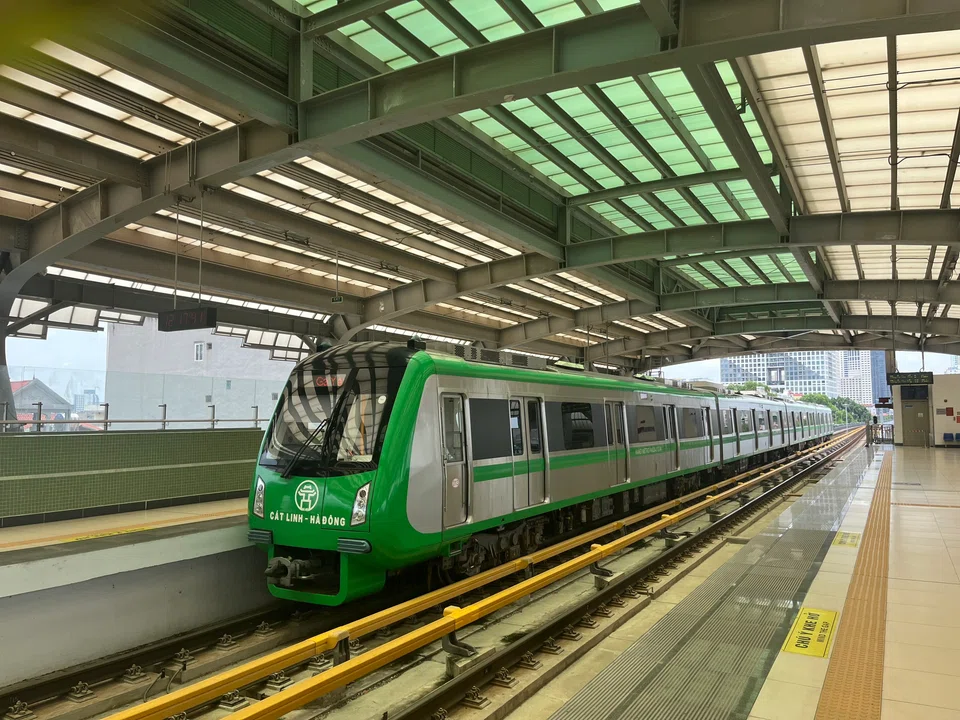
    • About 20 urban rail lines have been planned for Vietnam’s two largest cities by 2040.
    • About 20 urban rail lines have been planned for Vietnam’s two largest cities by 2040. PHOTO: JAMILLE TRAN, BT

    [HANOI] Vietnam – known for the notorious traffic jams in its major cities – wants more people to ditch their motorbikes and other vehicles and take public transport instead, but lengthy delays to get various metro projects completed and operational could scupper efforts to do so.

    The country’s first metro system in the capital Hanoi – the 13-km, 12-station Cat Linh-Ha Dong elevated railway line – finally began service in 2021, after a decade of construction and numerous delays. Official development assistance loans paid for most of the US$868 million construction cost, with the rest covered by the Vietnamese government’s corresponding capital.

    Ly Dieu Linh, a 27-year-old office worker who commutes to her workplace in downtown Hanoi, prefers taking this mass rapid transit (MRT) system to riding a motorbike, as the latter usually means getting stuck in gridlock on the main roads.


    A recent survey conducted by the operator, Hanoi Metro, found that while two in three passengers already own motorbikes and 18 per cent have cars, they still indicated that the MRT is their main mode of transportation whenever possible.

    This gradual shift in commuting behaviour in one of the most crowded cities in the world is timely, say observers. In June this year, the People’s Committee of Hanoi called on the relevant agencies to continue working on an ambitious plan to ban motorbikes from the inner districts of the city by 2030.

    According to statistics from the Department of Transport, Hanoi – a city with a population of 8.4 million – is home to around eight million vehicles, including one million cars and six million motorcycles. There are also more than a million vehicles from other cities and provinces that frequently travel to and from the capital.

    Every year, the city sees a 4 per cent to 5 per cent increase in personal vehicles, but the allocated land for vehicles grows only by 0.28 per cent per annum.

    In April, the Vietnamese government directed Hanoi and four other major cities – Ho Chi Minh City, Hai Phong, Da Nang and Can Tho – to halt the use of motorbikes in certain districts by 2030.

    The extent of the implementation, however, would be commensurate with the service capacity and infrastructure of the public transport system in the designated areas.

    The authorities in Hanoi intend to raise the rate of commuters using public transport from 19 per cent as at end-2022 to 30 per cent to 35 per cent by 2025, and to 45 per cent to 50 per cent by 2050.

    Besides the new MRT system, Hanoi has also implemented several pilot programmes to improve the inner-city transportation network.

    In 2017, it launched the first bus rapid transit (BRT) line with an exclusive lane on the roads. However, the BRT has not been a huge success as the sheer amount of traffic on Hanoi’s roads often results in other vehicles using the exclusive bus lanes, leading to slower bus rides and lower than expected passenger numbers.

    As such, observers say the MRT is the city’s best hope for encouraging greater public transport usage. The numbers give reason for optimism: Hanoi Metro reported 2.65 million passengers in the first quarter of this year, a 262 per cent increase from a year ago. The aim is to serve up to 10.7 million passengers for the whole of 2023.

    The impact on the environment is another reason why officials are beefing up efforts to get more residents to take public transport, especially the MRT.

    By Hanoi Metro’s estimates, every one million trips on the elevated train would see a reduction of 487,000 hours of personal vehicle usage. This would contribute an economic value of more than 30 billion dong (S$1.7 million) and cut as much as 100 tonnes of emissions in the city.

    For train commuters like Linh, however, one of the biggest hurdles she has to overcome is the lack of proper last-mile connectivity. Her office is 4 km away from the last train station, and she either waits for buses or lugs her portable bicycle along in order to complete her journey or travel around her office’s surrounding areas when needed.

    “It is too much of a burden so I may still ride my motorbike,” she said, adding that she continues to have doubts over the city’s aim to go motorbike-free by the end of the decade.

    Project delays

    The opening of the Cat Linh-Ha Dong line was planned for 2018, but various reasons such as late payments and design changes forced a delay of three years.

    Other major rail projects in Hanoi and elsewhere in Vietnam are also facing lengthy delays.

    The completion of the second metro line in Hanoi was supposed to be in 2015, but this was pushed back numerous times, and the latest deadline is now 2027. The elevated section of this Nhon-Hanoi Station metro line is slated to begin operations in August this year.

    Over in Ho Chi Minh City, the much-anticipated first metro line has yet to begin operations after more than 10 years of construction, with officials blaming the impact of the Covid-19 pandemic, soaring costs, safety issues and delays in payments.

    On Wednesday (Jul 12), the city’s authorities announced that construction of the 11-station link will be finished by the end of this year, with commercial operations slated to start in 2024 – six years later than first planned.

    A second line in Ho Chi Minh City is being built with the aim to finish by 2030, four years later than scheduled.

    In all, about 20 urban rail lines have been planned for Vietnam’s two largest cities by 2040, but the operators for five of six projects already under construction have sought government approval to push back the completion dates.