



Developer Amata capitalises on robust industrial land activity led by China-Plus-One strategy
The quest by foreign companies for alternative factory bases in South-east Asia is driving a surge in land sales, not only in Thailand but also in Vietnam and Laos
[BANGKOK] One of Thailand’s largest developers and operators of industrial parks is seeing a surge in activity – not just at home but also in neighbouring countries Vietnam and Laos, as multinationals and Chinese companies flock to South-east Asia in search of alternative manufacturing bases.
As land sales gain momentum, the Amata Group has begun marketing its latest project in Namor, located in Oudomxay province, north-western Laos. The site is strategically positioned near the Laos-China border and the Namor station of the Laos-China Railway, which commenced passenger and cargo services three years ago.
“We selected a location near China so that workers can commute easily from China,” said Amata’s chief executive officer for Vietnam Somhathai Panichewa.
Getting permission to allow workers from China to be employed on the Namor industrial estate was one of many incentives that Amata secured from the Lao government. This was important for the company given the shortage of labour in Laos, a landlocked nation with a population of just 7.5 million.
Other special incentives include a 30-year corporate tax waiver for foreign investors and a 5 per cent cap on personal income tax for employees. The estate will also have its own dry port in the coming years, and possibly a new airport.
The majority of the interested parties in the Namor project are Chinese companies, which was the case for Amata’s other industrial estates in Vietnam and Thailand.
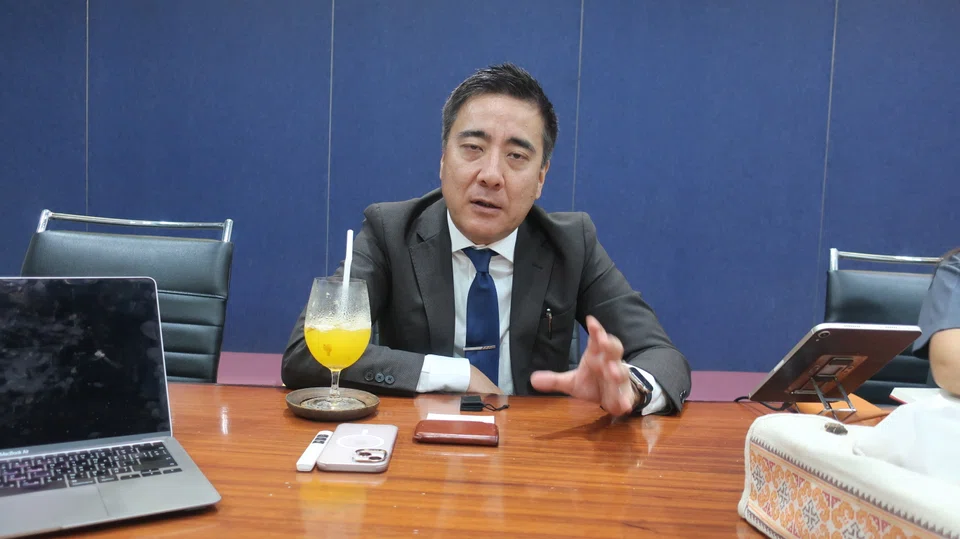
“Our focus is currently on Chinese investors, and we see many companies looking for another production base in South-east Asia,” said Amata’s acting chief marketing officer Osamu Sudo.
“They mostly come to Thailand, and some go to Vietnam. Laos is another option because we can offer them other benefits like tax incentives, clean energy and a good location,” he added.
Nearly half of the total land transfers by Amata in Thailand last year – about 297 hectares in all – were in Rayong, an eastern Thai province and a popular area for Chinese foreign direct investment (FDI).
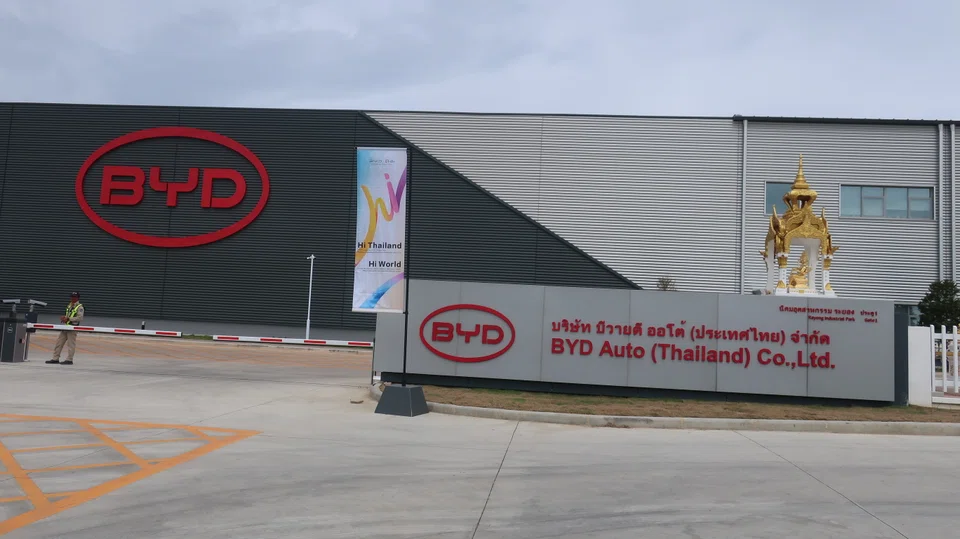
In July, Chinese electric vehicle (EV) manufacturer BYD opened its first factory on a 96-hectare plot of land in Rayong, at an industrial estate owned by Amata’s rival the WHA Group.
“I think all the industrial estates have been selling well over the past two years,” said Adam Bell, the head of industrial and logistics at real estate services and investment firm CBRE in Thailand. “The main driver has been that a lot of manufacturing companies have adopted their policy of a ‘China-Plus-One’ strategy.”
Looming supply crunch?
Multinationals and Chinese companies, even those with existing factories in China, have long been seeking alternative manufacturing bases, primarily in South-east Asia, in recent years. It was sparked by the ongoing US-China trade war that began when former US president Donald Trump was in office from 2017 to 2021.
The FDI exodus from China was disrupted by the Covid-19 pandemic, but analysts said it is now going full steam with Thailand and Vietnam being the main beneficiaries.
In Thailand, the substantial industrial land transfers over the past two years have resulted in supply challenges. “All the industrial estates are now finding there is more demand than they can handle,” said Bell.
That might be good news for Amata’s new project in Laos.
The industrial land sales have blossomed in parallel with applications for new projects at the Board of Investment (BOI), Thailand’s chief investment promotion office that offers tax and other incentives to FDI.
Chinese FDI topped the list of new applications for 2022 and 2023, along with robust FDI from Singapore and Hong Kong that tend to be Chinese companies based there.
New applications for BOI promotion totalled US$12.8 billion in the first half of 2024, marking a 35 per cent year-on-year increase. Singapore led the way with 120 projects, primarily in the electronics and electrical appliances industry by units of Chinese companies. This was followed by Chinese applications amounting to 72.9 billion baht (S$2.8 billion), with Hong Kong, Taiwan, and Japan also contributing significantly.
While Chinese investments in EV manufacturing in Thailand are among the big-ticket items, there has also been a steady and growing investment in electronics, especially in printed circuit boards (PCBs), a sector in which Thailand has established a substantial and growing supply chain.
“In the past two years, a lot of PCB factories have moved to Thailand from China – basically Taiwanese companies have moved here from China,” said Jimmy Chen, vice-president of the Thai-Taiwanese Business Association. “The whole supply chain will follow here.”
The inflow of FDI in Thailand’s electronics sector is not limited to Asian companies. In August, the BOI approved privileges to US’ Western Digital Storage Technologies (Thailand) to invest 23.5 billion baht in an expansion of its hard disk drive production in Thailand.
Strength in diversity
Many US, Taiwanese, and Chinese electronics companies have also relocated to Vietnam, which arguably holds an advantage over Thailand with its young, affordable, and educated labour force. Vietnam has reportedly set a goal to train 50,000 chip engineers and designers by 2030.
Amata Group, which is drawing FDI to both Vietnam and Thailand, is well-placed to characterise what both countries have to offer investors.
“Vietnam has human resources and cheap utilities prices, so it is the most balanced country for FDI cost-wise as everything is good for general manufacturing,” noted Sudo.
“On the other hand, in Thailand, we have the supply chain, more than in Vietnam, for the automotive and electronics industries. Thailand’s utility stability is the most mature in South-east Asia, offering a high-spec foundation for manufacturing, including infrastructure, utilities and logistics,” he added.






