



Double-digit annual growth not going away for Delta Thailand anytime soon
Since its debut on SGX in April, it ranks as the second most-traded Singapore Depository Receipt among the eight Thai market cap leaders, says the company’s CEO

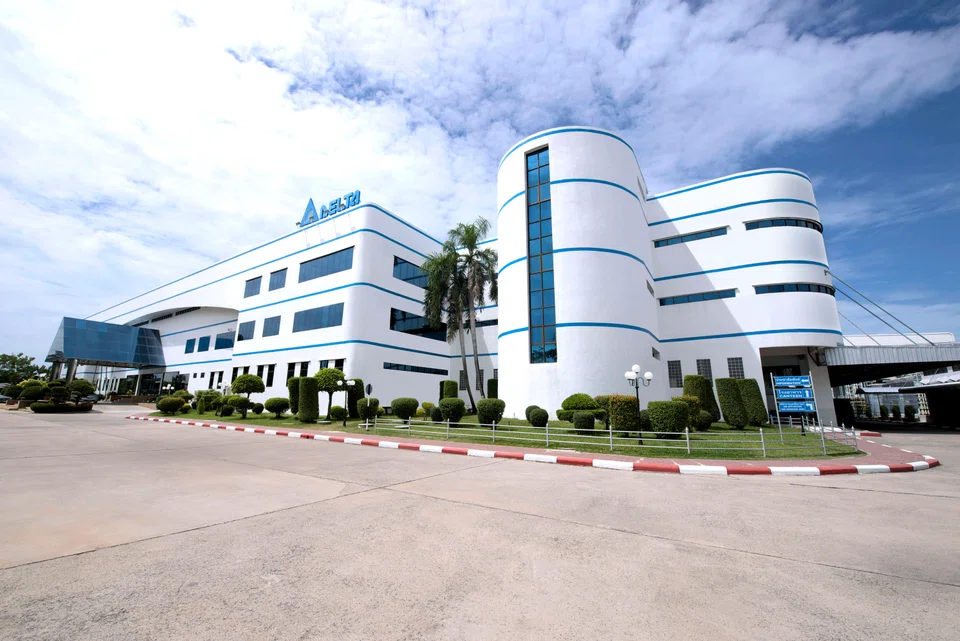
DELTA Electronics (Thailand), the largest electronics manufacturer listed on the Thai stock exchange, has its sights firmly set on maintaining double-digit year-on-year revenue growth over the next five years.
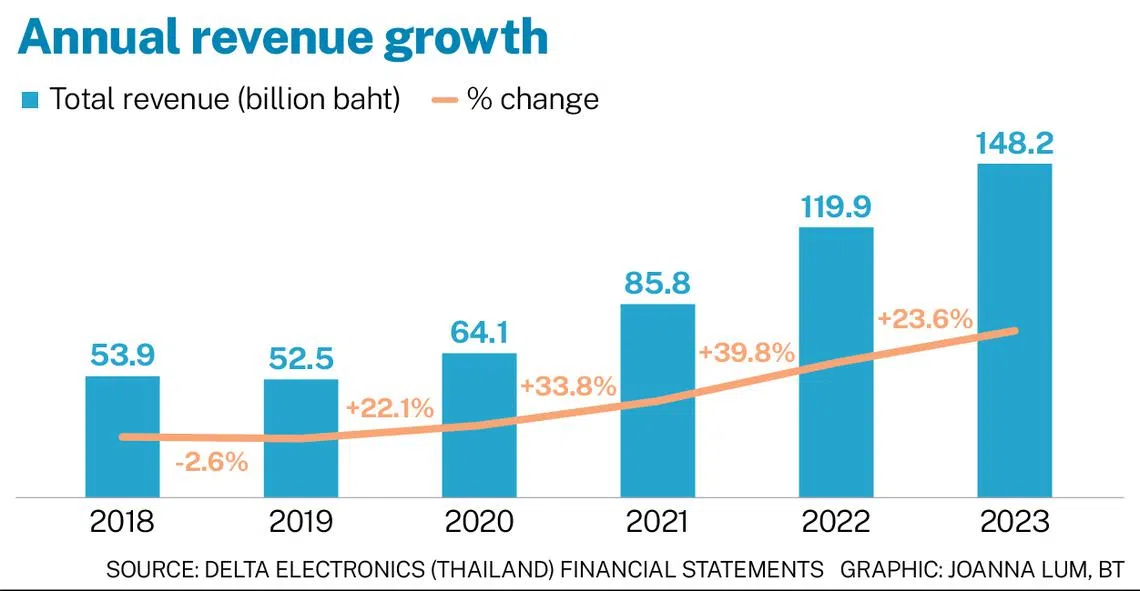
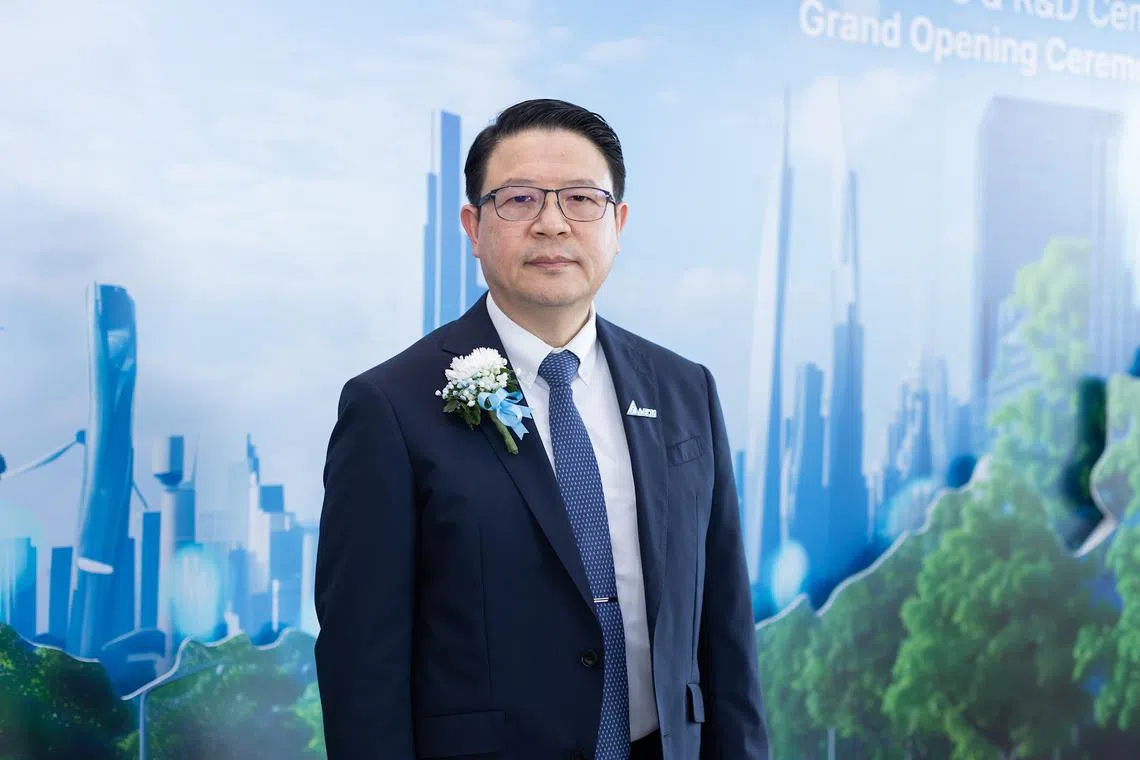
Although its growth this year is unlikely to match last year’s 23.6 per cent increase in revenue, the subsidiary of Taiwan-based Delta Electronics is still expected to sustain its four-year streak of double-digit growth, said its chief executive officer Victor Cheng, who is seven months fresh into the role.
The electrical engineering master’s graduate from California’s Santa Clara University began his career with Delta Electronics more than 30 years ago in the United States, before moving to Taiwan, and has now relocated to Thailand.
Taiwan-born Cheng attributed the projected growth deceleration to a slowdown in the electric vehicle (EV) business from the third quarter of last year to the first quarter of this year, as well as an easing in the information and communication technology sector. However, he maintained that the group is still seeing “a fairly robust ordering flow”.
Now showing: SGX premiere
Although the company is listed on the Stock Exchange of Thailand (SET), and has been since 1995, Delta Thailand made its debut on the Singapore Exchange (SGX) on Apr 1 this year via the Singapore Depository Receipt (SDR) route.
SDRs are financial instruments that allow investors to trade shares of companies listed on overseas stock exchanges. They are traded during local trading hours in Singapore dollars.
When first launched in May last year, there were only three depository receipts, featuring three of Thailand’s largest listed companies: airport operator Airports of Thailand (AOT), food retailer CP All, as well as oil and gas giant PTT Exploration and Production.
The scheme was then expanded in April this year to include five more SDRs linked to blue-chip companies in Thailand. Other than Delta Thailand, the new additions were mobile phone operator Advanced Info Service, Gulf Energy, Kasikornbank, and Siam Cement.
Together, the eight Thai SDRs account for more than 40 per cent of the SET 50 benchmark index across various sectors.
Cheng told The Business Times that Delta Thailand ranks as the second most-traded SDR, accounting for about 30 per cent of retail investors’ inflow to the listed SDRs.
“Being listed as an SDR gives us visibility not only in Singapore, but also among international investment companies,” he remarked. “It offers investors outside of Thailand the opportunity to invest in us. We believe we’re fairly solid and will perform for our investors.”
Making history and marking milestones
With its good growth prospects, Delta Thailand briefly had its moment in the sun in January 2023 when it became Thailand’s largest listed company, after a share-price surge catapulted it ahead of AOT and PTT.
Delta Thailand is not taking it easy though. In March this year, it launched a new research and development (R&D) centre as well as a new plant at the Bangpoo Industrial Estate, near Bangkok. They are dedicated to the production and development of EV power electronics products. The new plant is expected to double its output of EV-related electronic components.
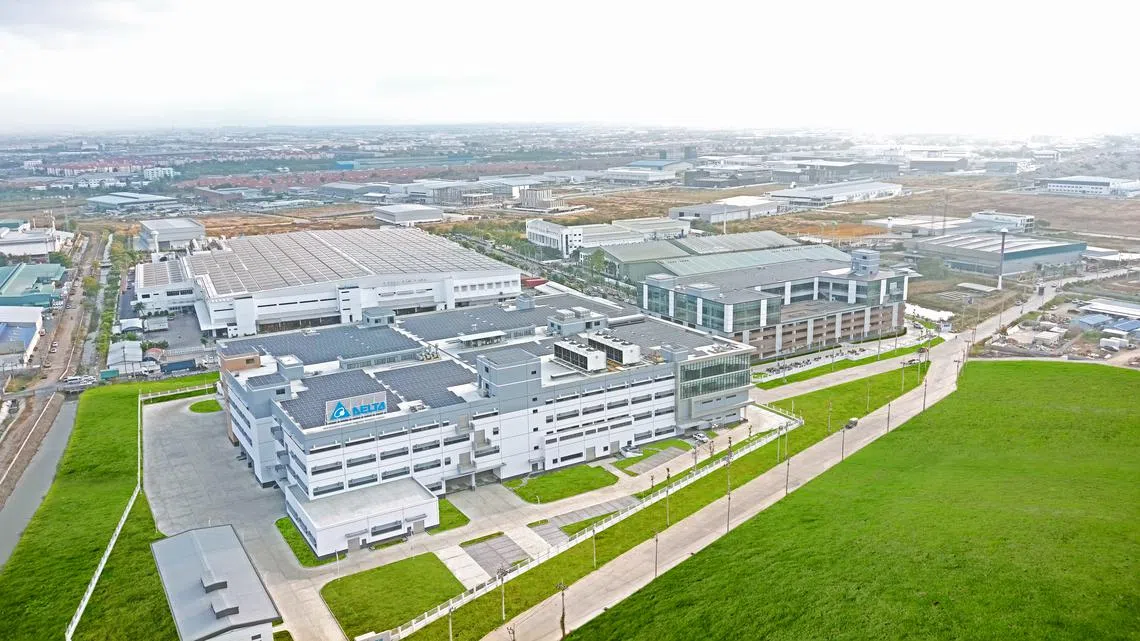
Funded from the group’s operating cash flow, the two new facilities cost 2.6 billion Thai baht (S$97 million).
The company currently has plants in Thailand, Slovakia and India.
Commented Cheng: “We foresee, with our customers’ inputs, that revenue (from EV-related products) will continue to grow in the next five to eight years. It takes several years to build a plant, get the equipment ready and train new staff; so we basically took advanced steps to build these factories to prepare for business growth.”
He added: “Even though from the end of last year, we have seen some slowdown in the adoption of EVs in Europe and the US... we still see our customers placing forecasting orders with us, and we are still fairly confident we’ll see double-digit growth in the EV sector (for the company).”
EV-related components currently account for about 30 per cent of the revenue of the company, whose main customers are in Europe or North America. About 70 per cent of the top 20 automakers in the world today are customers of Delta Thailand for power supplies, noted Cheng.
South-east Asia marks the spot
When asked about the company’s plans to expand internationally, Cheng remarked that the priority for now is to ramp up efforts in the countries where Delta Thailand has a presence and “get a job well done”.
“But, for market development, Australia, New Zealand, Vietnam, Singapore, Indonesia, the Philippines are the territories that we have already put local teams in to explore opportunities and growth engines,” said Cheng, adding that these are markets they “intend to fully exploit”.
Currently, South-east Asia, India, Australia and New Zealand account for about 15 per cent of Delta Thailand’s revenue.
The way Cheng sees it, South-east Asia will grow to become an even larger manufacturing hub for the world in five to 10 years.
“In the next few years, South-east Asia will be a very vibrant region for sure. Many of the foreign direct investments will come to this part of the world, and we expect a lot of different growth in many different segments,” he said.
“We’re hoping to gain more and more of these market shares from South-east Asia,” he added.
Concluded Cheng: “Delta Electronics (Thailand) has been in existence for over 35 years; so we have always been known for our quality and very solid business practices… We definitely are consistent or persistent players in the market, and we intend to grow, for sure, but steadily and in a controlled manner.”
TRENDING NOW

Companies still in search of AI use cases with worthwhile ROI, says Broadcom’s CEO
Beauty World Plaza up for collective sale for S$165 million

Trouble in paradise: Bali runs low on fuel, sparking long lines at pumps

Philippine power giant First Gen rebuffs foreign offers, plans up to US$2.6 billion in expansion

