



Durian duel: Malaysia to enter fray to export the spiky fruit to China, alongside Thailand, Vietnam
Malaysia is seeking to reinforce its position as one of the largest exporters of the ‘king of fruits’ in the region

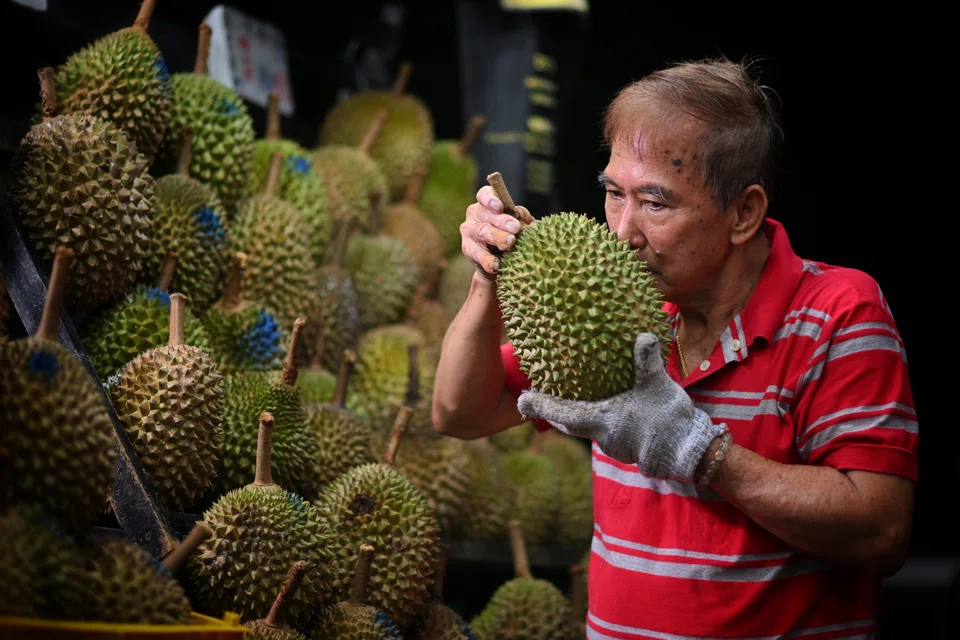
[KUALA LUMPUR] Malaysian durian farmers and exporters may be in for a treat, as the government is poised to conclude negotiations with China to export the spiky fruit to the world’s second most populous country by the end of this year.
If things go according to plan, Malaysia will become the fourth country authorised to ship fresh durian to China, joining Thailand and Vietnam – and to a smaller extent, the Philippines – in the battle for a larger share of China’s multi-billion-dollar fresh durian market.
Industry insiders say that both governments are finalising talks, which involve securing regulatory approvals and addressing numerous technical details.
When approached by The Business Times (BT), Minister for Agriculture and Food Security Mohamad Sabu said the application process is progressing well, and pending China authority’s review on the revised export protocol.
“We have received the draft protocol for fresh durian exports from the Attorney General Chambers of Malaysia on Apr 15. The revised protocol was sent to the General Administration of Customs China on Apr 26 for review,” he added.
A nod from China could be a game changer for the durian sector in Malaysia – the second largest exporter of the fruit in the world.
Hextar Group chairman Ong Soon Ho noted that China’s market is vast, and Malaysia’s durian industry could capture an additional 1 to 2 per cent of China’s fresh durian imports.
“Even a 1 per cent increase in market share would mean a lot to Malaysian exporters, planters, and the overall economy,” said Ong, who entered the durian business by acquiring controlling stakes in subsidiaries of PHG Ever Fresh Group, a prominent durian supplier and exporter, in July last year.
PHG Ever Fresh Group exports over 3,000 tonnes of durians annually to markets such as China, Taiwan, Singapore, Australia and the US.
Sweet endeavour
Chan Foong Hin, former deputy minister for agriculture and food security, previously indicated that approval is expected to align with the 50th anniversary of Malaysia-China diplomatic relations on May 31. He had been working on fresh durian exports before being redesignated as deputy minister for Plantation and Commodities last December.
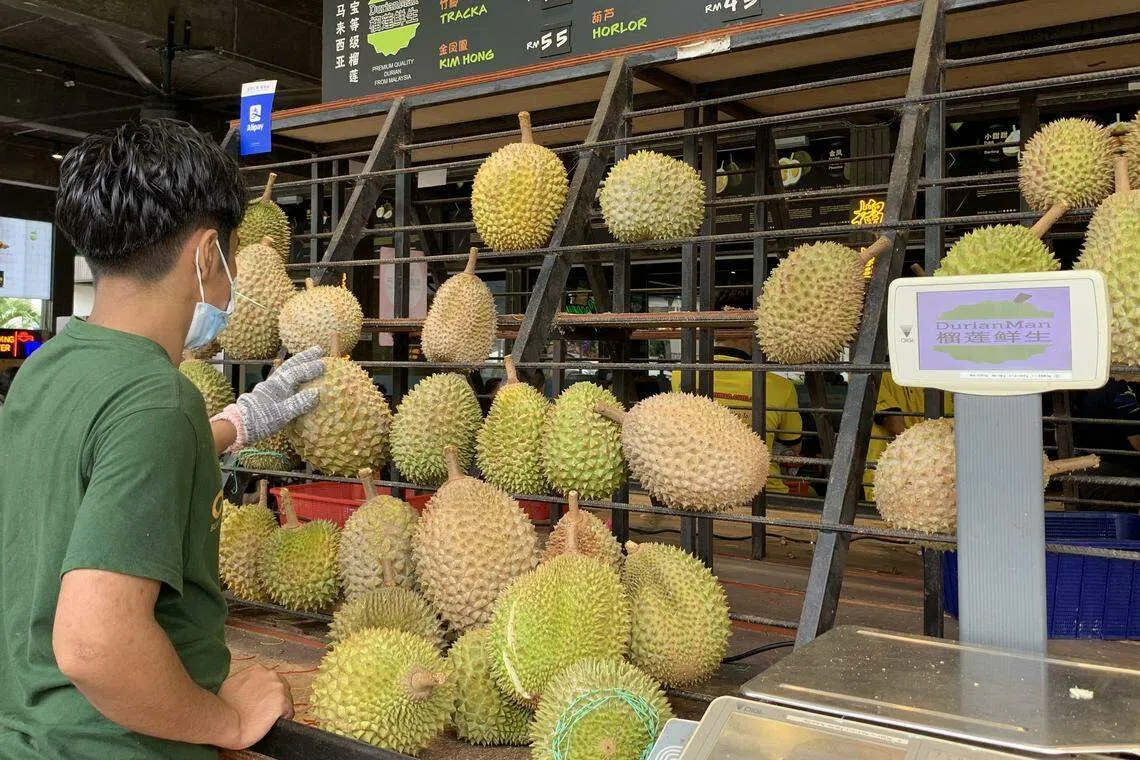
Despite China’s fondness for Malaysia’s “Musang King” – a premium variety known for its creamy texture and rich flavour – the country has thus far not been allowed to export the fresh fruit to China due to concerns over shelf life and quality. However, frozen durian products, including whole fruits, are permitted for export to China.
As it stands, Malaysia’s share of the frozen durian market in China is relatively small, accounting for only about 1 per cent of China’s total frozen durian imports. According to latest official data, Malaysia exported 930 tonnes of frozen durian to China in 2022, generating RM38 million (S$10.86 million) in revenue.
China’s total fruit imports surpassed 7.5 million tonnes in 2022, valued at US$16.8 billion. Fresh durian accounted for the largest share, representing 40 per cent of the import value, followed by fresh cherries (16 per cent) and both frozen durian and bananas (6 per cent each).
King of fruits
LKE Group’s managing director Jeremy Chin said the approval for fresh durian exports will pave the way for other Malaysian durian varieties, such as “Black Thorn” – known for its intense and complex flavour – to enter the Chinese market, further expanding its presence.
“Although Malaysia began exporting frozen durian products to China in 2011, and frozen whole fruits in May 2019, less than 5 per cent of Chinese consumers have tasted Malaysia’s Musang King,” he added.
That may be set to change. Since July 2022, when Vietnam got the green light to export fresh durians to China, the country has exported US$2.3 billion worth of the fruit.
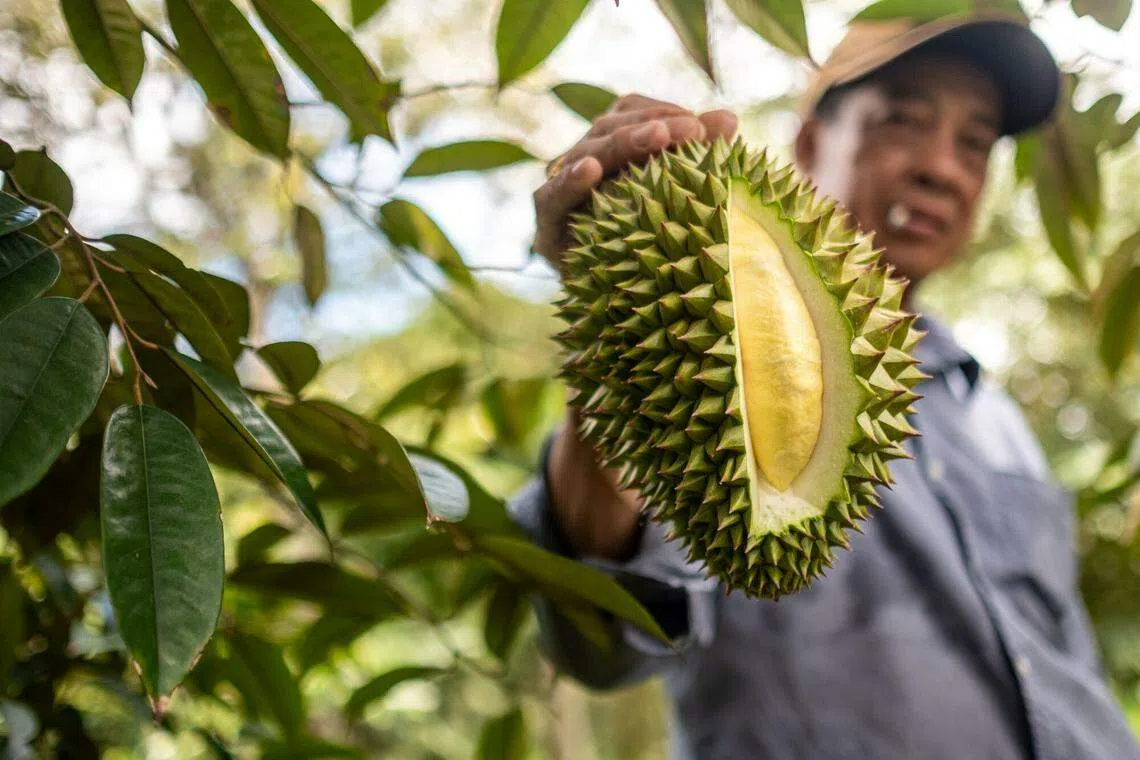
This year, Vietnam is aiming for US$3.5 billion in durian export revenue, accounting for half of the country’s total fruit and vegetable export revenue, according to estimates by the Vietnam Fruit and Vegetable Association.
Finger-licking potential
Ong’s outlook for Malaysia’s durian industry aligns with this trend, suggesting that gaining even a small portion of China’s vast durian market could significantly benefit Malaysia.
Aris Dacanay, an Asean economist at HSBC, noted that when Vietnam introduced its Monthong durian variety to mainland China in 2023, it quickly secured around 30 per cent of Asean’s market share for durian exports, leading to a reduction in Thailand’s share to about 70 per cent.
Despite this redistribution, Dacanay said Thailand’s durian exports continued to grow, driven by China’s rapidly increasing demand for the fruit, which surged by 66 per cent in 2023, totalling US$4 billion in value.
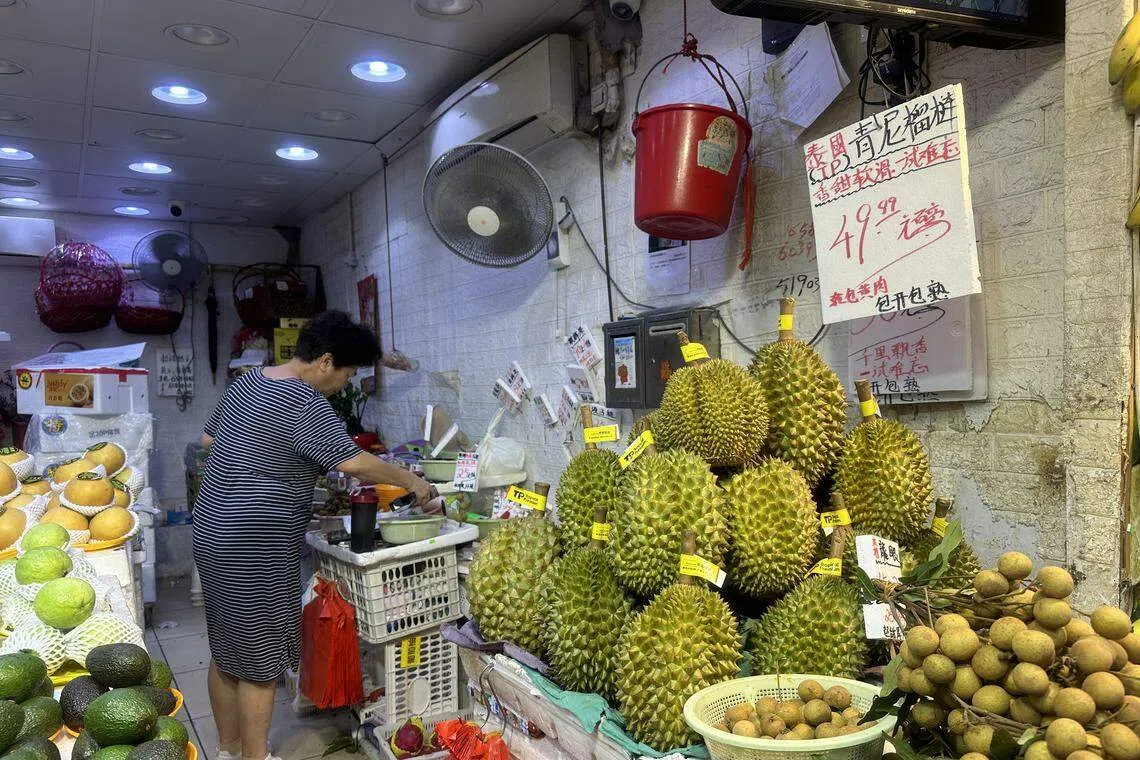
“The same trend could benefit Malaysia, allowing it to enter the Chinese market without diminishing the share of other Asean countries. China’s growing appetite for durian indicates a larger ‘pie’ for multiple exporters to share,” he told BT.
Despite the optimistic outlook, industry experts point out that exporting fresh durians poses significant challenges, particularly because Malaysian durians must ripen on the tree before being harvested and shipped.
“Musang King, known as the king of all durians, is best consumed within 48 hours after falling from the tree,” explained Chin, highlighting that the logistics of rapid delivery and maintaining fruit freshness create opportunities for transportation companies and chilling facilities providers.
Ong, who is ready to start exporting fresh durians as soon as government approval is granted, mentioned that his company plans to use a pre-order system to ensure customers receive fresh durians at their doorsteps or designated pickup locations.
“This approach, however, incurs additional costs. Based on our research, the air freight cost for one kilogram of durian is about RM20,” Ong said, noting that a typical grade A durian weighs 2 kg or more.
Nevertheless, Chin and Ong agreed that Malaysian durians should be marketed as a premium fruit, akin to Japan’s Yubari King melon, because of their unique aroma, rich flavour, and creamy texture.
Chin also pointed out that Malaysia is not the only country producing Musang King, with others such as Thailand, Indonesia, Vietnam, and China also cultivating the variety. However, the taste and texture of Malaysian-grown Musang King are distinct due to the suitable climate and soil conditions, he said.
TRENDING NOW

Higher rates, weaker spending: Is the Philippines entering stagflation?

Protect people, not prices: How Asean+3 can build resilience to energy shocks

Cabin fever: Airlines are rushing to refurbish plane interiors, but will their bets pay off?

DBS, OCBC or UOB? Investors urged to be selective as Q3 reveals widening performance gap

