


Eerily empty for months, Phuket set to welcome vaccinated tourists from July 1
 Add BT as a preferred source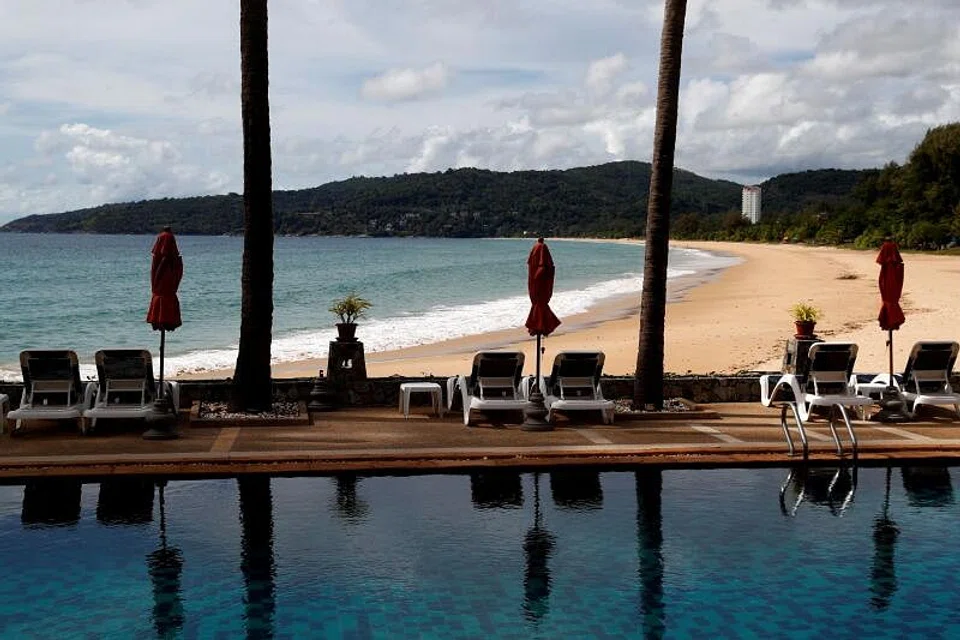
[BANGKOK] PHUKET'S devastated tourism industry - which normally accounts for up to 20 per cent of the country's gross domestic product - is expected to take baby steps towards recovery when it welcomes foreign travellers from July 1.
That is the start date for the island's reopening plan, known as "Phuket Sandbox". It will be open to fully vaccinated visitors from countries that have a low or medium risk of Covid-19 transmission, and the incentive is that there is no need to undergo any quarantine upon arrival.
On Wednesday, Thai Prime Minister Prayut Chan-o-cha announced his government's intention to reopen the entire country to international tourism within 120 days, making the Sandbox experiment a bellwether for the industry.
The sandbox's start date has been contentious, coming at a time when Thailand is suffering its third and deadliest wave of Covid-19.
South-east Asia's second-largest economy saw 3,000 new infections on Tuesday, taking the total to date to more than 202,000. There have been 1,485 deaths so far.
Although the Phuket sandbox project has been approved by numerous government agencies, it will not be considered a done deal until the scheme is announced in the Royal Gazette.
Navigate Asia in
a new global order
Get the insights delivered to your inbox.
"The Holy Grail will be the announcement of the reopening, with all the conditions, in the Royal Gazette," said Chattan Kunjara Na Ayudhya, deputy governor of the Tourism Authority of Thailand (TAT), in an address at a recent forum.
Laws in Thailand only come into effect once they are announced in the Royal Gazette, which is the government journal. The announcement on Phuket is expected soon, possibly in the next few days.
While vaccinated tourists need not serve a quarantine, they have to comply with a host of other conditions while in Phuket. These include staying only at government-designated hotels, taking three Covid-19 tests in the first seven days, and having US$100,000 worth of Covid-19 medical insurance.
There is no minimum stay if they only intend to visit Phuket. If they wish to carry on to other cities or provinces in the kingdom, they will have to remain in Phuket for at least 14 nights.
"After 14 months of effective closure to foreign tourists, the sandbox is good news for everyone in the tourism industry, even if the initial response is muted due to lack of clear instructions and even conflicting statements on details," said Luzi Matzig, chairman of Asian Trails Group, a travel agency specialising in the European market.
Mr Matzig and others in the tourism industry are hoping that if the Phuket model proves successful, other popular tourist destinations can follow suit, such as Samui Island, Hua Hin, Chiang Mai and Pattaya.
Phuket authorities have vowed to have at least 70 per cent of the island's population vaccinated with the first dose of a Covid-19 vaccine by July 1. As at the middle of June, some 60 per cent, or about 330,000 people, have been vaccinated, including nearly all staff who work in hotels.
TAT has set a target of 129,000 international tourists visiting Thailand between July and September, most of whom would be flying to Phuket.
Seven airlines have agreed to fly to Phuket in July - Thai Airways, British Airways, Cathay Pacific, Etihad, Qatar, Emirates and Israel's El Al.
Countries such as China are definitely off the Phuket Sandbox list, as anyone travelling to Thailand from China would be subject to 21 days quarantine upon their return.
"We are seeing strong interest, particularly from the Middle East, the UK, Europe and Scandinavia, to return to Phuket," said Anthony Lark, president of the Phuket Hotel Association.
The association is expecting 10 to 20 per cent occupancy rates at its member hotels - half of which are currently closed - in the July-October period, with an uptick during Thailand's peak tourism period from November to February.
Thailand is expected to attract at most 500,000 international tourists this year, down from 6.7 million in 2020 (mostly during the pre-Covid months of January to March) and 40 million in 2019.
Thanks to the third wave of Covid-19 ravaging the country since April this year, even receipts from domestic tourism have fallen 36 per cent in the first five months of 2021, with fewer than 7,000 foreign tourists arriving per month, according to government estimates.
With more than 60,000 registered hotels nationwide, half of them still closed, industry sources say it will take a lot more than the Phuket Sandbox to get the tourism sector back on its feet and anywhere near pre-Covid levels.
"I think it will take two years for hotels to rehabilitate from their long-term losses," said Marisa Sukosol, president of the Thai Hotels Association, at a forum.
"With no profit for two years, it eats into your bones."
READ MORE: Banyan Tree shares hit 52-week high on hopes of Thai tourism rebound
Decoding Asia newsletter: your guide to navigating Asia in a new global order. Sign up here to get Decoding Asia newsletter. Delivered to your inbox. Free.
Copyright SPH Media. All rights reserved.

