



eFishery founder, ex-CEO Gibran Huzaifah addresses fraud scandal for the first time
He believes that the current narrative about eFishery is one-sided, prompting him to speak up
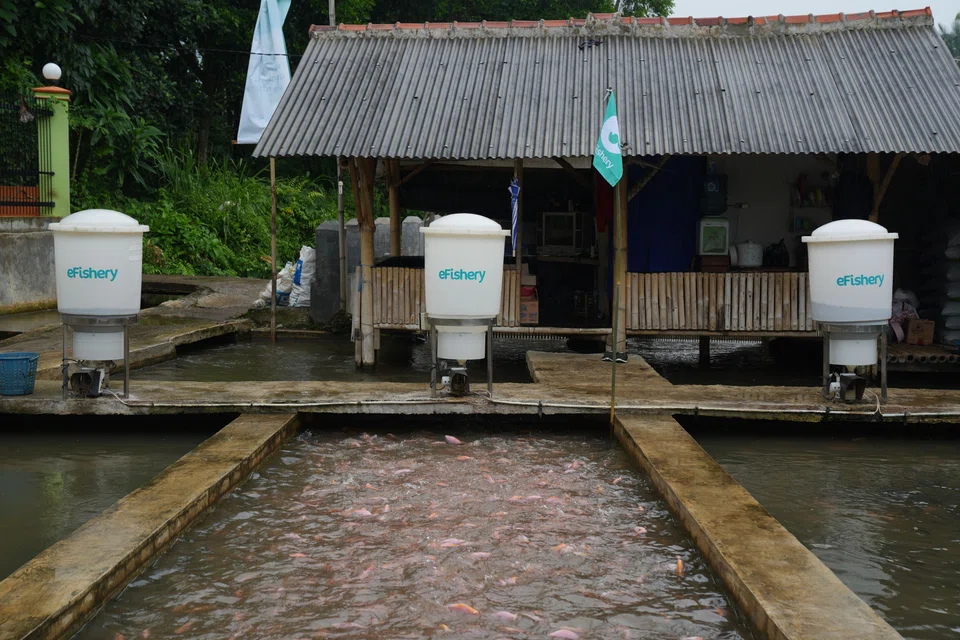
ONCE hailed as a visionary in Indonesia’s agritech scene, eFishery co-founder and ex-CEO Gibran Huzaifah now finds himself at the centre of a scandal that promises to go down as one of the most explosive in South-east Asia’s startup scene.
He was ousted from eFishery in December 2024, following an investigative audit that uncovered how the aquatech firm allegedly inflated revenue by US$600 million. Since then, it has laid off more than 90 per cent of its workforce, leaving its future hanging by a thread.
Huzaifah, whose rags-to-riches journey captivated many in the region when eFishery became South-east Asia’s only startup to achieve unicorn status in 2023, now finds himself back in Bandung – where it all began.
He deeply regrets that the fallout has left former eFishery employees facing uncertainty and struggling to find jobs, especially as Ramadan draws near. Fish farmers, too, were suddenly forced to halt their operations.
“I sincerely apologise to the employees and farmers who have been affected by a problem that should have remained between the founder and investors,” he said.
Speak now
In 2013, Huzaifah co-founded eFishery in Bandung, the city where he earned his bachelor’s degree.
While he was studying at the Bandung Institute of Technology, a professor encouraged him to explore catfish farming. This was how Huzaifah found out that feed management was a major challenge for farmers, leading him to develop a tech-powered fish feeder.
eFishery set out to revolutionise aquaculture by helping farmers boost production and scale efficiently. A powerhouse lineup of investors including Northstar Group, Temasek, SoftBank, Aqua Spark, and 42XFund bet big on the startup’s vision.
Over the years, eFishery has evolved beyond its flagship eFeeder, expanding into e-commerce and financial services tailored for fish farmers.
That’s why when DealStreetAsia broke the scandal, it sent shockwaves through South-east Asia’s startup community, which is still reeling from the tech winter.
Not only has eFishery dominated headlines in recent months, but Indonesia’s top business content creators have also dedicated YouTube videos to dissecting the alleged fraud at the company.
In January, GoTo Group CEO Patrick Walujo publicly called the situation at eFishery “embarrassing” and alleged systematic fraud within the company. Walujo is also the founder of Northstar Group, one of eFishery’s investors.
Huzaifah believes that the current narrative about eFishery is one-sided, prompting him to speak up.
He said that last year on Dec 13 – the day he was suspended – he was asked by one of the shareholders to sign an agreement that would bar him from speaking publicly or to the media. At the time, eFishery’s management had reportedly opted to handle the issue and do a probe internally.
FTI Consulting, which took over management of the startup on Feb 4, declined to comment. Tech in Asia has also reached out to eFishery.
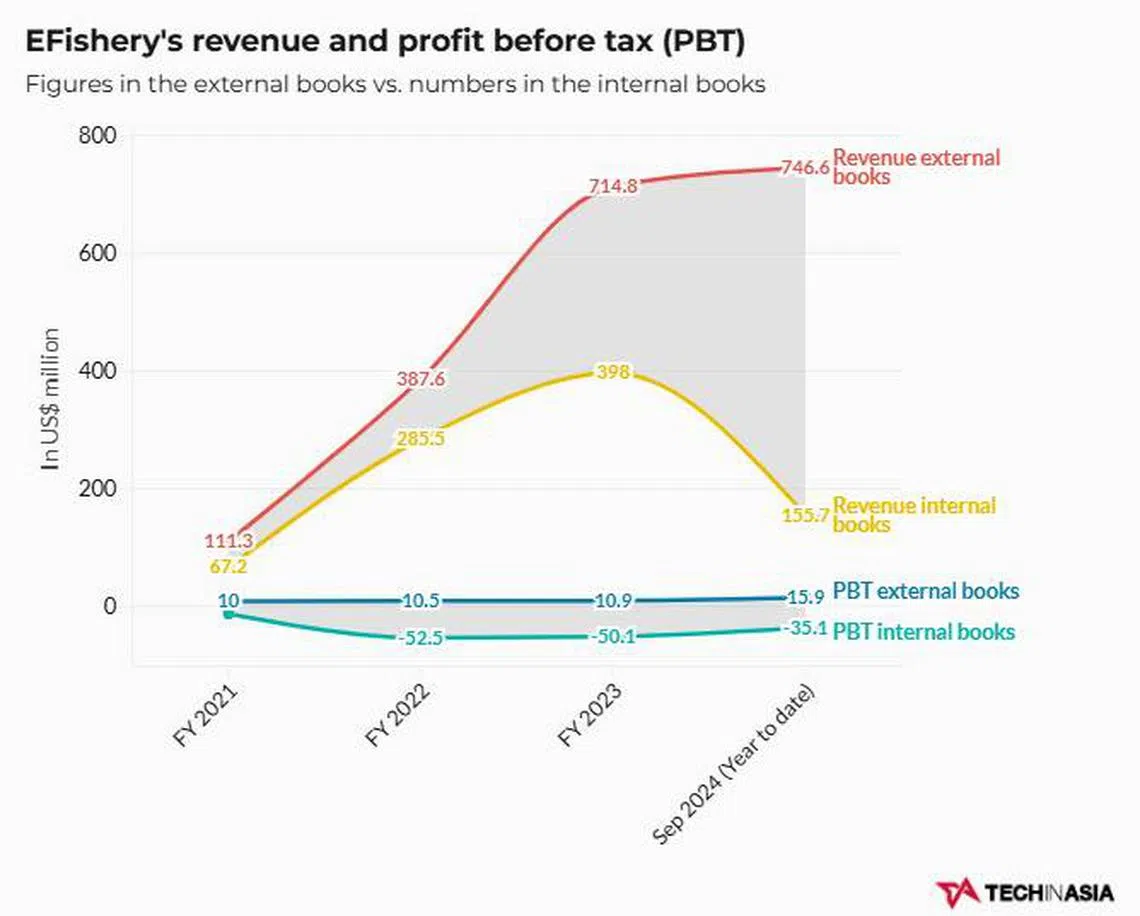
eFishery’s Singapore-headquartered holding firm and its lawyers hired SoftBank-backed FTI to conduct an investigation last December. Released in January, FTI’s draft audit report revealed that eFishery’s top management allegedly used “external books” for financials presented to stakeholders such as its board, shareholders, banks, and auditors.
The report also found that revenue was overstated by more than 75 per cent in the first nine months of 2024. Findings suggest that this revenue inflation had been going on for five years, dating back to 2018 when eFishery was raising its series A funding.
When asked by Tech in Asia, Huzaifah declined to comment on the audit’s findings, citing the ongoing investigation. While acknowledging discrepancies in eFishery’s two accounting books, he denied inflating the numbers for personal gain.
“If my intention was personal enrichment, I could have cashed out big during eFishery’s series D unicorn round. Many founders sold millions of dollars worth of shares at that stage, but I did not,” he adds.
Huzaifah emphasised that in his 11 years at eFishery, he sold shares only twice – each time was worth US$500,000. Beyond the share sales and his monthly salary, he said he has not taken any additional funds.
Tech in Asia has not been able to verify these transactions.
“All funds raised were used to help farmers, to build the [eFishery] ecosystem, not at all for my personal gain,” he contended.
FTI’s draft audit noted that in 2024, eFishery awarded US$1.5 million in performance bonuses for 2023 based on inflated financials. According to Huzaifah, the bonuses were given to all employees since the company had shown “real significant improvement” in 2023 compared to the previous year.
However, the audit also found that eFishery’s finance and corporate planning team received fundraising bonuses and interest income, but Huzaifah was not among the employees who received the money.
The ex-CEO also expressed regret over a shareholder’s statement on systematic fraud at eFishery, arguing that it unfairly tarnished most former employees who had no involvement in any wrongdoing.
Sudden downfall
Tech in Asia spoke with nearly a dozen ex-staff and longtime fish farmer partners of eFishery. None of them were aware of the alleged financial fraud involving Huzaifah and top management, nor did they anticipate the dramatic collapse of the once-celebrated aquatech unicorn.
The company axed 90 per cent of its workforce last Dec 13, and sources familiar with the matter say that number has now climbed to 98 per cent.
Former employees have also established a union as they await eFishery’s fate.
Despite the alleged fraud, many lament the fallout, believing eFishery had a genuine impact on farmers.
Mujahid, a catfish farmer in Tasikmalaya – a city about 270 kilometres away from Jakarta – has been part of the eFishery ecosystem for four years, relying on its trading services and financial platform, Kabayan. He started with just four ponds in 2021 and expanded his operation to nearly 200, producing two tonnes of catfish per day.
“But everything came to a sudden halt at the end of last year, and I suffered losses because eFishery stopped collecting the fish,” he said.
He had also met and spoken with Huzaifah on multiple occasions. “He always seemed nice, and eFishery’s services have been a great help to me,” Mujahid said.
Huzaifah was “always open to suggestions from the team”, said a former eFishery employee who worked closely with the CEO.
In his view, Huzaifah was a friendly and approachable leader who engaged with both employees and farmers. The co-founder frequently visited the field to observe eFishery’s progress firsthand, gaining a clear grasp of on-the-ground realities.
Another former staff who asked not to be named said the allegations came as a shock to those who had worked with Huzaifah. While the ex-CEO occasionally shared figures with the media that weren’t entirely precise, it was mostly minor rounding – nothing like the massive inflation now making headlines, according to the source.
One eFishery worker tells Tech in Asia that Huzaifah was quite accessible even to employees who were not his direct reports. The employee recalled one moment that stood out. Early on, eFishery had partnered with a major Indonesian F&B business to co-develop a shrimp farm franchise network.
During a visit to one of the farm locations, the owner of the F&B business “rode in a luxury car while his staff came in separate cars, which is often the case in Indonesia”, the source said. “But that was not the case with Gibran. He always rode together with us.”
Nevertheless, Huzaifah’s suspension and the raft of issues that followed have coloured the perception of some employees. While Huzaifah was welcomed at farewell parties for laid-off staff, there is general discontent that the fraud itself happened in the first place.
“We are still waiting for Gibran to apologise and clarify what happened to employees,” said the eFishery staff.
Can the mission continue?
It took over 10 years for eFishery to grow from scrappy startup to Indonesia’s most prominent agritech company, but it only took months for it to fall apart. With just 2 per cent of its workforce remaining, is there a light at the end of the tunnel for eFishery and Huzaifah?
FTI held a meeting on Feb 24 to assess eFishery’s next steps. According to Bloomberg, shareholders suggested winding down the business. The report also indicated that investors might recover only 10 per cent of their investments and that eFishery is operating more like a traditional business with minimal technology.
Regardless of the outcome, Huzaifah hopes that eFishery’s mission to uplift local fish farmers will live on.
He stressed how eFishery was built upon his dream of helping fish farmers so they could have a better future. “If you ask me now, 11 years ago, or 11 years from now, my answer will always be the same,” Huzaifah said.
“I just hope that even though eFishery’s reputation has ended like this, the mission and optimism behind it can still continue.” TECH IN ASIA
With additional reporting by Putra Muskita
TRENDING NOW

Once staunchly pro-China, Malaysian Chinese businesses are now distancing themselves from Beijing

Britain’s mansion tax shows the difficulty of targeting wealth
Three hats, one goal: How Ng Kian Swan runs sustainability at NUHS

COE review: The gap between luxury and mass-market cars isn’t the only one worth bridging

