



Electronics growth, tourism recovery put Asean on course for strong finish to 2024
The region charted resilient growth in the first half of the year on robust domestic, external demand and strong foreign investment inflows

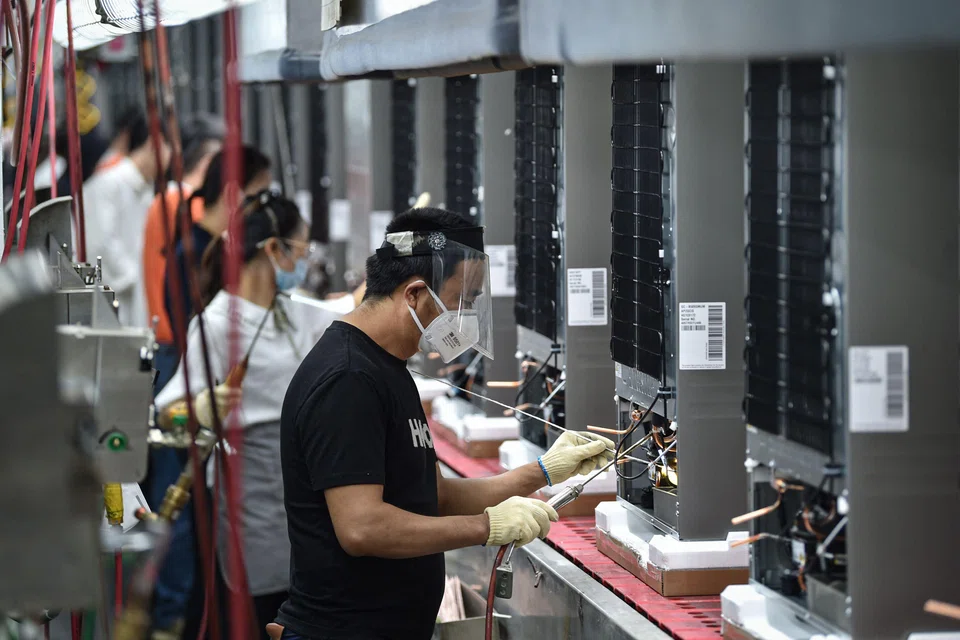
SOUTH-EAST Asia may be poised for a strong finish to the year, driven by a resurgence in the global electronics cycle and a robust recovery in tourism.
An upturn in the global electronics cycle is expected to buoy growth in Singapore, Vietnam, Malaysia and the Philippines while continued tourism recovery on the back of more liberal visa policies will likely lift many boats, particularly that of Thailand, Malaysia and Singapore.
New orders for consumer electronics globally have started to “accelerate very notably”, said HSBC’s chief Asia economist Frederic Neumann.
He, alongside other economists from the bank, remarked in a Q3 economics outlook report that this “suggests the broader tech cycle in Asia could lift, going beyond artificial intelligence (AI)-related hardware, and benefitting a wider array of producers and economies, notably in South-east Asia”.
The Jun 27 report cited Malaysia as an example, noting that despite the country being “a laggard in the electronics export recovery” due to its limited exposure to AI hardware, its decline in tech shipments looks to be easing.
In particular, the semiconductor industry is believed to be the new sandbox for several Asean economies, especially Malaysia, Singapore, Vietnam and the Philippines.
As the US-China trade war intensifies, these South-east Asian nations have stood out as attractive options for Chinese companies looking to bypass restrictions from the West. They are also competitive complements for non-Chinese firms adopting a China-plus-one strategy to diversify their supply chains.
In contrast, other Asean economies with lower exposure to electronics – such as Indonesia – are unlikely to reap the benefits of the upturn.
“The lion’s share of Indonesia’s exports are commodities, hence, the recovery in the global electronics demand will have a limited boost to exports,” noted OCBC’s Asean senior economist Lavanya Venkateswaran and economist Ahmad Enver in a recent report.
What is likely to drive growth in Indonesia in the second half of the year are an expansionary fiscal policy and resilient private consumption, said economists.
“Growth is likely to be higher in the post-election period, led by positive fiscal impulse, the realisation of FDI (foreign direct investment) inflows waiting on the sidelines for election-related uncertainties to end, and a recent rise in capacity utilisation and credit growth,” wrote HSBC’s chief economist for India and Indonesia Pranjul Bhandari and associate Priya Mehrishi.
“The latter, in particular, has been rising across the board, and may get a shot in the arm when Bank Indonesia embarks on monetary policy easing,” they added.
Economists broadly expect Indonesia to cut its benchmark interest rate – currently at 6.25 per cent and unchanged since April – after the US Federal Reserve does so in September as indicated by most forecasts.
Continued recovery in tourism
While Indonesia’s year-to-May tourist arrivals this year are only 83 per cent that of the pre-pandemic 2019 level, they are still an improvement from the same time period last year.
Other Asean economies fared better with tourism recovery, notably Thailand, Malaysia and Singapore – which sealed visa-free deals with China.
In particular, Thailand’s growth trajectory for international tourist arrivals looks to be most promising, with its visa waivers bolstered by the administration’s multiple incentives to woo foreign visitors.
This includes extensions on the opening hours of entertainment venues, clubs and karaoke bars in popular destinations and tax cuts on alcoholic beverages.
Meanwhile, Singapore’s services sector “remained more than resilient, thanks to a rapid pick-up in visitors”, wrote HSBC’s Asean economist Yun Liu and associate Madhurima Nag.
“Singapore’s growth is not limited to just trade recovery,” they added. “Despite being the last Asean country to introduce a visa-free scheme for Chinese tourists, Singapore reaped imminent benefits, now attracting Chinese visitors equivalent to 80 per cent of 2019 levels.”
An ongoing recovery in the tech-led global trade cycle and continued resilience in travel-related services are anticipated to boost growth of 2.4 per cent for this year, up from 1.1 per cent last year, noted the HSBC report.
Other economists were slightly less optimistic about visitor numbers.
Although UOB analysts project growth of 2.9 per cent for Singapore this year, they expect activities in tourism-related sectors to “moderate as tailwinds from the post-pandemic pent-up demand for these services ease”.
“Singapore’s competitiveness as a tourism destination could also be weighed down by structurally higher price levels vis-a-vis the regional Asean economies, in addition to the effects from the strong exchange rate-based monetary policy to anchor inflation,” said the Q3 global outlook report.
Dealmaking upswing
Across South-east Asia, equity capital markets volumes have been low for the past two years. But while last year was “pretty tough as a market overall, M&As (mergers and acquisitions) have really kept the ship afloat”, said Bank of America’s head of South-east Asia investment banking, Antonio Puno, at a media roundtable on Jul 24.
The bank believes M&A activity in South-east Asia will revert to mid-cycle levels in 2025, said its head of South-east Asia M&A John Lin.
“Ten to 15 years ago, in the Asia-Pacific region, China was the dominant story… Perhaps that’s shifted away a little bit now to spread out more with the rest of the countries in Asia-Pacific,” said Lin.
“Add a decade-and-a-half of the rapid development in the economies in South-east Asia, and now we are seeing them (receive) a lot more attention both inbound and outbound in terms of M&As.”






