


Asean Business logo
SPONSORED BYUOB logo

Energy giants’ exits deflate Vietnam’s offshore wind ambitions

The obstacles to fully realising the country’s potential for generating wind power are regulatory, economic, technical and even tied to security

Jamille Tran
Published Fri, Sep 6, 2024 · 05:00 AM
    • Offshore wind power is projected to account for 4 per cent of Vietnam’s energy mix by 2030, and up to 16 per cent by 2050.  
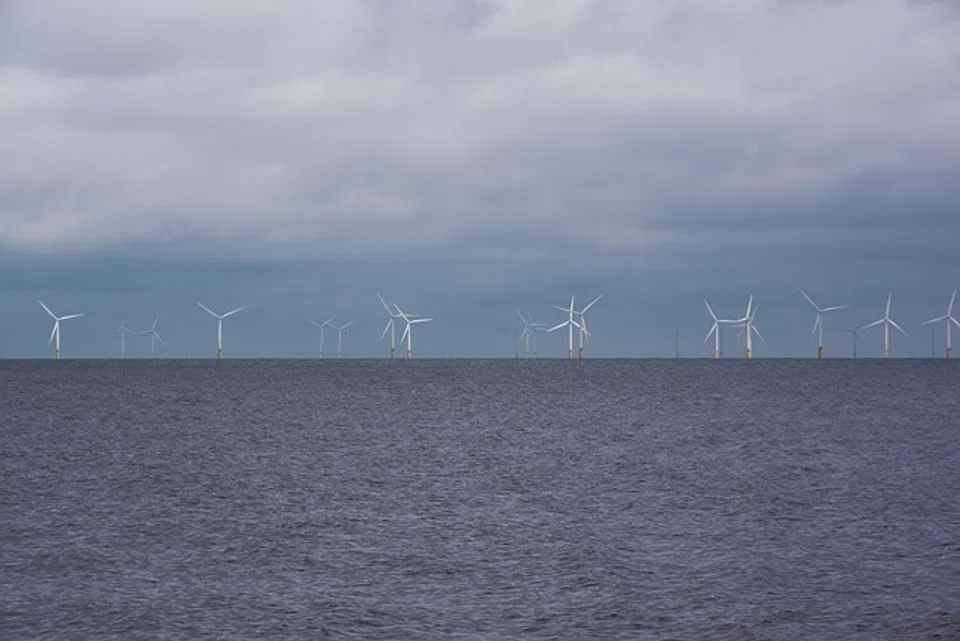
    • Offshore wind power is projected to account for 4 per cent of Vietnam’s energy mix by 2030, and up to 16 per cent by 2050.   PHOTO: PIXABAY

    [HO CHI MINH CITY] Despite its vast offshore wind potential, Vietnam’s unresolved regulatory, economic and security challenges are causing foreign investors to waver, as barriers to profitability stall progress in the infant market.

    Norwegian energy giant Equinor recently cancelled its offshore wind plans in Vietnam, citing “significant headwinds” in the sector, Reuters reported. 

    Last year, Denmark’s Orsted, the world’s largest offshore wind developer, abandoned plans for 5GW offshore wind projects off the coast of Vietnam’s Ninh Thuan province. It was reported in the media that the decision was triggered by uncertainty over the country’s policy framework and route to market.

    Tran Duc Cuong, business partner at CM Group International Technology, a Vietnam-based renewable-energy solutions company, said: “Vietnam has yet to develop a comprehensive legal framework for the offshore wind market.

    “And investors don’t want to leave their money immobilised in banks with lower interest rates. Money needs to move to make money,” he added. 

    Industry players attribute the recent exits to regulatory hurdles and uncertainties in Vietnam, which has yet to clarify key issues like pilot project mechanisms, marine spatial planning, national defence and security, renewable energy pricing, permitting processes, construction standards and grid infrastructure.

    The Global Wind Energy Council, referring to the gaps in Vietnam’s landscape, noted in a June report: “Transparency and efficiency are paramount for attracting investment and ensuring the long-term success of offshore wind projects.”

    No profit clarity, no go

    A European media outlet reported that Orsted’s chief executive officer Mads Nipper warned that the intense price competition in Vietnam’s renewable-energy market could hurt profitability and reduce the market’s attractiveness.

    Equinor’s investor relations officer, Nora Callander, reportedly said that the company maintains capital discipline and selectively pursues low-carbon projects that meet its current return criteria.

    Global offshore wind capacity surged to 75 GW in 2023 and can possibly hit 494 GW by 2030, IRENA’s World Energy Transitions Outlook estimated.

    Technology improvements have brought down the installed capital and operating costs for such projects significantly over the past decade. 

    The global levelised cost of electricity (LCOE) for offshore wind fell from US$0.218 in 2009 to US$0.074 per kWh in the first half of 2023, reported BloombergNEF. The group expects the LCOE to drop by more than 10 per cent by 2025 and by a third by 2035, with China’s rate already as low as US$0.048/kWh.

    A World Bank report from last September found that offshore wind projects in developing countries, supported by blended finance – grants, concessional climate finance and private debt – can compete with the long-term costs of thermal generation.

    Winds of change

    However, over the past two years, several offshore wind developers have suspended projects on the back of rising financing and material costs, driven up by higher interest rates, inflation and supply-chain challenges.

    Such a shake-up in the market has brought the economic promises of offshore wind under question.

    Orsted has incurred billions in impairment losses from cancelled offshore wind projects in the US; Equinor’s renewables division reported a net loss of US$220 million in the first quarter, with the loss a third deeper than it was the year before.

    It should also be noted that Vietnam has some of the lowest electricity tariffs in Asean, posing challenges to the commercial viability of offshore wind projects in the country.

    The country’s retail electricity prices for consumers are now at between 7.8 and 10 cents per kilowatt-hour (kWh). In comparison, the cost of producing offshore wind energy in Vietnam was estimated in 2021 to be 17.4 cents, though it is expected to go down to 16 cents this year and to 8.3 cents by 2030, said the World Bank.

    This makes it challenging to match the production costs of offshore wind with the prices consumers are used to paying.

    John Rockhold, president of Pacific Rim Investment & Management, asked: “Can Vietnam afford billion-dollar losses or the high price? I think the Vietnamese government has made a very wise choice of not jumping (immediately) on offshore wind.”

    Rockhold is also head of the Power and Energy Working Group in the Vietnam Business Forum, a consortium that gathers representatives from 17 foreign chambers of commerce in Vietnam.

    Overreaching

    To phase out coal and achieve net-zero carbon emissions by mid-century, Vietnam aims to develop 6 GW of offshore wind by 2030, contributing 4 per cent to the country’s energy mix by that year and up to 16 per cent by 2050.

    The country’s target represents just a fraction of the World Bank survey finding in 2021 – that Vietnam has potential to generate 600 GW of energy from offshore winds, courtesy of the gusty winds along its long coastline.

    Given that offshore wind projects typically take six to eight years to go from concept to commercial operation, many are asking whether the country can achieve even a portion of its target by 2030.

    The country has yet to have commercial capacity of offshore wind power today. Most projects developed so far are intertidal ones, which are sited close to the shore. 

    Policymakers are lobbying for state-owned majors to lead Vietnam’s first offshore-wind pilot project, though some have acknowledged that they lack the necessary experience and capabilities.

    Daniel Hamer, director at Vietnam Energy Consulting, said: “Accessing international expertise and international finance is critical to the successful development of the offshore sector in Vietnam, which plays a significant role in underpinning Vietnam’s energy security.”

    Vietnam’s trade ministry has ruled out considering private or foreign investors for its pilot offshore wind projects on the back of unresolved legal and security concerns. The industry is deemed politically sensitive, as projects could be rolled out in contested waters between Vietnam and China in the South China Sea.

    The only offshore-wind project approved for examination and preliminary feasibility assessment in Vietnam is a partnership between Singapore’s Sembcorp Utilities and PetroVietnam Technical Services Corporation, a subsidiary of state-owned Vietnam Oil and Gas Group.

    Under this tie-up, Singapore will import 1.2 GW of primarily offshore wind-generated electricity from Vietnam, with the power being sent through new subsea cables.

    “Vietnam is not standing still. (It) will have a good pilot in place, and learn to integrate (offshore wind) once the price comes down,” said Rockhold.



