



Even with chicken export ban, Malaysia’s F&B players struggle with shortage and higher prices

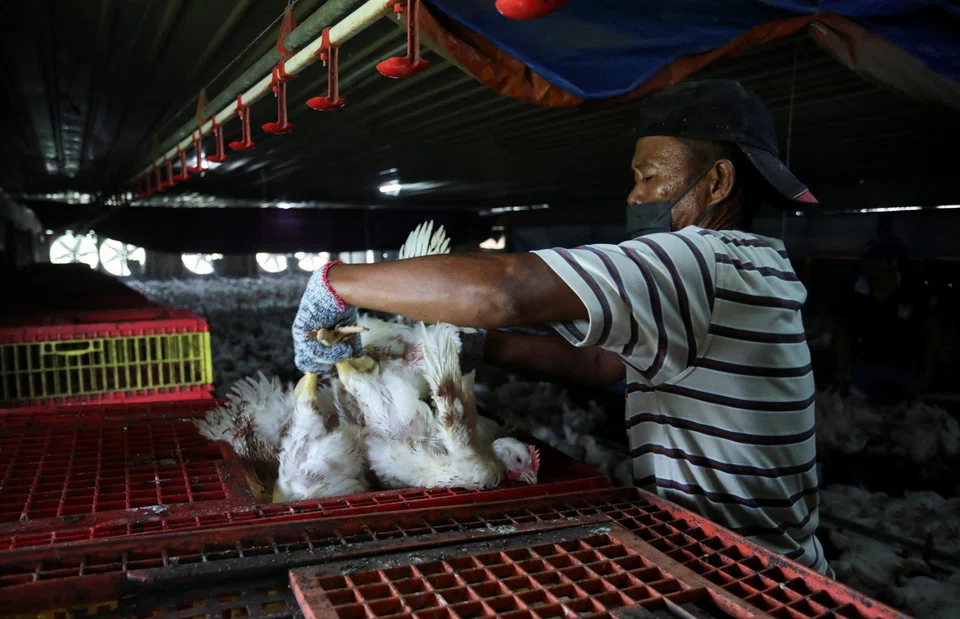
TEN days after Malaysia halted all exports of chicken, many food and beverage (F&B) operators and wholesalers in the country say they have yet to see a greater supply available to them.
Prices are far from stabilising too, with some players even spending more to source for kampung chicken from smaller farms as a stop-gap measure to ensure they have enough stock to keep their operations going.
Desmond Chew, the owner of a chicken rice restaurant in Kuala Lumpur that sells kampung chicken, told The Business Times that he has already lost count of the number of times his supplier has increased the price of the birds this year.
“I just received another message of a price hike from the supplier - it will go up slightly to RM40 (S$12.50) per chicken from next week. Last year, the same stock cost about RM20,” he said. He explained that the increase was largely due to surging demand for the more premium kampung chicken, as there is an insufficient stock of the cheaper broiler chickens.
Chew recently had to increase the price of a plate of chicken rice by 50 sen to RM9.30 - a move he said resulted in his shop selling around 30 chickens a day, down from the usual 50 to 60 chickens before the export ban kicked in.
On Jun 1, Malaysia halted the export of up to 3.6 million chickens per month in order to deal with domestic supply and pricing issues. The ceiling price of broiler chickens was also extended to the end of June.
Currently, broiler chickens are priced at RM8.90 per kg for standard whole chickens, and RM9.90 for whole super chickens. A week prior when first announcing the ban, Prime Minister Ismail Sabri Yaakob decalred that “the government’s priority is our own people”.
Vincent Lua, the chief executive of South Korean restaurant chain MyeongDong Topokki, said he has resorted to sourcing for chickens from more suppliers, which in turn has driven up his costs. He noted that his costs have gone up by almost 50 per cent since January, due to the soaring price of the poultry. Another restaurant owner in Kuala Lumpur said he had no choice but to buy kampung chicken from his local wet market as an alternative, in case his usual supplier ran out.
Despite the controlled ceiling price, a hawker who sells chicken chop at a local coffee shop in Selangor said what he now pays for broiler chickens has gone up by to RM17 per kg today, from RM12 a few months ago.
“Unlike others who purchase whole chickens, I only buy the chicken leg parts. My customers also complain that the parts are smaller, and I believe it’s because the farmers are selling underweight chickens to suppliers,” he said.
It takes about 6 to 8 weeks for a broiler chicken to grow to the standard size of about 1.8 kg, depending on the weather conditions. As a result, many farmers have started to sell underweight birds to meet demand from their customers.
A wholesaler in Johor Bahru noted that a labour shortage at poultry production companies across the country has worsened the situation, with some factories shutting down for several days at a time when they don’t have enough manpower.
Johor’s daily broiler chicken production is around 3 million birds, he said, with bad weather and a manpower crunch causing production levels to fall by 40 per cent in recent weeks.
What’s more, the prices of grain and soy beans have increased in Malaysia by 13 per cent and 11 per cent since January, resulting in the escalating cost of chicken feed and a bigger squeeze on the profit margins of farmers.
“Some farmers choose to breed less as the more they produce, the more they need to pay. Although the government is providing subsidies to poultry farmers, it takes a long process to apply for these subsidies and many people have just given up” said the Johor wholesaler, who requested not to be named.
The subsidy programme, worth RM720 million, was announced in April but it will cease from July 1 due to a poor response from breeders. The government has since said that it will instead channel the funds from the subsidy directly to low-income groups.
TRENDING NOW
Far East Organization’s The Serra Residences sells less than a quarter of units released at average S$3,460 psf

Once staunchly pro-China, Malaysian Chinese businesses are now distancing themselves from Beijing

Ageing in Asia: Huge potential for the consumer economy

DBS, OCBC, UOB face rate hike reality check

