



Eyes on Johor as it seeks to be ‘Malaysia’s Shenzhen’
Tan Ai Leng
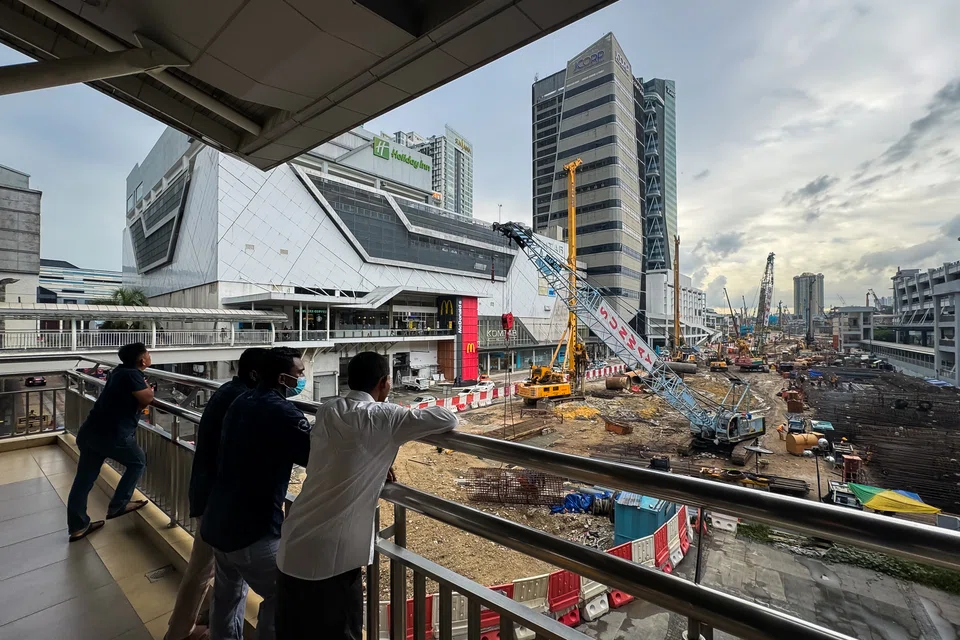
[KUALA LUMPUR] Johor, the southernmost state in Malaysia, is finding itself in the regional spotlight these days as it builds momentum towards its aim of achieving the type of success that Shenzhen has enjoyed.
For some years now, Johor has harboured ambitions of being able to flourish in the same vein as the Chinese city, in what some commentators have labelled as the “Shenzhentrification” of Johor.
Johor chief minister Onn Hafiz Ghazi said last September that this vision could be realised with the establishment of the new Johor-Singapore special economic zone (SEZ).
He noted how Shenzhen, in the four decades after it became an SEZ, had transformed from a city of just 300,000 people to a modern high-tech metropolis with a population of more than 17 million.
Singapore and Malaysia are set to sign a memorandum of understanding on Thursday (Jan 11) for the Johor-Singapore SEZ.
At a leaders’ retreat last October, Prime Minister Lee Hsien Loong said the SEZ should improve cross-border goods flows, which may mean special tax arrangements and bonded warehouses; as well as the flow of people who work on both sides, with SEZ investor companies also “able to get personnel they need”.
It was reported last week that Johor’s state government has proposed that its business hub Iskandar Malaysia be designated as the site of the Johor-Singapore SEZ.
Analysts say that key to Johor’s longer-term success will be the extent to which it can attract more investments. Last August, Malaysia’s Prime Minister Anwar Ibrahim said the government would create a special financial zone in the Forest City area in Iskandar Puteri to boost investment and economic growth in Johor.
He announced incentives such as a lower income tax rate of 15 per cent for skilled workers and the provision of multiple-entry visas.
Wong Chin Yoong, an economics professor of the Universiti Tunku Abdul Rahman Malaysia, said that strong political will and having sustainable policies would be the pull factors to attract investors to Johor.
As many high-growth and high-value investments take at least 10 years to realise, he stressed the need for policy certainty that will assure investors that their plans would not be affected, such as by a change of government in Malaysia.
Wong noted that the establishment of the SEZ should be seen as a joint bilateral effort to collaborate and to attract investment to the region.
“(Malaysia has) always viewed our Asean peers as competitors, but together we can be stronger. Instead of competing with Singapore, Johor can play a complementary role to Singapore and (provide things) such as production facilities and workers,” he said.
JB’s transformation
Loong Kok Wen, the head of the regional property sector at RHB Investment Bank, visited Johor Bahru twice in 2023 – 10 years after her last trip to the city – and was impressed by the many developments and business activities there.
“Johor Bahru has evolved from a town centre into a city. You can feel the momentum on the ground, the way people are spending, and there are new property launches targeting the middle and high-income group,” she said.
Loong attributed the robust growth to the strong Singapore dollar and the upcoming Johor Bahru-Singapore Rapid Transit System (RTS) Link.
The latter – a 4km rail shuttle service that has an estimated development cost of RM10 billion (S$2.9 billion) – is under construction and is expected to be operational by the end of 2026. It is expected to ferry as many as 10,000 passengers per hour in each direction when it begins service in end-2026.
The close proximity to Singapore remains Johor’s biggest advantage over other cities in the region, said Loong. This strategic location has attracted many multinational companies to Malaysia’s southern tip, including tech giants Microsoft and Nvidia, which have announced plans to build data centres in Johor.
“This has spurred demand for industrial land in Johor, especially in established industrial areas such as Sedenak and Kulai,” she said. She noted that asking prices for industrial plots increased to more than RM120 per square feet in 2023, from RM80 previously.
Rising property prices and rentals in Singapore have also resulted in more Malaysians who work in Singapore to relocate to Johor Bahru in recent years, usually at the city centre or in housing areas nearer to the Second Link in Tuas.
Johor Bahru Chinese Chamber of Commerce and Industry president Low Kueck Shin said the Singapore dollar – which is worth about RM3.50 – makes it attractive for workers in Singapore to spend in Johor or other states in Malaysia.
The ringgit depreciated by nearly 6 per cent against the Singdollar last year. At its lowest, the ringgit traded at RM3.53 on Dec 13, 2023.
Even with the RTS and SEZ, Low felt that more needs to be done to ensure that Johor’s economy can continue to grow and be able to take advantage of the proximity to Singapore.
“Nurturing and retaining talent is one of the keys to continue attracting high value investments to Johor,” he said.
Loong noted that the potentially larger catalyst for Johor would be a revival of the terminated Kuala Lumpur-Singapore high speed rail (HSR). The project, should it ever be realised, would fuel the construction sector and other related industries in the short to medium term, as well as generating more economic benefits for both countries, he said.
Last November, Malaysia’s next king, Johor ruler Sultan Ibrahim Iskandar was quoted in The Straits Times as saying that he wants to revive the HSR project, which was terminated in 2021. He wants to realign the HSR to run through Forest City, a development by Chinese real estate developer Country Garden.
The revival of the HSR has been discussed on several occasions since Anwar took office in November 2022. But observers noted that as much as the government is keen to do so, funding the expensive construction costs will be a big issue.
Malaysia’s debt and liabilities has reached RM1.5 trillion, which is about 82 per cent of total gross domestic product. The country’s Transport Minister Anthony Loke had previously said that the HSR’s revival was possible, but it could only work if it is based on private sector financing.
“With the HSR, it will be a game changer to the mobility of goods and people as it’s no longer limited to Johor Bahru and Singapore, but (the connectivity) between other states in Peninsula Malaysia and Singapore,” said RHB’s Loong.
TRENDING NOW

LTA proposes combining car COE categories, adding rebate-surcharge system
StarHub to acquire MyRepublic’s mobile business amid ongoing telco consolidation

DBS, OCBC, UOB rout lops billions off STI as inflation, rate concerns spook investors

Grab CEO’s wife Chloe Tong on life with Anthony Tan and finding her purpose

