



Failed reform vote raises questions over Malaysia’s coalition discipline
Analysts say this raises execution risks for the administration’s agenda
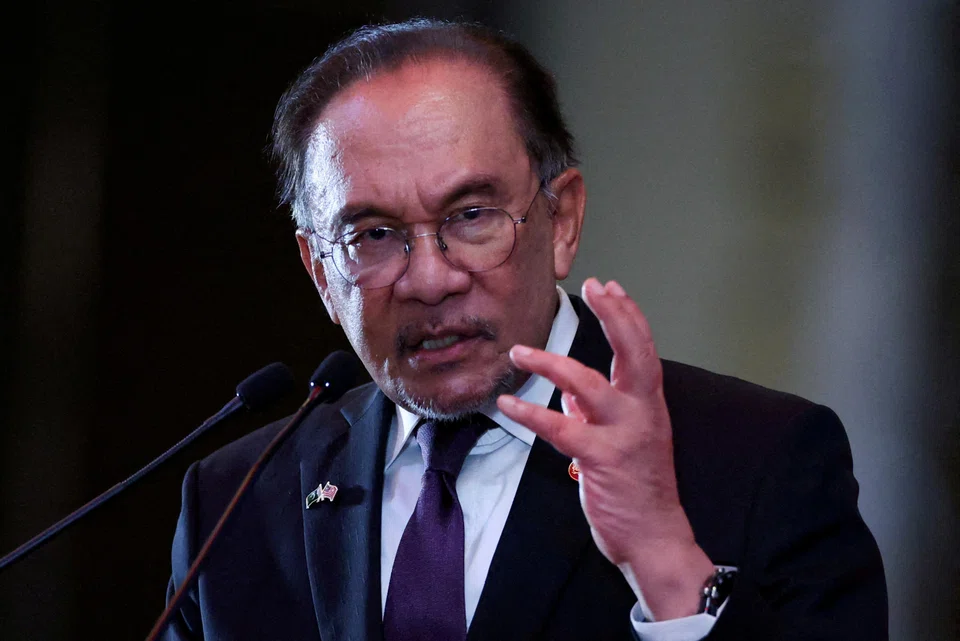
[KUALA LUMPUR] Malaysia’s unity government is scrambling to shore up coalition discipline after a constitutional reform vote to limit the prime minister to two terms fell short in parliament this week, a setback analysts say raises execution risks for the administration’s reform agenda.
Communications Minister Fahmi Fadzil said on Wednesday (Mar 4) that the government will re-table the Bill in June, even as it seeks explanations for the absence of government-aligned MPs during Monday’s vote.
The Bill failed by two votes – securing 146 of the 148 needed – a result analysts said underscores “execution risk” around reforms and policy follow-through.
The vote came a day after Malaysian Prime Minister Anwar Ibrahim alleged in parliament that a suspect under Malaysian Anti-Corruption Commission investigation had hired an international public relations firm to mount a campaign against the government.
Dr Geoffrey Williams, an economist based in Kuala Lumpur, said: “Markets are more concerned about shifts in the main political coalitions than about stories of conspiracy to topple the government.”
He added that the failed constitutional vote, rather than the conspiracy allegations, was the more consequential signal for investors.
“The failure to pass a vote supported by the PM is part of a growing narrative of possible division in the ruling coalition. Added to all the other twists and turns, it signals political risk,” said the founder and director of Williams Business Consultancy.
No immediate effects
Malaysia’s markets showed little sign of immediate stress. The ringgit firmed to 3.9450 against the US dollar on Wednesday, supported by continued foreign inflows.
The near-term domestic outlook also remains broadly supportive. RHB Investment Bank said in a recent note that it maintained its 2026 gross domestic product growth forecast at 4.7 per cent, while Hong Leong Investment Bank Research expects the government to keep its fiscal deficit target at 3.5 per cent of GDP.
The external environment, however, has grown more complex.
Escalating Middle East tensions have pushed oil prices higher, raising global inflation risks. For Malaysia, the impact is mixed. As a net energy exporter, higher crude prices could lift government revenues, but analysts warn the gains may be offset by a heavier RON95 subsidy burden and rising logistics costs.
Investors will also be watching Bank Negara Malaysia, which is widely expected to keep its policy rate unchanged at 2.75 per cent at its meeting on Thursday.
Investors’ concerns are “manageable”
“Governments can and have changed overnight in Malaysia for obscure reasons and (after) personal realignment among MPs. This is something investors should be taking into account. Despite all this, I expect Anwar to complete his term and lead his coalition into the next general election,” said Dr Williams.
Dr Jayant Menon, senior fellow at Iseas-Yusof Ishak Institute, noted: “The negative impact on confidence is through an indirect signalling that cohesion among parties in the ruling coalition is waning. Investors may also see ‘reform fatigue’ in this outcome, which will not bode well for long-term confidence in the economic programme of this government.”
Professor of economics Yeah Kim Leng, director of the economic studies programme at Sunway University’s Jeffrey Cheah Institute on Southeast Asia, said: “While investors may be spooked initially, the legislative slippage is not as dire as headlined given broad cross-party consensus to pass the amendment and the government’s commitment to re-table it in June.”
The failure, he added, was “known, identifiable and correctable” – making investors’ concerns “manageable”.
Dr Yong Meng Hong, professor and vice-president at LSi Business School in Cambodia, pointed out that investors had already largely priced in Malaysia’s political uncertainty.
“In the Malaysian political context, the so-called political instability is a storm in a teacup,” he said, adding that the more substantive concern was the possibility of a Perikatan Nasional government introducing conservative and restrictive investment policies. “That’s the fear among investors.”
The country has experienced abrupt political shifts before. The Sheraton Move in February 2020 saw the then Pakatan Harapan government collapse after defections rather than an election, highlighting how quickly parliamentary arithmetic can change.
TRENDING NOW

Inside Jensen Huang’s last hours as Nvidia CEO

Higher rates, weaker spending: Is the Philippines entering stagflation?

‘I’ll be buying more’: Singapore investors pour into Nvidia shares on Jensen Huang’s exit

Demand, tech capabilities position Apac and AI as Skyscanner’s next growth frontiers: CEO Bryan Batista

