FBM KLCI to expand to 50 stocks as Malaysia cuts reliance on banking overweights
This raises main market coverage to 70% while boosting growth sectors such as tech, energy and Reits

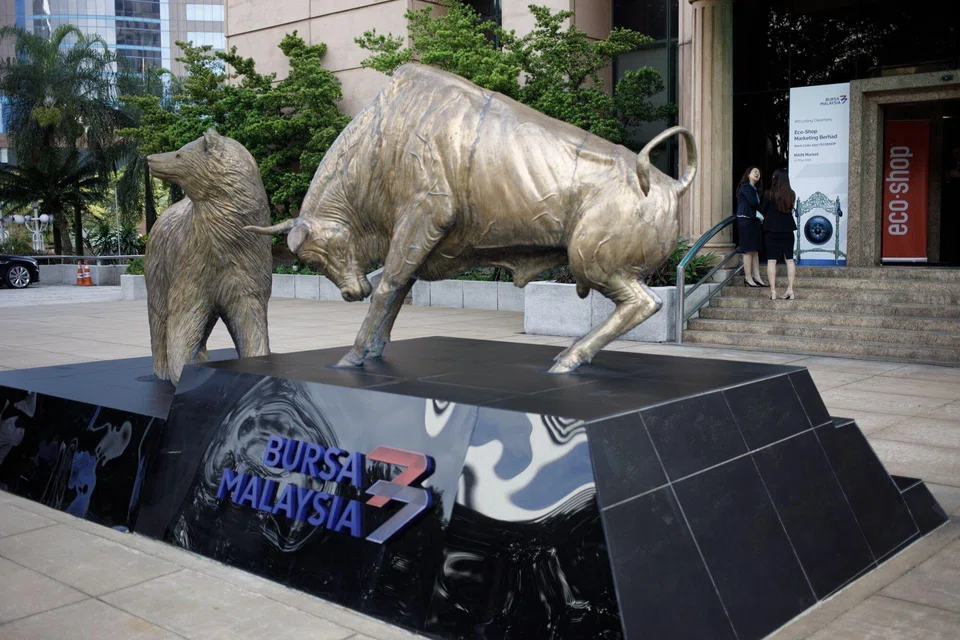
[KUALA LUMPUR] Malaysia is broadening its benchmark FTSE Bursa Malaysia Kuala Lumpur Composite Index (FBM KLCI) for the first time in 17 years, adding technology, energy and real estate investment trusts (Reits) into the index.
This is to diversify its stock benchmark beyond traditional heavyweights such as banks.
The FBM KLCI will expand to 50 stocks from 30 under changes announced by Bursa Malaysia and FTSE Russell on Thursday (Aug 20), following a public consultation earlier this year.
The overhaul is the first change to the benchmark’s methodology since July 2009, when it was cut from 100 constituents to 30.
The broader index will cover about 70 per cent of Bursa Malaysia’s main market capitalisation, compared with around 60 per cent currently, based on simulations using end-June data. Technology, energy and Reits would also gain representation for the first time.
The FBM KLCI expansion rolls out in two phases, with 20 new constituents entering at 50 per cent weight on Dec 21, 2026, and reaching 100 per cent weight on Jun 21, 2027. Concurrently, the FBM70 will downsize from 70 to 50 stocks.
The changes could significantly alter the composition of a benchmark that analysts say has become heavily tilted towards financial stocks.
Prem Jearajasingam, head of research at CGS International, said the expansion should improve representation while diluting the concentration of individual stocks and heavyweight sectors.
Citing an Aug 20 presentation by FTSE Russell and Bursa Malaysia, he said financial services’ weighting is projected to decline from 42.7 per cent currently to 39.4 per cent in the first phase, before falling further to 36.6 per cent by June 2027.
Technology, by contrast, would rise from 0 per cent to 1.9 per cent in the first phase and eventually to 3.4 per cent.
The grip of top stocks will loosen. The largest constituent’s weight will fall from 13.2 per cent to 12.1 per cent in the first phase, and reach 11.1 per cent in the second phase.
Meanwhile, the top five stocks – which currently command half the KLCI – will see their combined weight shrink to 42.1 per cent.
Apex Securities analyst Nick Foo said the concentration is particularly apparent when the KLCI is compared with the broader FBM Emas – an index covering all eligible main market companies.
Banks account for 43.1 per cent of the KLCI against 31.1 per cent of the FBM Emas, while utilities make up 16.4 per cent compared with 12.2 per cent. Technology has zero weight in the KLCI versus 3.2 per cent in the broader index.
“We expect technology and construction to be among the key sector beneficiaries, while the increased breadth of the index should also improve the visibility of selected large-cap names outside the traditional banking-heavy benchmark,” Foo said in a report on Friday.
Among potential beneficiaries are companies currently outside the bellwether index.
Final list out on Dec 3
CGS International identified 20 large FBM100 stocks that could potentially join the expanded KLCI, including leisure and hospitality groups Genting and Genting Malaysia, technology players ViTrox Corp and Inari Amertron, and construction and property counters Sime Darby Property, IJM Corp and Sunway Construction.
The actual entrants are not yet determined. The 20 additions will be selected using data as at Nov 23, with the final list scheduled to be announced on Dec 3.
Peter Kong, head of research at Kenanga Investment Bank, said a 50-stock benchmark would provide a slightly better representation of the economy.
“A 50-stock bellwether benchmark will better showcase industrials, property and tech sectors at the expense of financials and utilities,” he said, adding that potential beneficiaries would still depend on the November cut-off.
Banks, utilities to face dilution
While banks and utilities will face some weight dilution from the expansion, Kong noted that large-cap stocks benefit from the decision not to proceed with a proposed 10 per cent cap on individual constituent weights.
That removes an additional potential rebalancing impact for stocks that would have exceeded the cap, chiefly Maybank, he said.
The expansion itself will be staggered across two index reviews. Bursa Malaysia and FTSE Russell said the approach is intended to avoid concentrated trading flows, minimise market disruption and make it easier for investors to rebalance portfolios.
The two-stage transition could consequently lift trading activity around the review periods as institutional and index-linked investors adjust their holdings, with Foo saying Bursa Malaysia could benefit from higher average daily trading value.
Early buying risks front-running
But he cautioned against treating likely KLCI entrants as straightforward buying opportunities.
“Investors could front-run prospective additions ahead of implementation, while final weights may differ depending on free float, market capitalisation and closing prices nearer the review,” he added.
Apex therefore views the changes primarily as index-flow events rather than fundamental shifts, Foo said, with company fundamentals remaining the primary consideration and index inclusion a secondary catalyst. The brokerage maintained its year-end KLCI target of 1,770.
The overhaul will also reshape the rest of the large and mid-cap index universe. The FBM70 will shrink to 50 stocks and be renamed the FTSE Bursa Malaysia Mid Cap Index from Dec 21, while the FBM100 will remain at 100 constituents.
Bursa Malaysia CEO Fad’l Mohamed said the changes reflect an equity market in which growth sectors have gained scale alongside established industries, allowing the flagship benchmark to capture a broader range of Malaysian companies as the market evolves.
TRENDING NOW
Grab CEO’s wife Chloe Tong on life with Anthony Tan and finding her purpose
Hwa Seng Builder, two China companies win S$1.2 billion Tuas Road Viaduct phase two contracts
Deal between tycoon friends sparks scrutiny of Philippine power sector
Canada is upping oil flows to Asia, but South-east Asia’s refineries aren’t ready to handle them yet