FDI flows to Asean double in past decade on region’s growth potential, supply chain diversification trends

FOREIGN direct investment (FDI) flows into Asean have doubled in the past decade, with Singapore being the leading destination in the region.
This growth is expected to continue in the near term as the region’s consumer markets grow in size and affluence and businesses look towards diversification amid geopolitical fragmentation, according to observers.
Bank of America (BOA) economists Faiz Nagutha and Ang Kai Wei estimate that FDI flows to Asean grew to more than S$200 billion in 2022 – from S$104 billion in 2010 – and account for 11 to 12 per cent of global FDI, compared to 4 to 5 per cent a decade ago.
A similar uptrend has been observed in net direct investments, which points to a real acceleration, rather than distortions from “in-transit” flows through Singapore into the rest of Asean, said the economists in a report.
While the FDI drivers vary across the region, observers to whom The Business Times spoke cited supply chain diversification amid geopolitical tensions, as well as a strong post-Covid rebound in manufacturing as reasons for the accelerated growth, particularly after the pandemic.
“FDI inflows into China and FDI from China itself are looking for a new home for risk diversification, and Asean is one of the preferred destinations along with India”, said Economist Intelligence Unit (EIU) senior analyst Syetarn Hansakul.
She added that Asean has an edge over India due to its regional trade integration through agreements such as the Asean Free Trade Area and the Regional Comprehensive Economic Partnership.
Investors are also interested in the potential of Asean as a single market, given that the 10-member bloc has a combined population of over 600 million with rising incomes.
“(Asean) is still significantly smaller than China’s and India’s domestic market size, but (it is) certainly not small,” said Hansakul.
With its export-centric and cost-effective manufacturing capabilities, Asean is positioned to continue benefiting from the diversification trend, said Nithin Chandra, managing partner for South-east Asia at Kearney.
But he reckons that the region cannot fully replace China’s capacity in the medium-term, due to the latter’s depth of supply chain expertise and manufacturing ecosystem.
Hansakul, however, was more optimistic, with EIU expecting FDI inflows into Asean to exceed those into China by 2025.
Stephen Bates, the head of transaction services for KPMG in Singapore, believes Asean will continue to be an attractive destination for FDI, given the region’s growth potential. The Asian Development Bank has forecast Asean’s gross domestic product to expand by 4.7 per cent in 2023, from 5.2 per cent last year.
What investments are countries attracting?
The industries which attract the most FDI into the Asean-6 markets – Indonesia, Malaysia, Philippines, Singapore, Thailand and Vietnam – are finance and insurance; manufacturing; wholesale and retail trade; real estate; and information and communications, said Bates. These industries accounted for over 80 per cent of the total FDI to the region last year.
More broadly, different Asean countries have their own attractions, and each country’s ability to attract FDIs are usually centred around a few factors, such as institutional strength, infrastructure capability of workforce and government incentives, as well as cost competitiveness, said EIU’s Hansakul.
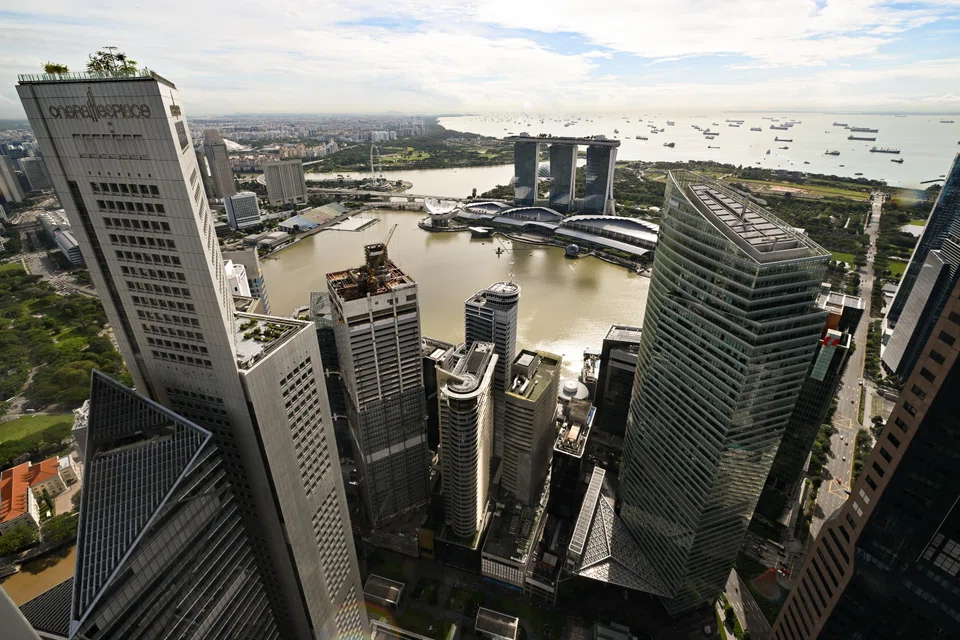
Singapore continues to be the leading location in the region for attracting FDI, given its status as both a business and financial hub. The city-state attracted more FDI than any other country in Asean in the first six months of 2022, surpassing even China, noted Bates.
The key beneficiary is the finance and insurance sector, which accounts for the largest share of the country’s inward direct investment flow, said Hansakul. These investments come mainly from the US and Japan.
Manufacturing – particularly electronics and biomedical – has also seen an uptick in FDI flows, from businesses looking to expand production capacity as well as research and development activities, he added. The digital economy, information and media sectors have also seen strong FDI interest.
For Malaysia, investments have gone mostly to its electronics industry, which accounted for 47 per cent of investment approvals between 2020 and 2022, said BOA’s Nagutha and Ang.
In particular, the country has attracted strong semiconductor investments from US and European companies.
Aside from this, the country’s electrical, mining and chemicals sectors are also seeing substantial flows, said Hansakul.
Vietnam has also attracted strong manufacturing investments, being the biggest beneficiary from recent supply chain shifts and diversification trends, said observers.
It has captured the relocation of labour-intensive sectors due to its cost advantages and existing manufacturing ecosystem, said Kearny’s Chandra.
“Large technology original equipment manufacturers (OEMs) have been shifting new investments from China to Vietnam,” he said, citing tech giants Apple and Samsung’s expansion into Vietnam for some of its production lines as examples.
Meanwhile, Indonesia has become a big beneficiary of commodity downstreaming and electric-vehicle related investments, particularly from North Asia.
BOA’s Nagutha and Ang noted that the share of FDI from Japan, South Korea and Taiwan to Indonesia between 2020 and 2022 – at 25 per cent – grew nearly four times from the share in 2011 to 2016.
The share of FDI from China to Indonesia has also jumped to 19 per cent over the same period, also owing to investments related to electric vehicles (EVs), as well as smelter plants to process metal ores into higher value products, added the analysts.
Chandra notes that higher levels of FDI in nickel mining can be expected as Indonesia aims to be a global EV manufacturing hub, with nickel emerging as an important raw material for EV batteries and Indonesia having the world’s largest reserves of nickel.
Thailand sees continued investments in manufacturing, driven by the country’s low-cost factors and strong production capabilities across industries, said Chandra. The government is also planning to develop Thailand into an EV production hub in Asean, with production expected to grow by 37 per cent in terms of units produced between 2001 and 2026.
The Philippines has attracted investments in various sectors, including information and communications, manufacturing, finance, as well as real estate. In particular, investments in ICT contributed to almost half of the country’s FDI inflows in 2022, noted Chandra.
TRENDING NOW
Genting Singapore trails MBS, but helps anchor Malaysian parent group’s finances
He built the Vingroup empire. Now South-east Asia’s richest man is handing some key roles to his sons
CDL to invest S$5 billion, target S$6 billion divestments under refreshed strategy
Stocks to watch: CDL, Centurion, Oiltek, Geo Energy Resources