Fierce competition, narrow offerings stymie Malaysia’s digibank sector
Of the five digital banks granted licences, only three have begun operations; the other two have yet to launch their services

[KUALA LUMPUR] Digital banks, once hailed as the next big thing in Malaysia’s financial landscape, are facing an uphill battle to live up to the initial hype, with progress slower than expected due to limited offerings and ongoing trust concerns.
Of the five digital banks granted licences by Malaysia’s central bank in April 2022, only three have begun operations; the other two have yet to launch their services.
GXBank, a subsidiary of Singapore’s GXS Bank – a joint venture between Grab and Singtel, is the first digital bank that officially launched its operations in November last year.
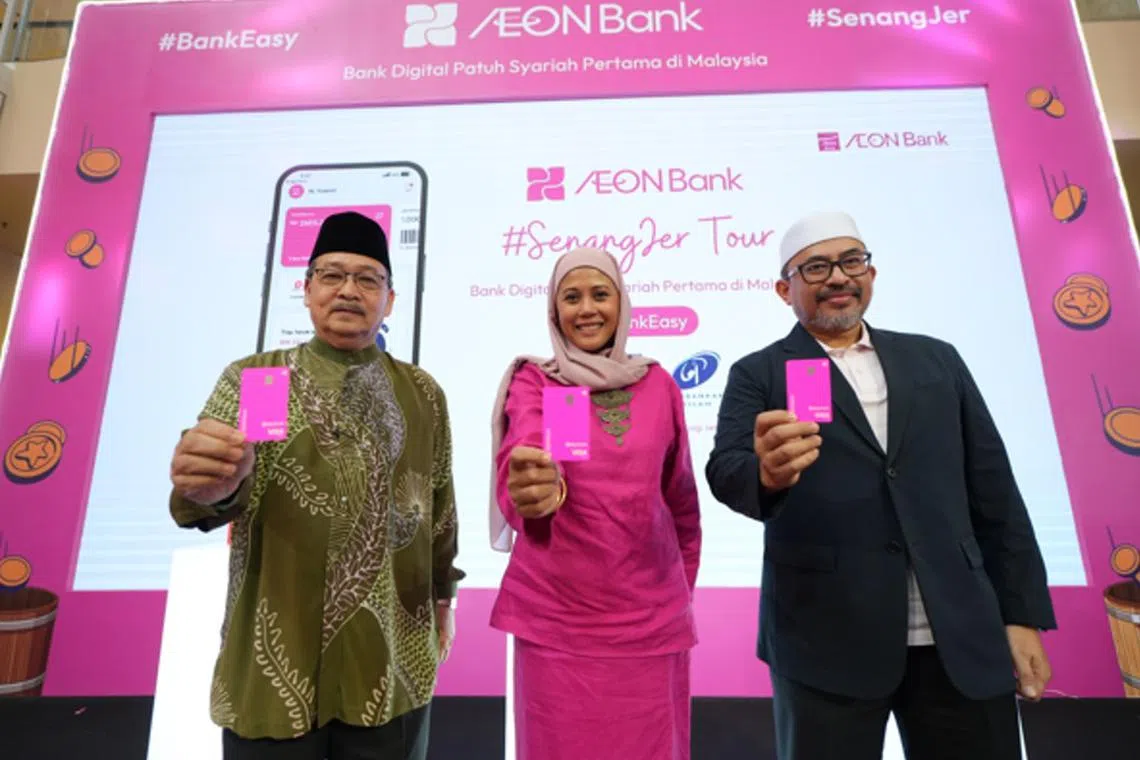
Following GXBank, Aeon Bank kickstarted its operations in May this year as the country’s first Islamic digital bank – targeting 21 million Muslim consumers in the country. The bank is a joint venture between Aeon Financial Service (Japan) and Aeon Credit Service (Malaysia), which are the subsidiaries of Japan’s largest retail group Aeon Group.
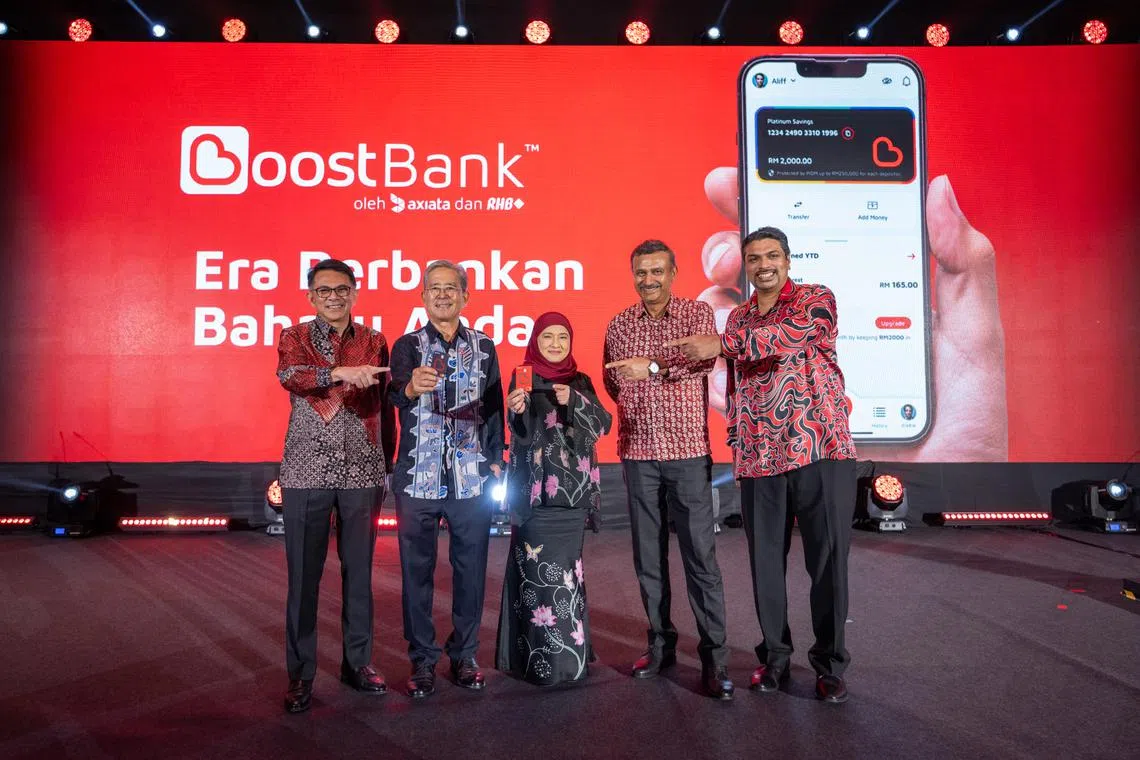
Boost Bank, a joint venture between Boost Holdings and the country’s fourth-largest lender RHB Bank, was the third to officially commence its operations in June, marking the first home-grown digital bank.
Both YTL-Sea digital bank and KAF digital bank have yet to start operations. The former is backed by a consortium led by Singapore-based Sea and YTL Digital Capital. The latter is backed a consortium led by KAF Investment Bank.
Malaysian media outlet The Star earlier reported that the launches of YTL-Sea and KAF’s digital banks have been delayed due to technical issues related to incomplete digital channels and IT-related issues – key criteria to obtain Bank Negara’s green light to go online.
When contacted, a spokesperson from Sea Capital Services stressed that the timeline of the digital bank’s launch is aligned with the plan submitted to and approved by Bank Negara and the Finance Ministry. “Our approved commencement date of the end of 2024 remains unchanged,” said the spokesperson.
KAF Investment Bank had not responded to the inquiry at press time.

A banker, who requested to stay anonymous, said digital banks in Malaysia face regulations that are more stringent than those for peers in Hong Kong and Singapore.
Bank Negara’s Licensing Framework for Digital Banks, which was established in December 2020, outlines detailed eligibility requirements, capital mandates and operational readiness reviews.
Digital banks in Malaysia must maintain a minimum capital of RM100 million (S$29.8 million) during the foundational phase and RM300 million thereafter, making it tough for newcomers to enter the market.
“The digital bank operators, at the same time, will need to compete with well-resourced conventional banks to drive innovation and build trust within the country’s competitive banking landscape,” he added.
Growing interest, limited offerings
Kelvin Lee, financial services leader at PwC Malaysia, said the public response to existing digital banks has been generally positive, for the ease of onboarding digitally – without needing to visit a branch or to speak to a bank staff – has been a significant factor driving the adoption of digital banks.
“Additionally, partnerships with ecosystem players, such as retailers, have allowed digital banks to offer attractive deals, further enticing consumers,” he added.
GXBank, the first digital bank in Malaysia, reported that it has so far acquired 750,000 customers, while Aeon Bank aims to attract 250,000 users.
Although Boost Bank did not set a clear target, it is aiming to convert half of its current 11 million Boost App customer base into digital bank users.
Like traditional banks, digital banks are concentrating on collecting deposits. This has led to competitive campaigns, with traditional banks responding by offering better deposit deals to retain customers.
Homemade-beverage entrepreneur Wilson Gan, a user of one of the digital banks, has been using the bank’s services for business transactions. He is most keen, however, on getting a working capital loan, as he wants to purchase raw materials in bulk and rent a space for a central kitchen.
“I like the convenience of digital banks and their trendy debit cards, but my objective of using their services is to get a business loan for my working capital, which is currently unavailable at the traditional banks,” he said.
Gan is among the seven million unbanked and underbanked in Malaysia, who hope to access a broader range of financial products through digital banks. Gan lacks a credit record as he had been living overseas for seven years and only returned to Malaysia in 2022.
Two-fifths of adults underserved
According to industry estimates, about 15 per cent of the 23 million adult population in Malaysia were unbanked last year. Another 40 per cent were considered underbanked, meaning they were not well served in financial services or had unmet needs such as no access to credit cards, being underinsured or having no long-term savings product.
Josef Jelinek, research director at Kapronasia, said that like other central banks in Asia, Bank Negara believes that the presence of digital bank players could increase competition, hopefully by putting some pressure on incumbents.
Without more financial products, however, it will be hard for the new players to compete with the conventional banks which are already rooted strongly in the market, he added.
Malaysia is the fifth economy in the Asia-Pacific that joined the digital bank bandwagon after Hong Kong, Taiwan, Singapore and the Philippines.
PwC’s Lee concurred with Jelinek, noting that revenue generation will be a big challenge for digital banks to stay sustainable in the market.
“Without lending products, digital banks struggle to offset deposit and operational costs, putting pressure on their profitability and growth potential,” he added.
Jelinek pointed out that Malaysia’s well-established banking system poses another challenge for newcomers. “With less than 10 per cent of the population lacking a bank account, there is no pressing need for digital banks.”
To build their deposit bases, digital banks must rely on high interest rates and other promotional tactics. This could result in prolonged periods of operating in the red, he added.
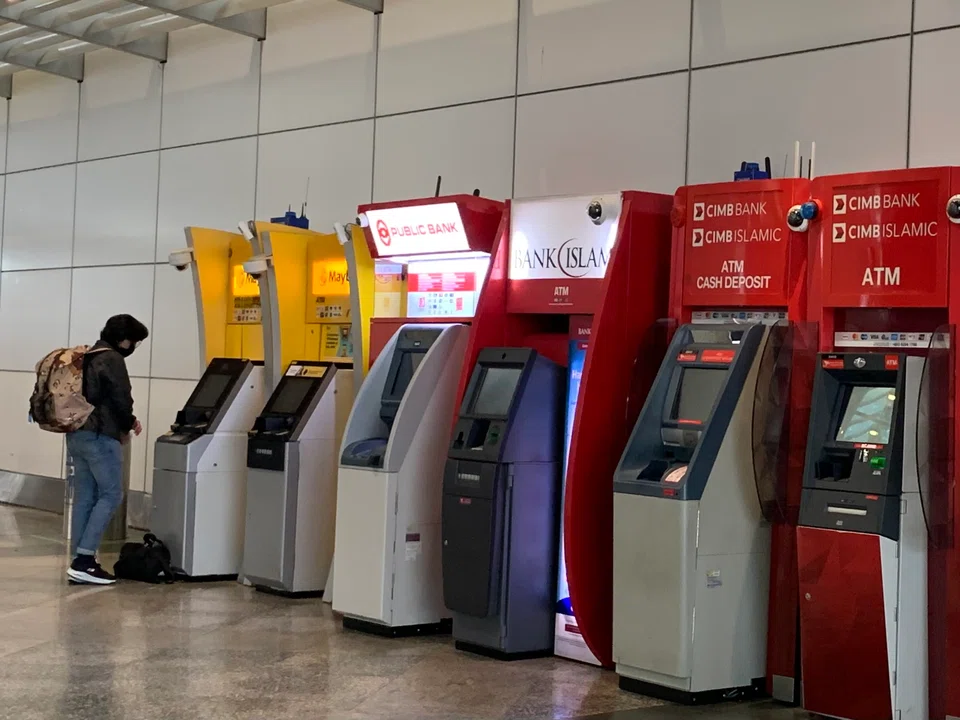
Moreover, Malaysia’s incumbent banks are not far behind on digital offerings. Maybank, for instance, has a dedicated digital platform called Maybank2U. CIMB operates a standalone digital bank in the Philippines. These large, well-capitalised banks can easily counter any challenges posed by newcomers.
Despite the slower progress, Jelinek noted that Malaysia’s digital banks possess unique characteristics due to their formation by consortiums involving various conglomerates across different industries. This backing creates opportunities for them to cross-sell services – an advantage that most conventional banks lack for now.
For instance, Grab-Singtel’s GXBank includes the Kuok brothers among its investors.
The Kuok Group is a major business group in Malaysia, with operations spanning agriculture, real estate, hospitality, logistics and digital infrastructure. By leveraging the resources of the Kuok Group, GXBank may be able to rapidly expand its customer base.