



Fintech titans GCash and Maya test IPO goals as Philippine market thins
The profitable rivals backed by Globe Telecom and PLDT are taking different routes to market
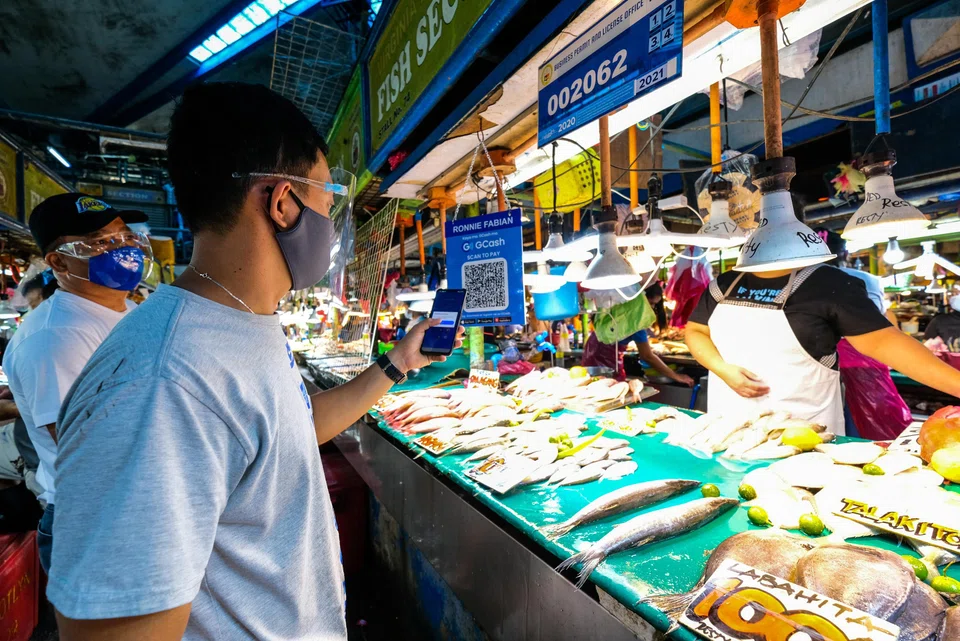
[MANILA] The Philippines’ home-grown tech giants GCash and Maya are moving towards billion-dollar public debuts from positions of strength – profitability and deep-pocketed backers.
Yet, their listing strategies expose a local stock market so thinly traded that one analyst warns that it risks failing to absorb its own tech champions.
Market leader GCash, wholly owned by tech incubator Mynt, is reportedly aiming for a landmark initial public offering on the Philippine Stock Exchange (PSE) in the second half of this year, after having sat out the market since 2025 to fetch a premium valuation.
Deemed one of the Philippines’ most valuable startups with its ubiquitous mobile wallet and financial super-app, it is also counting on newly relaxed regulatory public float rules to ease its multibillion-dollar entry.
Maya, meanwhile, is taking a different route. The market challenger, led by Philippine telecom group PLDT and Hong Kong-listed holding firm First Pacific, is angling for a US debut first, as it bets on New York’s deep liquidity, followed by a listing on the PSE to maximise valuation. Its strategic investors include private equity giant KKR and Chinese Internet company Tencent.
Rob Chan, Citi’s head of equity-linked origination for the Asia-Pacific, believes the fintech listings slated for H2 2026 may galvanise the local market.
The divergent routes underscore the local market’s woes. The Philippine stock market’s IPO pipeline faces severe headwinds from deteriorating market depth and sluggish capital velocity, even as major corporate exits have eroded its depth.
The benchmark PSE Index (PSEi) has fallen 7 per cent since mid-2025 on the back of systemic capital flight.
Although the year-to-date contraction stands at a relatively mild 1.84 per cent, the PSEi remains stubbornly below the critical 6,000 threshold, battered by currency depreciation, rising inflation and interest rates, and uncertainty amid the Middle East geopolitical crisis.
Persistent selling pressure has turned the Manila bourse into one of the weakest performers in the Asia-Pacific.
Luis Limlingan, head of sales at equities broker Regina Capital Development Corp, said: “Heightened geopolitical tensions dampened risk appetite and triggered selling across the market. As a result, sentiment turned cautious.”
From a position of strength
With 94 million users driving the bulk of the country’s peer-to-peer and merchant trade, GCash commands a market share of 89 per cent. It is targeting to raise US$1 billion to US$1.5 billion, benchmarking its valuation at up to US$9 billion.
Under the relaxed float regime, the minimum IPO float for large issuers was cut to 15 per cent from 20 per cent, with scope for exceptionally large listings to go as low as 12 per cent with regulatory approval.
The old 20 per cent rule would have placed a heavier absorption burden on the local market for GCash’s listing, said Ron Acoba, chief investment strategist at Trading Edge Consultancy. “With the current state of the local market, it wouldn’t be able to absorb such a big initial public offering,” he noted.
GCash’s parent company Mynt counts local telecom giant Globe Telecom as its largest single shareholder, followed by China’s Ant Group and Japan’s financial titan Mitsubishi UFJ Financial Group (MUFG).
Globe Telecom, in turn, is a joint venture of Philippine conglomerate Ayala Corp and Singapore’s Singtel.
In South-east Asia’s fintech landscape, GCash and Maya’s super-app predecessors, Grab and GoTo, first burnt through billions in venture capital before achieving bottom-line returns.
GCash and Maya, however, reached operational maturity and profitability within their home borders before their planned public debut.
Globe Telecom posted a 6.1 billion peso (S$129.5 million) share of net profit from the GCash operator Mynt in 2025, up 64 per cent from 3.8 billion pesos in 2024.
Led by a boom in digital spending, the GCash app single-handedly accounted for 22 per cent of Globe’s total pre-tax income last year.
Maya crossed into full-year profitability for the first time with a 1.7 billion peso net profit for 2025. The fintech unit’s performance cushioned softer earnings across PLDT’s legacy business, propelling the telecom group’s consolidated core income to 34.6 billion pesos.
Exit strategy
Armed with a US$1.4 billion implied valuation, Maya is targeting to raise up to US$1 billion and offer existing shareholders an exit.
Manuel V Pangilinan, chairman of PLDT and Maya, said the company and its investors are exploring a trade sale as an alternative corporate off-ramp.
The platform favours a Wall Street launch over a domestic float “because that’s a deeper market to raise money for this type of business”, he said.
This follows reports of KKR enlisting Goldman Sachs to manage the sale of its 30 per cent stake in Maya, a secondary market move that could lift the digital bank’s valuation past US$2 billion.
Pangilinan confirmed that PLDT is working through alignment details with KKR, adding that the telecom group will support either a strategic trade sale to consolidate its equity control or an IPO to facilitate a clean exit for private equity sponsors.
His long-term blueprint involves a dual listing in New York and Manila to accommodate local retail investors.
Nicky Franco, research head at Abacus Securities, estimates Maya’s valuation will range between US$3 billion and U$3.5 billion if its IPO proves successful.
A starved domestic bourse
Even before the downtrend of early 2026, the local bourse had already been shrinking from what analysts call the “Great Exit” of corporate giants.
Major players from San Miguel Corp’s Eagle Cement to Keppel Philippines Holdings have bowed out of the bourse after weighing compliance costs, regulatory scrutiny and undervaluation risks.
These departures have caused the PSE to lose more than 580 billion pesos in market value from 2023 to early 2026. Over that period, the exchange managed to attract only eight IPOs, which injected a modest 306.9 billion pesos in new equity value.
As global investors turn their focus to safe havens such as Singapore – the Singapore Exchange is becoming South-east Asia’s largest bourse, with a market capitalisation of US$645 billion – they have turned away from emerging markets like the Philippines as risk aversion heightened.
Jarrod Leighton Tin, an equity research analyst at DragonFi Securities, said this lacklustre velocity exposes a market paralysis: Corporate issuers are reluctant to test public waters because they are unlikely to command a premium valuation, while investors are pulling back out of fear that newly listed stocks would tank below their offer prices.
Fintech fever?
Despite uncertainty over their timelines and choice of bourse, the IPOs of GCash and Maya are on the radar of global fund managers tracking the South-east Asian fintech space.
The Philippine fintech market, in particular, is on an aggressive upward trajectory, valued at about US$1.2 billion in 2025 and projected to balloon to US$4.7 billion by 2034 on the back of a compounding annual growth rate of 16.8 per cent.
The regional IPO pipeline is bracing for some 150 to 170 new listings this year. “South-east Asia’s IPO landscape is poised for a resurgence,” said Roshan Behera, a Singapore-based fintech investment specialist and partner at Redseer Strategy Consultants.
He added: “2026 can be the year when IPO-ready candidates sitting on the fence finally take the plunge.”
TRENDING NOW
China Investment Corp, PGIM’s 50% stake in Nex mall up for sale; asking about S$1.2 billion

Higher rates, weaker spending: Is the Philippines entering stagflation?
Singapore tech stocks plunge as Nasdaq bloodbath spills into region
OCBC wealth clients turn defensive amid market volatility as Q3 profit rises 3%

