Five ways Malaysia's political crisis could play out, and implications for businesses: report
 Add BT as a preferred source
DeeperDive is a beta AI feature. Refer to full articles for the facts.
COMPANIES in Malaysia need not react to every political development reported but ought to watch out for key triggers that would signpost possible shifts in the political state, which would consequently increase the risk of governmental change, policy discontinuity and regulatory and operational disruption, said Control Risks in a report.
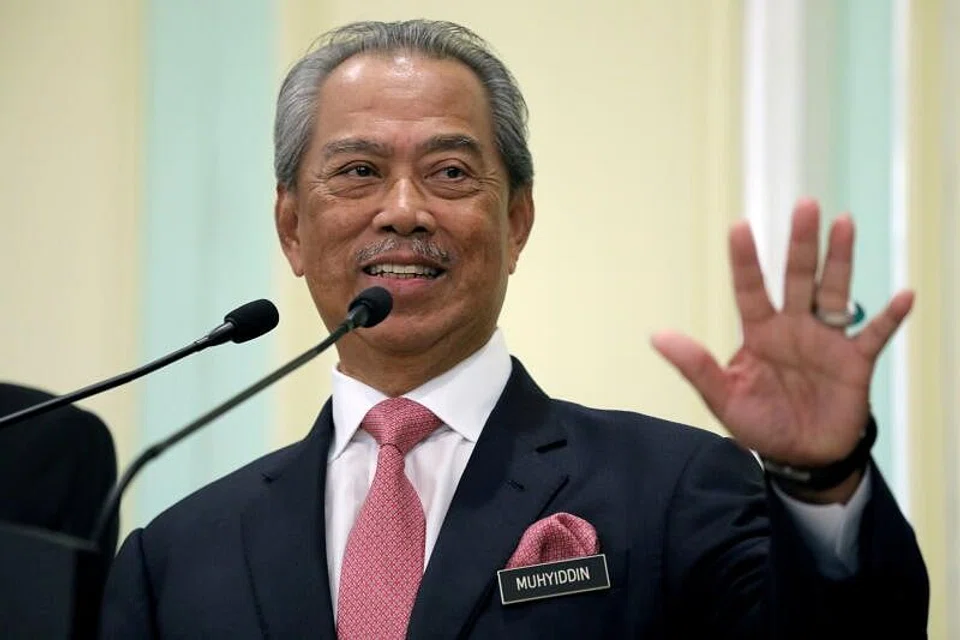
Prime Minister Muhyiddin Yassin has faced multiple calls for his resignation. The country's King has also asked Mr Muhyiddin to bring forward a parliamentary vote of confidence currently scheduled for early September in the face of growing pressure from the premier's opponents this week.
Harrison Cheng, associate director and lead analyst for Malaysia, outlined five ways Malaysia's political crisis could play out in the next six months:
- Minority rule: Mr Muhyiddin lacks a parliamentary majority but remains in power because no other contender can muster more support than him.
- Fragile majority: Mr Muhyiddin regains a fragile parliamentary majority through continued offers of incentives to legislators on both sides of the political divide in the coming weeks.
- Umno redux: The United Malays National Organisation (Umno; ruling coalition member) becomes the dominant party in the ruling coalition, as it had been before being ousted in 2018. This scenario sees one of its leaders replace Mr Muhyiddin as premier.
Navigate Asia in
a new global order
Get the insights delivered to your inbox.
- Snap polls: Mr Muhyiddin dissolves Parliament, paving the way for a snap election within 60 days.
- Opposition rule: The main opposition Alliance of Hope (Pakatan Harapan) coalition forms a new, potentially minority, government.
"Minority rule" describes the status quo, following the withdrawal of support for Mr Muhyiddin's government by 11 Umno legislators on Aug 3.
"This arrangement is hardly stable as the government would need to strike confidence-and-supply agreements - whereby opposition or independent legislators support the government in confidence motions and budget votes - to get any legislative work done," said Mr Cheng in the report.
Parliament sittings will double up as opportunities for legislators to display a lack of confidence in Mr Muhyiddin. Being outvoted by the opposition would force him to resign or dissolve Parliament and trigger the "snap polls" scenario, he noted.
What businesses can expect
As to what businesses can expect under "minority rule" which Control Risks said it expects to persist in the coming months, these include: limited immediate improvements in Covid-19 pandemic management, increasingly opaque decision-making and regulatory processes, and a persistently challenging compliance environment.
The worst-case scenario could see new laws that enable enforcement against businesses in arbitrary ways without transparent avenues for appeal. Less dramatically, these laws could impose unrealistic and cumbersome compliance requirements, driven by weak governmental understanding about supply chains and business needs, said Mr Cheng.
On a positive note, Malaysia is likely to see 80 per cent of eligible adults complete their vaccination by December if not earlier. Steady vaccination progress is likely to reduce the need for blunt lockdowns and enable more targeted restrictions within the third and fourth phases of the National Recovery Plan.
Easing Covid pressures will also allow the government to pay greater attention to regulatory reforms for emerging sectors. Malaysia is also on track to register an economic rebound in 2021, albeit at a modest 4 to 5 per cent growth before picking up to a robust 6.6 per cent in 2022.
"In sum, though the trajectory of Malaysian politics in 2022 remains murky, there are good reasons to believe in a more encouraging prognosis for its economy and consequently for businesses," said Mr Cheng.
Meanwhile, companies will need to devote resources to mitigating key risks, he said.
They will need to actively monitor for indications of upcoming regulatory changes, given the government's opaque decision-making and the paucity of legislative debates, said Mr Cheng.
Regular compliance reviews, remediation and training remain essential amid persistent integrity challenges. Engaging the right government and industry stakeholders will also help companies to clarify regulatory and operational requirements that are often communicated vaguely, as well as securing timely and direct support to resolve operational impediments.
Decoding Asia newsletter: your guide to navigating Asia in a new global order. Sign up here to get Decoding Asia newsletter. Delivered to your inbox. Free.
Copyright SPH Media. All rights reserved.