


Fixing economy will be real test for Anwar
Tan Ai Leng
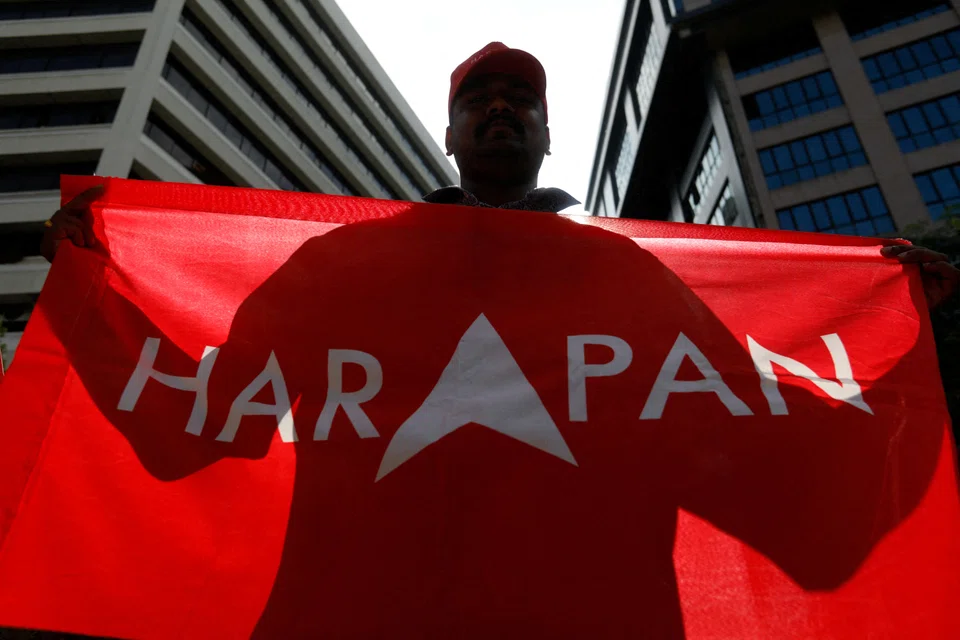
MANY Malaysians were glad to see veteran politician Anwar Ibrahim finally securing the top job after 24 years of waiting. Now all eyes are on how the new prime minister will set the country’s direction not just politically, but economically: tackling inequality and inflation, and pursuing fiscal consolidation.
The chairman of the Pakatan Harapan (PH) coalition is in the midst of forming a unity government with former ruling coalition Barisan Nasional (BN), East Malaysian alliances Gabungan Parti Sarawak and Gabungan Rakyat Sabah, as well as other independents.
The 75-year-old statesman comes onboard at a critical juncture in Malaysian history, when its political landscape is arguably the most fractured and the country’s depressed economy is still recovering – with a gloomy outlook due to global headwinds.
Will Anwar and his government be able to resolve these issues? This is certainly possible, but requires strong political will to push through a painful reform process involving all Malaysians.
The journey of reform will not be easy for the PH-led government. PH did not secure a simple majority in the polls, resulting in the formation of a unity government with different ideologies and voices. The next Parliament session on Dec 19 will thus be crucial, as Anwar will call for a motion of confidence: a test of the new government’s legitimacy.
Beyond this political test, an economic one lies ahead. Although the country achieved an impressive gross domestic product growth of 14.2 per cent in the third quarter of 2022, this was mainly due to a low base effect. Economists have warned that some major trading partners are showing early signs of recession and that Malaysia, as an export-oriented country, will see slower growth in upcoming quarters.
In preparing the country to face a potential recession, Anwar has a lot on his plate. Besides addressing short-term cost of living issues – as stressed in PH’s manifesto – he needs to introduce measures and policies that boost domestic business vibrancy and attract foreign investments.
Based on PH’s manifesto, the new government is expected to introduce policies that will steer the country away from its current fiscal trajectory of generous spending and towards more prudence – which may not be popular.
On the third day after coming into office, Anwar requested that the government subsidies programme be reviewed to better target low-income groups. Government agencies were given two weeks to review the implications of narrowing the subsidies.
Malaysians have been enjoying blanket subsidies on fuel, cooking oil, electricity, and food items such as sugar, eggs and flour. This year, the country will spend an estimated record RM77.7 billion (S$2.2 billion) on subsidies.
If Anwar implements targeted subsidies, the middle and high-income groups will feel the pinch. Take fuel prices, for example: the market price of RON 95 petrol would be RM3.70 per litre, 44 per cent higher than the current subsidised price of RM2.05.
Tax consultants and analysts also expect a reintroduction of the goods and services tax (GST), even though the previous PH government in 2018 had opposed the GST and abolished it that year. Introduced in April 2015 at a rate of 6 per cent, the GST brought in RM41 billion in 2016 and RM44 billion in 2017, several times the sales and service tax revenue of RM10.9 billion in 2014.
As for tackling the high cost of living, PH’s manifesto mentioned cash handouts and other measures such as the reduction or removal of highway toll charges; allowances for contract workers who lose their jobs; and eliminating cartels in food supplies.
However, policies to alleviate the financial burden on Malaysians must go beyond short-term band-aid measures and instead address the root cause.
Syed Saddiq Syed Abdul Rahman, president of the Malaysian United Democratic Alliance – a component party of the PH coalition – has repeatedly urged the government to address the problem of low wages, which he sees as the main cause of Malaysia’s brain drain and income inequality.
“The average income has stagnated for the past 10 to 20 years, but inflation continued to climb,” he said in a recent interview with The Business Times. “Young Malaysians have to work two or three different jobs to earn a decent income for a better life. Many of them will just give up and take another job overseas that pays well.”
According to 2021 data from the Department of Statistics Malaysia, the median monthly income was RM4,471 (S$1,370) for a skilled worker and RM1,601 for a low-skilled worker. Over the decade, the overall median monthly salary rose just 50 per cent to RM2,250 in 2021, from RM1,500 in 2011. Currently, Malaysia’s minimum wage is set at RM1,500 a month.
Low wages are the source of a related concern: whether Malaysians have sufficient funds for retirement. Although not in the election manifesto of any political coalition, it is a crucial problem that needs to be addressed.
During the Covid-19 pandemic, former prime minister Muhyiddin Yassin allowed Employees Provident Fund (EPF) members to make special withdrawals from their retirement accounts. This resulted in a total of RM145 billion in withdrawals, with 6.62 million members – or 52 per cent of EPF members aged below 55 – now having less than RM10,000 in their accounts.
How to raise the incomes of Malaysians is the most pressing issue for the new government, especially when the country is facing external headwinds and needs to sustain strong domestic consumption to fuel its growth.
The country needs to move up the global value chain, from labour-intensive activities to a more high-tech and value-added approach. For example, Malaysia’s semiconductor industry should move from low-value manufacturing services to high-value design and manufacturing to attract multinational players.
One semiconductor player said: “We can’t compete with Vietnam and Indonesia in labour-intensive industries. Good policies with the right incentives to promote high-value activities are needed now to attract investment.” They added that this will create more high-paying jobs and attract Malaysian talent back from overseas.
All of this requires structural reform. From policymaking to consistent execution, it will take years to see the results. Hence, the new prime minister will need to balance between economic effectiveness – selecting the right people for the team to drive these changes – and the political game of dividing the ministers’ posts across parties to stabilise his power in the government.
TRENDING NOW
Deal between tycoon friends sparks scrutiny of Philippine power sector
Canada is upping oil flows to Asia, but South-east Asia’s refineries aren’t ready to handle them yet
Grab CEO’s wife Chloe Tong on life with Anthony Tan and finding her purpose
China got cool for foreigners. But can they find a job there?



