



Foreign businesses in Myanmar could struggle to remain neutral in crisis: Report
 Add BT as a preferred source
DeeperDive is a beta AI feature. Refer to full articles for the facts.
FOREIGN businesses in Myanmar could find themselves in the crossfire whether they are perceived to be sympathetic towards the military government or the pro-democracy movement, a report by Control Risks has suggested.
"As the political drama drags on, there is almost certain to be conflicting pressures to at least imply public support for either the pro-democracy movement or the military government," Dereck Aw, senior analyst at the global risk consultancy firm, wrote in the report. "Perceptions that a foreign company - or its domestic partner - is conferring legitimacy to the military government by engaging with it could make the company the target of a boycott campaign or anti-coup demonstrations, within or outside Myanmar."
Corporate decision-makers should thus be wary of advice that assumes inevitable momentum towards either the military's or the protest movement's endgame, he said.
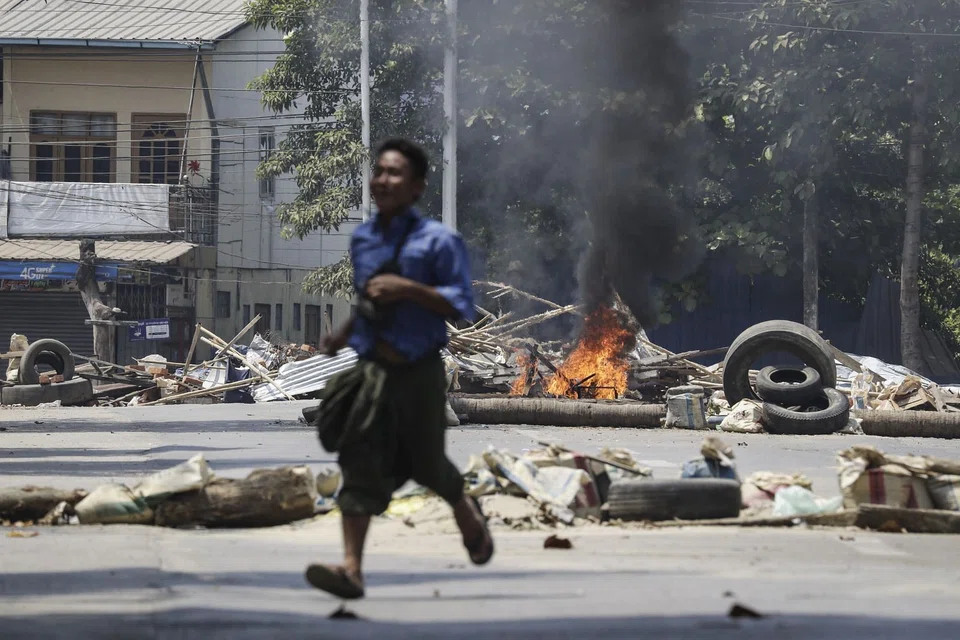
Myanmar's military Tatmadaw carried out a coup d'etat on Feb 1, overthrowing the civilian government led by Aung San Suu Kyi and sparking a political crisis in the country. Tens of thousands of civilians have seen taken to the streets to protest the coup, and these demonstrations are turning increasingly bloody due to the military crackdown.
Mr Aw believes protests and crackdowns are "almost certain" to persist in cycles over the coming months as the Tatmadaw takes steps towards setting up a military-dominated coalition government.
"Civil unrest could temporarily de-escalate as the Tatmadaw ramps up efforts to disperse and arrest protesters, only to flare up again following political developments or encounters with security forces that stoke public outrage against the military," Mr Aw said.
Navigate Asia in
a new global order
Get the insights delivered to your inbox.
Each such cycle would have the potential to spiral into widespread violence and significant loss of life, while disruptions to commercial operations, which are already significant, would also intensify periodically, he added.
Although the intensity of protest and military activities is likely to fluctuate, Mr Aw felt the Tatmadaw has likely considered most scenarios before it launched a coup and would be able to adapt and respond to some events it might not have initially accounted for.
Even so, what decision-makers should keep an eye on are "new and specifically disruptive forms of popular resistance" that take the military by surprise or are outside its leaders' comfort zone, he noted. For example, the ongoing banking stalemate potentially marks the first "acute juncture" at which the Tatmadaw's apparent resolve in avoiding the widespread use of lethal force will be put to the test.
"These disruptions - along with widespread calls to withdraw as much cash from military-owned banks that serve as financial vehicles for the military's business empire - are potential watersheds that could bring forward the moment of truth and provoke the military to reveal its tooth and claw," Mr Aw said.
While the coup has already had damaging consequences for the business environment in Myanmar, the new military government appears to be "taking pains" to present itself to foreign investors and domestic corporate groups as being "pro-business", Mr Aw said.
For example, it has set up a self-proclaimed "hybrid civilian-military" State Administration Council and promised to honour all existing contracts and tenders including those approved by the civilian government it deposed.
"However, the fact that a coup has taken place is proof that the Tatmadaw is willing to overlook economic or its own material interests for the sake of ensuring its long-term centrality in Myanmar politics," Mr Aw added.
Meanwhile, international and domestic businesses are watching the Tatmadaw for indications of how exactly it intends to manage the economy, he noted. "Already, there are very clear signs of mistrust between the current Tatmadaw leadership and domestic business elites, with a few prominent Myanmar business figures who had been reportedly held against their will in hotel rooms in the capital Naypyidaw," he said.
Ironically, the Tatmadaw's "ostensive pursuit of legitimacy" does not bode well for foreign businesses, given that existing laws have already been "weaponised" and newly revised security policies could "sharpen ethical dilemmas" for these companies, according to Mr Aw. This is because they will be faced with complying with the new laws while honouring their commitment to international norms and duty of care for their staff.
Decoding Asia newsletter: your guide to navigating Asia in a new global order. Sign up here to get Decoding Asia newsletter. Delivered to your inbox. Free.
Copyright SPH Media. All rights reserved.
TRENDING NOW

Shelving S$5 billion office redevelopment plan proved ‘wise’ as geopolitical risks mount: OCBC chairman
Why where you park your joint venture matters: Lessons from a US$689 million shareholder dispute

China pips the US if Asean is forced to choose, but analysts warn against reading it like a sports result
Singaporeans can now buy record amount of yen per Singdollar

