



Foreign investors’ concerns mount as Vietnam’s regulatory gaps threaten growth efforts
While systemic risk in the banking sector has mostly been avoided, the country’s fraud case involving property tycoon Truong My Lan has put a spotlight on these regulatory gaps

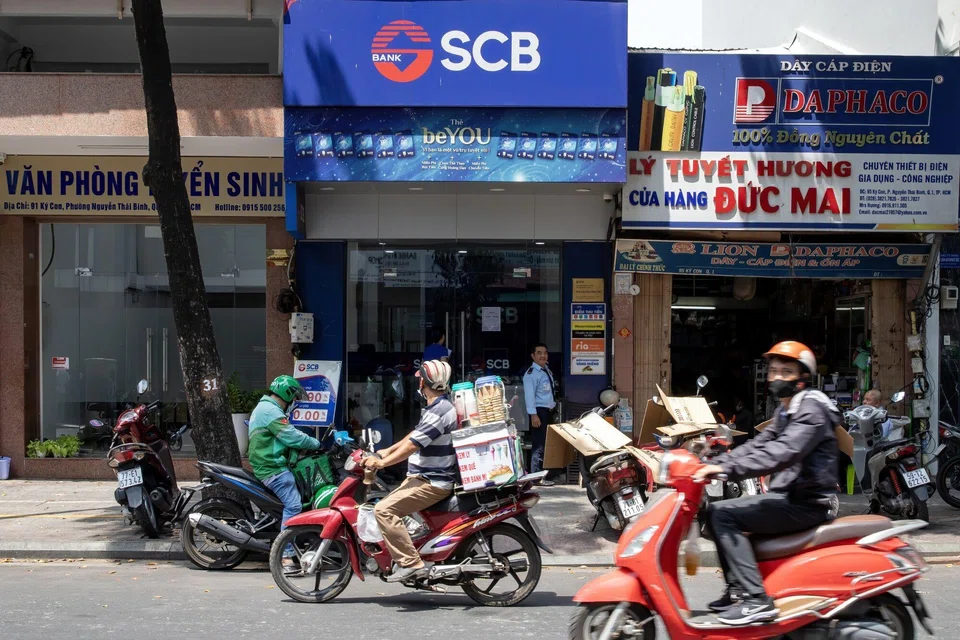
[HO CHI MINH CITY] Less than two months since Vietnam’s real estate tycoon Truong My Lan was sentenced to death amid the country’s far-reaching anti-graft campaign, market watchers say foreign investors are expressing doubt that the country can effectively regulate and manage its economy to foster growth.
Vietnam’s largest fraud case involving Lan’s embezzlement of more than US$12 billion from the Saigon Commercial Bank (SCB) has underscored the weaknesses in financial supervision and the governance failures that led to the bank’s stress, said Fitch Ratings in a commentary early this month.
Lan’s death sentence, handed down last month, sent shock waves across the country’s business circles. She has appealed against the sentence.
SCB averted a collapse through the liquidity support it has received from the state bank in the past years. Fitch noted that, despite the details of this fraud case having become public, the banking system has withstood new contagion risks.
The real estate sector, however, has been under strain since late 2022, with the details of the fraud embroiling high-profile developers having emerged. Project approvals have been delayed, trust among homebuyers has diminished, and bond market regulations have been tightened.
This worsened the debt crunch and the banking system’s non-performing loans amid an ongoing challenging economic environment.
Professor Zachary Abuza of the Washington-based National War College, who specialises in South-east Asian politics and security, said: “The banking sector and capital markets are still too shaky for sustained economic growth.”
He added: “The economy’s growth has outpaced the state’s regulatory capacity.”
Lan’s case was part of “the Blazing Furnace”, the moniker given to the government’s sweeping crackdown against graft. Spearheaded by ruling Communist Party Chief Nguyen Phu Trong, its dragnet has ensnared thousands of Party members, public servants and business executives since 2021.
Amid this clean-up drive, the country has reeled from a string of departures by top ranking government leaders, including two presidents and a national assembly head, on the back of unspecified “violations” and “shortcomings”.
Dampened by bureaucracy
As things stand, lawyers and industry insiders whom The Business Times spoke to said the administrative gridlock lingers because bureaucrats are reluctant to approve projects or push forward incentives, for fear of inadvertently infringing the complex regulations.
“As the government knows well, we need the economy to keep going,” Seck Yee Chung, who leads the mergers and acquisitions practice in Vietnam for an international law firm, told BT, following the stepping down of former president Vo Van Thuong in March. “The longer it is prolonged, the more it could erode investors’ confidence.”
The bureaucratic foot-dragging has prevented Vietnam from securing at least US$2.5 billion in foreign aid over the past three years; it may also lose another US$1 billion in funding because of this administrative paralysis, Reuters reported on May 17, citing an unpublished letter from the United Nations, the World Bank and Western donors to Vietnam’s Prime Minister Pham Minh Chinh.
Regulatory hurdles are also exacerbating the country’s power shortages and its underutilisation of renewable energy – issues that concern the multinationals flocking to Vietnam, which they see as an alternative production hub outside China. Rolling blackouts due to power woes interrupted production in the industrial zones of several northern provinces in Vietnam last summer, and there are concerns that it might happen again this year. State utility Vietnam Electricity (EVN) expects demand in the north to rise by a record 17 per cent between May and July.
Last July, American chipmaker Intel reportedly shelved plans to increase investments in its Vietnam factory on the back of concerns over an unstable power supply and excessive bureaucratic red tape.
The Vietnamese authorities reassured businesses in March that power shortages would not happen this year. Prime Minister Chinh ordered the stepping up of state management of the national power system, the completion of renewable energy-related mechanisms and policies, and the deployment of power source and grid projects.
Prof Abuza said: “FDI (foreign direct investment) is fickle, and it will move elsewhere if the government doesn’t make some fundamental reforms.”
He believes Vietnam has not had the absorptive capacity of its peer competitors, especially in terms of attracting investment in high-tech sectors, such as semiconductors and artificial intelligence (AI). In addition, there is still a delta between pledged and realised FDI.
Despite reaching all-time highs in 2022 and 2023, Vietnam’s disbursed FDI has fluctuated around the US$20 billion mark over the past five years. Pledged FDI, however, jumped 32 per cent to a four-year high of US$37 billion last year.
Promising signs
In the first five months of 2024, pledged FDI grew 2 per cent from the year before, mostly on the strength of a few saving graces – the country’s optimistic growth prospects, effective external affairs and policy consistency.
In the latest forecast dated Apr 29, the International Monetary Fund (IMF) projected Vietnam’s economy to be one of the fastest-growing in Asia this year, and that it would lead the region alongside India in 2025.
Vietnam is officially targeting a full-year gross domestic product growth of 6 to 6.5 per cent for 2024; global think tanks and major financial bodies such as the World Bank and IMF expect its economy to grow by at least 5.5 per cent.
Brian Lee, an economist with Maybank Investment Banking Group, noted that the foreign investment growth in the first four months was primarily driven by the 55 per cent surge in capital pledges from China and Hong Kong, offsetting a 4.4 per cent decline in the volume committed by other countries.
“I think there will be a limit to how much FDI interest will be impacted by the recent developments in Vietnam... Chinese investors are less likely to be fazed by Vietnam’s political developments,” he said.
“Investors may be getting more cautious about investing in Vietnam and stepping up due diligence, but the country’s favourable fundamentals and geopolitical advantages remain to its advantage,” he added.






