Fresh from farm to feast in 36 hours: Malaysia’s durians hit lucrative Chinese market
This is a big milestone for one of the world’s top durian exporters although industry players warn of potential logistics and freshness challenges

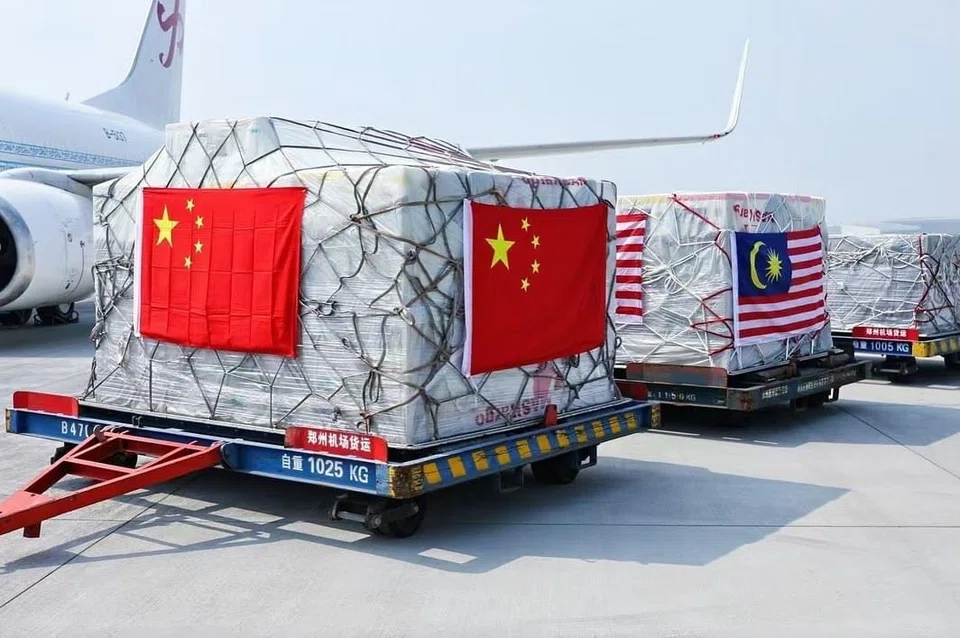
[KUALA LUMPUR] The first shipment of fresh Malaysian durians travelled nearly 4,000 km from farms in the country to Zhengzhou in China last week, ready for distribution to major cities and marking a sweet milestone for one of the world’s largest durian producers.
The shipment of 15 tonnes of the spiky delicacy was the first portion of a 40-tonne export over three days.
Among the prized cargo were beloved Malaysian varieties such as Musang King, Black Thorn, D24, and IOI, all carefully transported via air cargo to Zhengzhou International Airport, ready to delight durian enthusiasts in major cities such as Beijing and Shanghai.
Edwyn Chiang, secretary-general of Malaysia International Durian Industry Development Association, said: “No time to waste. All fresh durians must be delivered to the pre-order customers within 36 hours of leaving Malaysia to ensure optimal consumption quality.”
The notable achievement aside, industry experts point out that Malaysia may face challenges in competing with regional peers on durian export volume due to its natural harvesting methods and high logistics costs, although they say it could focus on its superior fruit quality to target the premium market.
For now too, some exporters remain cautious about the risks associated with fresh durian’s short shelf life and transportation issues.
Prices for the spiky treat
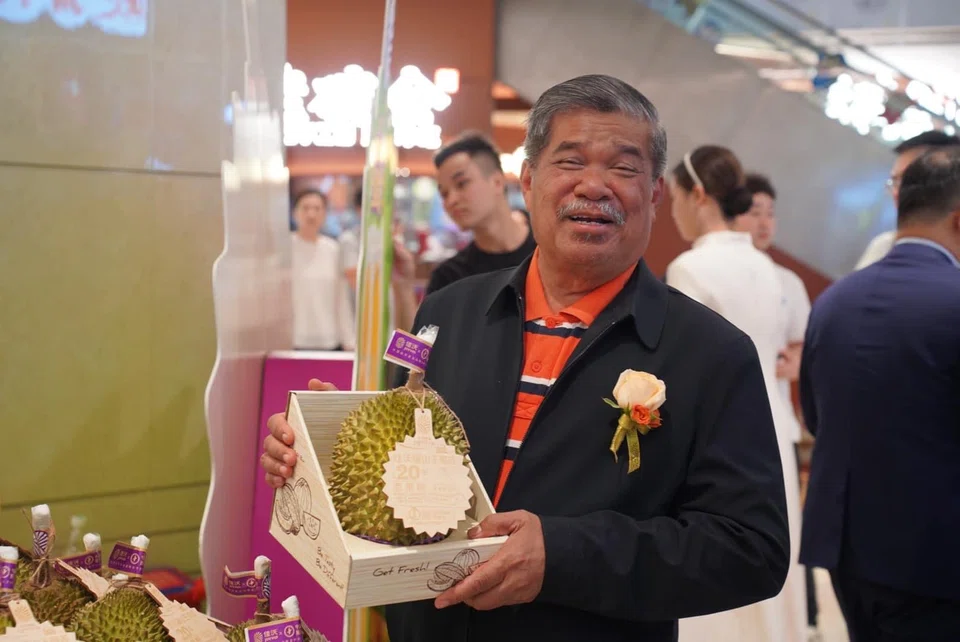
The durians were priced around 200 yuan (S$37) per kilogram, while Musang King – the most premium variety – was priced at 258 yuan per kilogram. In comparison, frozen export durians were priced around 160 yuan per kilogram.
Malaysian Agriculture and Food Security Minister Mohamad Sabu visited the fresh durian packaging and distribution warehouse in Shenzhen, noting that the fresh Musang King durians were repackaged and sold at RM350 per fruit at retail outlets in Shenzhen.
“All the durians were sold off within a couple of hours,” he wrote in his Facebook post on Aug 26.
Chiang said eight durian exporters have participated in the first batch of shipments, and more exporters are showing interest to be part of the game. For now, there are 16 exporters, including farm owners, registered as fresh durian exporters.
“As (it is) now approaching the end of the durian season, we expect there will be more exporters by year-end, when the next harvesting season starts in November,” he told The Business Times.
The fresh fruit exports come just two months after an agreement was signed in June during Chinese Premier Li Qiang’s visit to Kuala Lumpur. Prior to this, Malaysia had only permitted the export of frozen durians to China.
There has been strong demand for Malaysia’s durian and durian products. In 2023, the South-east Asian nation exported RM1.2 billion (S$362.1 million) worth of frozen durians to China, compared with RM170 million in 2017.
The Malaysian Ministry of Agriculture and Food Security expects durian exports to reach RM1.8 billion by 2030.
New player in the market
Malaysia is the fourth country authorised to ship fresh durians to China, joining Thailand, Vietnam and the Philippines – in the battle for a larger share of China’s US$6.7 billion fresh durian market.
China’s annual import value of fresh durians increased by more than 12 times from 2017 to 2023. Last year, the country imported over 1.4 million tonnes of fresh durians, with the bulk or 929,000 tonnes from Thailand, while Vietnam exported 493,000 tonnes.
Earlier in July, Indonesia also expressed interest in exporting fresh durians to China. It is in discussion with China to establish a protocol for fresh durian exports. The Indonesian government estimates this will potentially earn up to US$8 billion for the country.
Losing out in volume
Industry players told BT that in competing with its regional peers, Malaysia may lose out in terms of volume. However, the country could leverage its fruit quality and target the premium segment of the market.
Chiang said Malaysia’s harvesting method – allowing durians to ripen and drop naturally – puts it at a disadvantage in terms of volume compared to Thailand and Vietnam.
Last year, Malaysia produced 455,458 tonnes of durians. This is expected to increase by 11 per cent to 505,853 tonnes in 2025.
In comparison, Thailand produced nearly 770,000 tonnes of durians in 2023, while Vietnam produced 800,000 tonnes of durians last year.
Lim Chin Khee, an adviser at Durian Academy which trains Malaysian growers, noted that the natural ripening process results in a shorter shelf life and increased susceptibility to damage during shipping, making exports more challenging.
“In contrast, Thailand and Vietnam’s practice of harvesting unripe durians gives them an advantage in shipping and shelf life,” he told BT.
Chiang noted that the main challenges of fresh durian exports lie in the cost for chilling facilities and logistics. For instance, air cargo charter services may potentially add around RM5 to RM10 per kilogram to fresh fruit export costs.
Hextar Holdings chairman Ong Soon Ho, who is also a shareholder of durian exporter PHG Ever Fresh Group, cautioned that fresh durian export “is a race against time” due to uncertainties in the transportation process and concerns about the fruit’s short shelf life.
“We are taking a wait-and-see approach on this. There are technical and logistics issues that we need to think through before exporting the fresh durians to China,” he added.
PHG Ever Fresh Group is one of the prominent durian suppliers and exporters. It exports more than 3,000 tonnes of the fruit annually to markets such as China, Taiwan, Singapore, Australia, Canada and the US.
Going premium is the way
Despite the challenges, Chiang said Malaysian farmers are likely to maintain their traditional harvesting methods, as the creamy texture and rich bittersweet flavour remain the unique selling points of Malaysian durians.
Lim sees opportunities that Malaysia could turn such a disadvantage into its uniqueness by positioning the country’s fresh durian as premium fruits.
“We may not be able to compete in volume, but we can go premium by marketing Malaysia’s durian as a luxury fruit, akin to Japanese strawberries,” he said.
Despite potential fresh durian exports to China, industry players believe that there will still be ample supply for Malaysian and Singaporean consumers at reasonable prices.
Chiang noted that the premium pricing of fresh Malaysian durians, meanwhile, may attract durian aficionados and curious consumers, but the majority may opt for more affordable options from other countries.
The Bangkok Post reported that Thai durians were priced around US$5.80 per kilogram in April, while Vietnamese durians were selling at around US$4.22 per kilogram.
Consumers’ preference is another issue, said Lim, noting that the majority of China consumers still prefer a sweeter durian fruit, which is mostly produced in Thailand and Vietnam, while Malaysian and Singaporean consumers love fully fermented durian that has a pungent smell and rich flavour.
“No worries, we will still have sufficient supply for local consumers while continuing to expand our footprint to overseas markets,” he added.
TRENDING NOW
Grab CEO’s wife Chloe Tong on life with Anthony Tan and finding her purpose
HDB reviewing ‘jumbo’ flat scheme after Telok Blangah unit listed for sale at S$2.18m
He built the Vingroup empire. Now South-east Asia’s richest man is handing some key roles to his sons
Singapore judge raises doubts iron ore trader Radiant World is owed US$1 billion