Full impact of Trump tariffs will take some time to play out: SM Lee
The US’ ‘opting out’ of the multilateral trading system it anchors will hurt world economy, he says

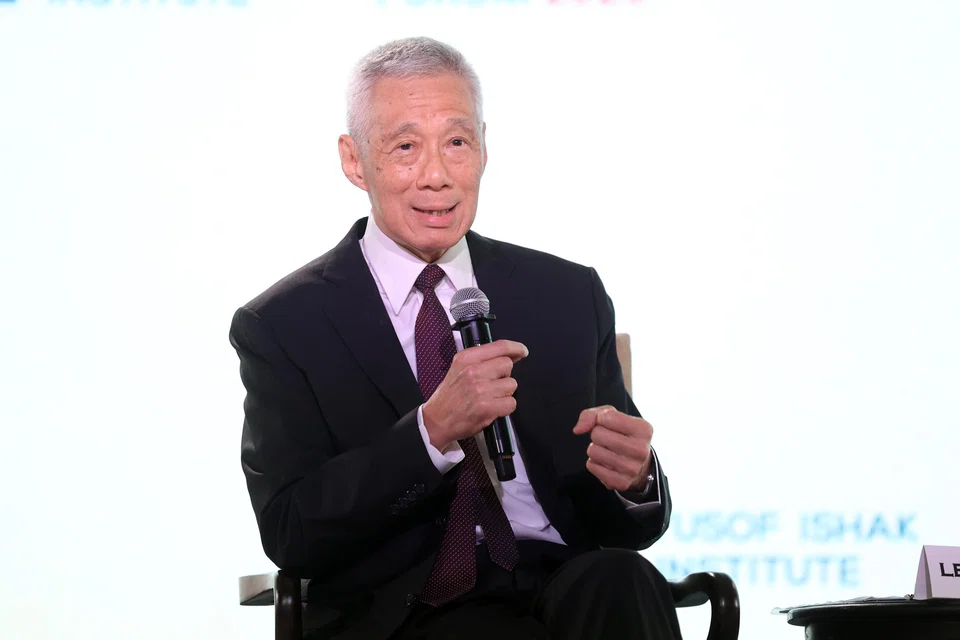
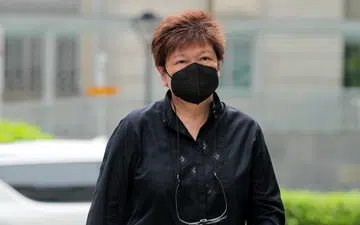
[SINGAPORE] The impact of the US tariffs may have been more muted than expected, but the full extent of the consequences will take some time to play out, said Senior Minister Lee Hsien Loong.
“The results have been slightly less bad than that; we are relieved. But in fact, it is a very drastic change,” he said at the Iseas-Yusof Ishak Institute’s Regional Outlook Forum at Marina Bay Sands on Thursday (Jan 8).
Following the announcement of the US tariffs, economists had forecast a recession or significant growth downgrades.
US President Donald Trump sent shockwaves across the world on Apr 2 last year when he unveiled sweeping tariffs on economies around the world. The “Liberation Day” tariffs included a baseline 10 per cent tariff, with the tax going into double digits for many economies that his administration viewed as having unfair trade relationships with the US.
But the drag on growth has been limited in part by an artificial intelligence (AI)-led boom, and also because some tariffs have been lower than initially headlined.
The International Monetary Fund said in an October report that it expected global gross domestic product growth for 2025 to come in at 3.2 per cent – an upgrade of the 3 per cent it had projected in the middle of the year.
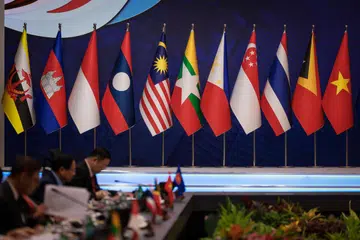
The fund also projected that Asean would grow 4.3 per cent for 2025, higher than its initial projection of 4.1 per cent.
Analysts from Deutsche Bank and JP Morgan said that AI investment, estimated to be US$375 billion globally in 2025, potentially saved the US from a technical recession. A massive demand for AI infrastructure in the US was also seen in other parts of the world.
Despite its more limited impact, Trump tariffs remained a drastic change.
Lee said: “In a multilateral trading system based on Most Favoured Nation (MFN) status, now the anchor player, the US, has said ‘I am not playing. I am opting out’.”
Washington has shown that it is now more inclined to deal bilaterally and use tariffs as a policy tool for many other purposes, he added.
The full impact of the US tariffs may not have been felt yet because countries will take time to react, retaliate and secure their own supply chains.
“The consequences will take time to play out. But that is going to hurt the world economy and lead to less stability, less growth, less prosperity, less economic integration and technological progress,” Lee said. “I think that is not in doubt.”
Despite the US seemingly retreating from its role as an anchor of the current global trading system, it remains a very important partner for many countries in the Asia-Pacific.
At the same time, governments in the region also know that China, the world’s second largest economy, is growing in stature. “China has been making the right statements about multilateralism, about MFN trade, about rules-based systems. And we hope to see that this will be realised as real policies, as issues implemented,” he said.
When asked if he could share any lessons from crises he dealt with during his time as Prime Minister of Singapore, Lee replied that having the support and trust of the people were important when he was dealing with the global financial crisis of 2008, and the Covid-19 pandemic.
That came through having a good team in government to design policies needed to tackle the problem, and also to communicate clearly with the population about what the government was trying to do.
However, Lee acknowledged that the current situation was different from the two “black swan” events he dealt with as prime minister – the global financial crisis and the Covid-19 pandemic, both of which had a finite duration.
“We are in a situation where there is less trust between countries, where there is greater friction, greater rivalry, greater unpredictability and fewer rules and norms which will help a small country make its way forward.”
Decoding Asia newsletter: your guide to navigating Asia in a new global order. Sign up here to get Decoding Asia newsletter. Delivered to your inbox. Free.
Copyright SPH Media. All rights reserved.