



Fund managers seek reporting crackdown after Philippines scandal
The group is also asking for greater transparency around infrastructure spending
[MANILA] Money managers led by BNP Paribas Asset Management and Robeco Institutional Asset Management are putting pressure on the Philippine government to introduce stricter reporting standards for state-backed projects, following a corruption scandal tied to flood infrastructure.
The group of 11 fixed-income investors sent a letter to the Philippines’ Securities and Exchange Commission and government treasury at the end of March calling for tighter rules around use-of-proceeds disclosures, according to people familiar with the matter. The group is also asking for greater transparency around infrastructure spending, the people said asking not to be identified as the matter is confidential.
Representatives for the investment managers – a group that includes Amundi and Fidelity International – did not provide comment when approached by Bloomberg. Superannuation fund Australian Ethical, also among the investors behind the letter, declined to comment.
National Treasurer Sharon Almanza, in a text message, acknowledged receipt of the letter and said the agency is planning to respond. SEC Commissioner McJill Bryant Fernandez, who oversees markets and securities regulation, did not immediately reply to a request for comment.
The investor group includes asset managers who are willing to withhold financing until they’re assured the government has taken adequate steps to address their concerns, the people said.
The group also includes existing investors in sustainable bonds issued by the Philippine government who are now worried they may inadvertently have financed flood-control projects tainted by the misappropriation of roughly US$2 billion of public funds.
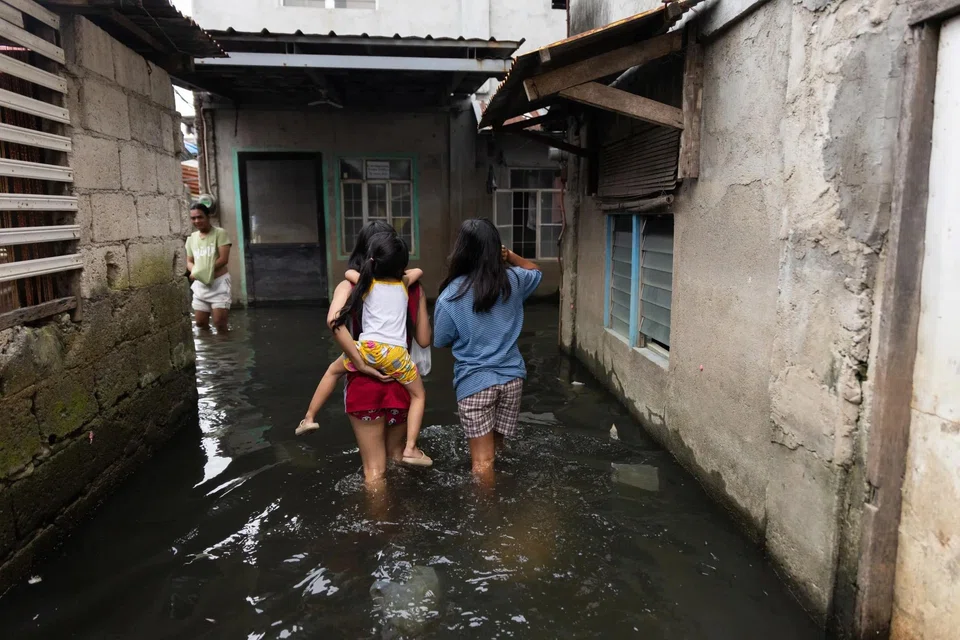
The scandal centres on the alleged failure of public authorities to dedicate the funds at their disposal to the declared goal of building defences against flooding. Some flood infrastructure projects such as dikes either weren’t built or collapsed as soon as storms hit, possibly contributing to hundreds of deaths.
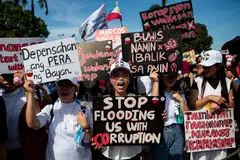
The revelations of corruption have triggered mass protests across the country, with subsequent investigations resulting in more than US$200 million worth of assets being frozen. Three government ministers quit, and several public officials have been arrested.
After the illicit dealings came to light last year, Robeco, Mirova and Neuberger Berman Group separately told Bloomberg News they were liaising with the government to understand their exposure. Robeco had said it may divest if it did not receive “a robust answer.”

Investors are now hoping a coordinated pressure campaign will force the government to act, the people familiar with the matter said. They’re also seeking clarity on how the government plans to strengthen the power and independence of institutions as part of the corruption crackdown, and how it will improve standards for the selection and evaluation of projects, one of the people said.
About 168 billion pesos (S$3.4 billion) of the proceeds of Philippines sustainability bonds have been allocated to flood-control projects, according to Bloomberg calculations based on government reports. That’s roughly 39 per cent of all proceeds. Over US$7 billion of sustainable bonds have been issued by the Philippines government since 2022 and sold in US dollar, euro and Japanese yen capital markets.
The scandal involves the alleged collusion of politicians and contractors to receive kickbacks, with up to 70 per cent of government funds for flood-control projects lost to corruption. Philippine President Ferdinand Marcos Jr brought attention to the issue in a State of the Nation Address in July, after typhoons flooded many parts of the country’s north.
The government hasn’t issued any bonds with environmental, social or governance labels since August, according to data compiled by Bloomberg Intelligence.
“It’s quite telling that since 2021, the government has only issued sustainability-labelled debt, and this year in January they came to the market with a non-labelled bond,” said Rose Choy, research director for Asia-Pacific at the Anthropocene Fixed Income Institute, a nonprofit that looks at how debt markets can help mitigate climate change.
“Most people are concerned about transparency, as they should be,” she added. “So if and when they plan to issue more labelled use of proceeds debt, the allocation and governance of this will be scrutinised.” BLOOMBERG
Decoding Asia newsletter: your guide to navigating Asia in a new global order. Sign up here to get Decoding Asia newsletter. Delivered to your inbox. Free.
Share with us your feedback on BT's products and services
TRENDING NOW

Britain’s mansion tax shows the difficulty of targeting wealth

Once staunchly pro-China, Malaysian Chinese businesses are now distancing themselves from Beijing

The only common thing in S-E Asia is that we all eat rice: Cisco’s Asean president

Singapore data centre operator DayOne opts for US IPO at likely US$20 billion valuation

