



Future Food’s RM50 million rise was years in the kneading and proving
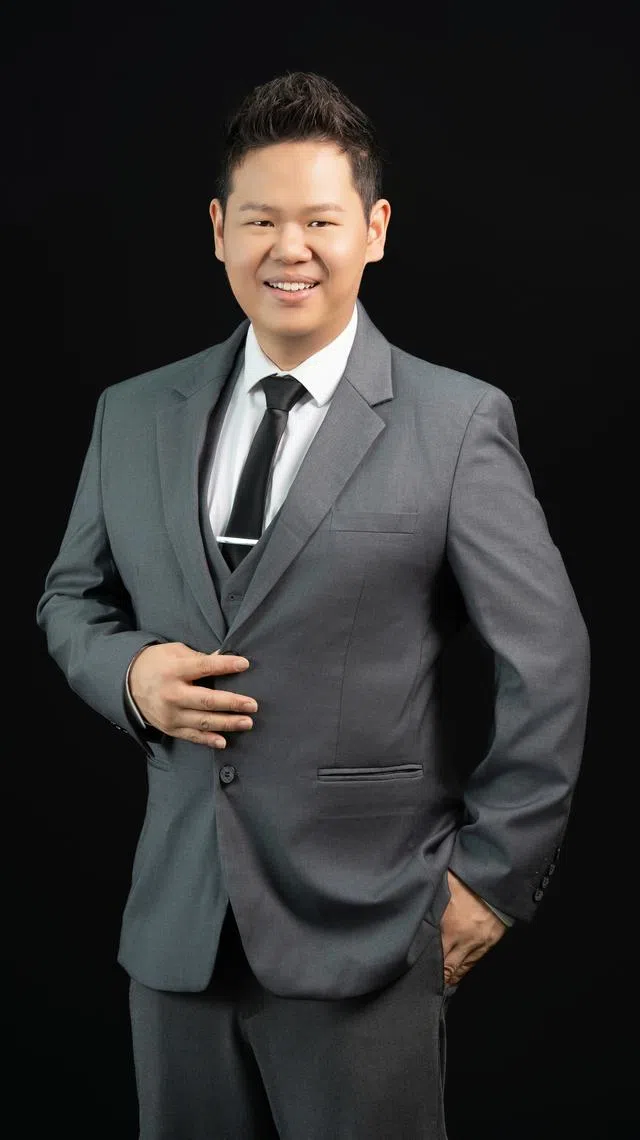
Founder Sean Tan has built a leadership style anchored on understanding, not commanding
The strategies and stories that shape today’s leaders
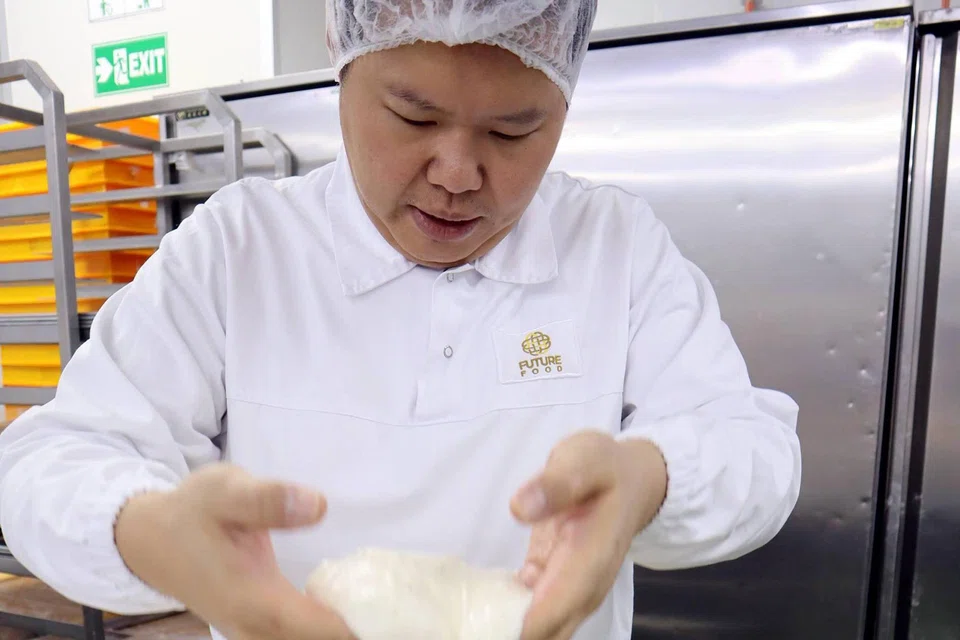
[ISKANDAR PUTERI] A sourdough starter sits at Future Food’s facility in Nusajaya Tech Park – a living culture Sean Tan has kept going for 12 years. Built on fermentation and patience, it has become his rule of thumb for running a business: do the small things consistently and give processes time to develop.
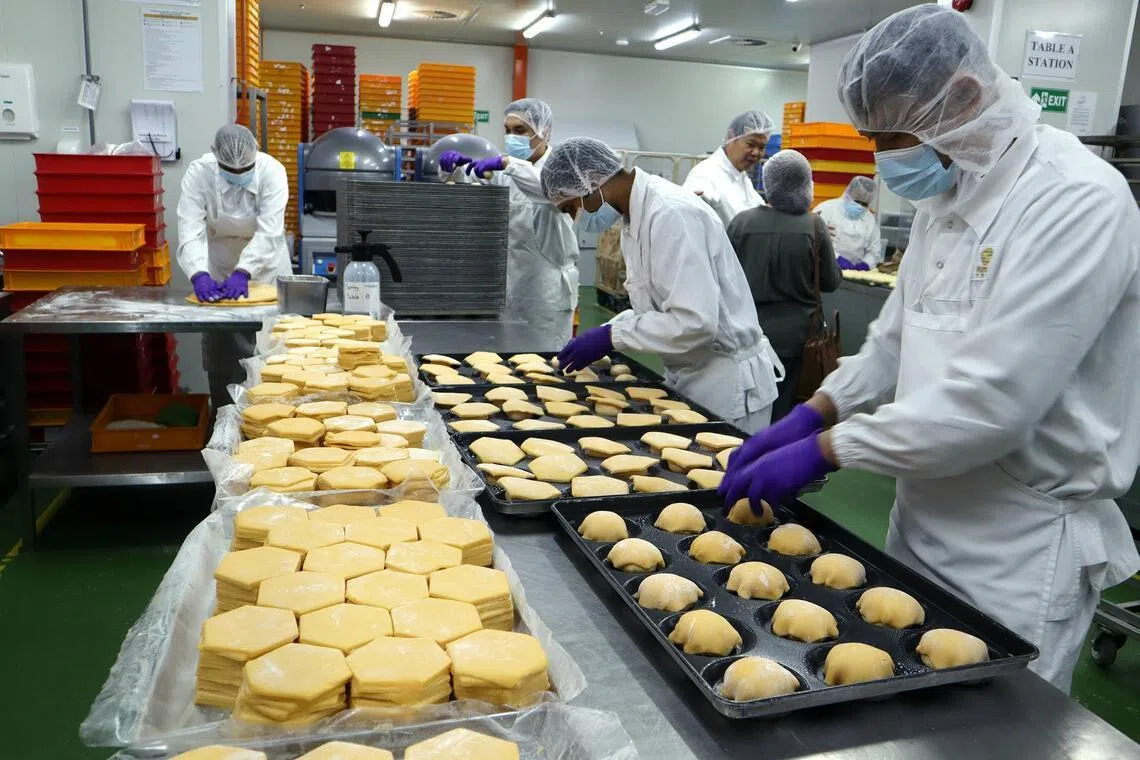
That same approach has taken Future Food from a Skudai shophouse to a halal bakery manufacturer with roughly RM50 million (S$16.2 million) in annual revenue, employing about 300 people across three facilities, he said. Two more facilities in Johor are set to start operations soon.
“When I’m kneading dough, my mind slows down,” Tan said. “It reminds me why I started this in the first place.”
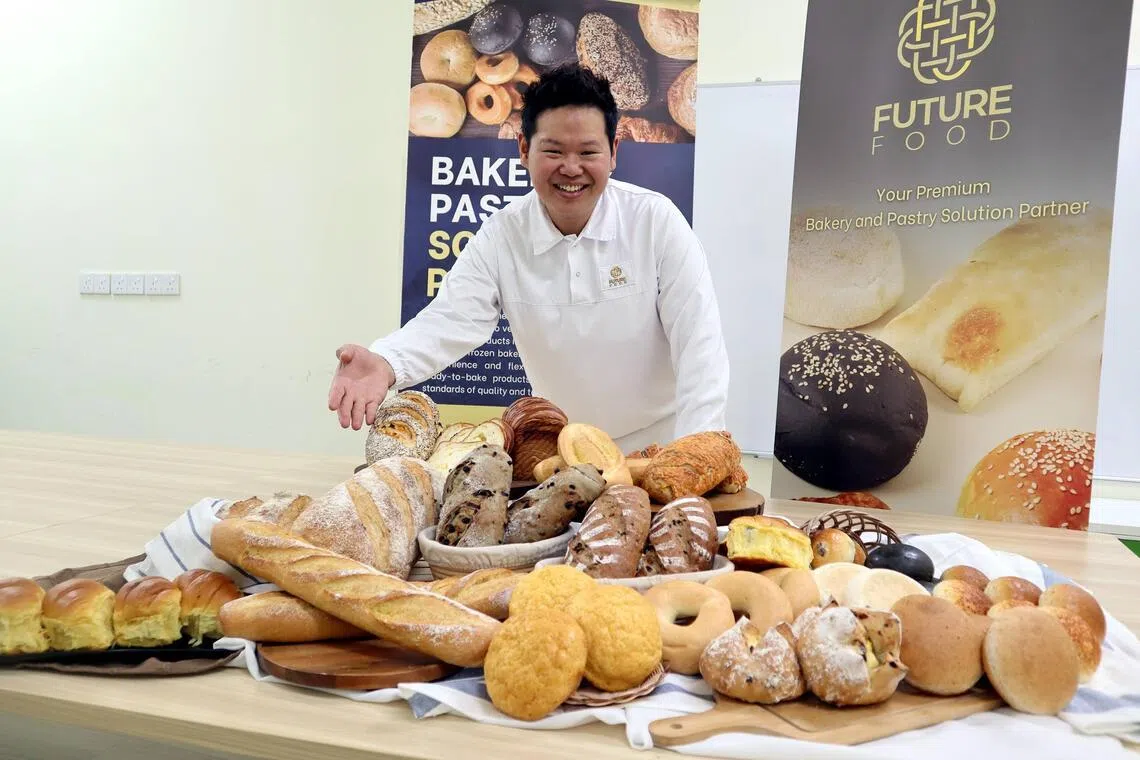
The company was started by Tan and his two brothers Ian and Chee Seng. Ian, the older brother, went on to graduate from Nanyang Technological University while his younger sibling Chee Seng studied at the National University of Singapore.
Tan took a different route. He left secondary school with five E grades in his Sijil Pelajaran Malaysia (SPM) examinations – “five elephants”, as he jokes.
He insists his business has grown because he refused to chase it.
“Most business schools will tell you this is wrong,” he said. “A lot of businesses chase growth and profit. But it’s about taking care of people – and letting profit become a byproduct. If you do the right thing, profits will come.”
But after 12 punishing years in Singapore kitchens, and a business journey that nearly ended during the Covid-19 pandemic, Tan has built a company where output outweighs ROI (return on investment) and a leadership style anchored on understanding, not commanding.
It is a deliberate rejection of command-and-control. “A lot of people think leadership is giving orders. But when you understand people’s motives, the history, the process, as well as the difficulty and the possibilities, you can decide how to help them do what needs to be done,” Tan said.
He describes his leadership philosophy with a Chinese concept, “guan li”. For him, the first part is self-management: discipline and setting the standard. “Management and leadership: don’t ask people first. Ask yourself first,” he said.
The unlikely path
Tan’s options narrowed early. His father died when he was two; his mother raised the children alone and never remarried. After his SPM results, he went straight to work.
“Ian (elder brother) was studying on a full scholarship at Nanyang Technological University, but he still needed money for food and lodging,” Tan said. “So I decided to work – and working across the Causeway was more feasible than working in Malaysia because of the exchange rate.”
He began as a part-time baker in 2006, then enrolled in Baking Industry Training Centre in 2007. Tan moved through a German-style bakery and later an artisanal operation, where he rose from baker to section head managing 20 staff. He eventually joined The St Regis Singapore in 2011, and later held senior baking roles at hotels including One Farrer Hotel.
The hours were gruelling. At its worst, he recalls working up to 36 hours in a single stretch. “Ten to 12 hours was the minimum,” he said.
What he took from that period was exposure to international standards and different baking traditions. He also travelled to study how different cultures approached bread and production – Germany for precision, Japan for innovation, China for speed and cost efficiency.
In 2016, Tan returned to Johor and began building what would become Future Food. The move was a professional reset and it collided with a family crisis that forced him to grow up fast as a leader.
The crisis that changed everything
When he came back, he discovered his mother had kidney failure. She had kept it from him while he was still working in Singapore. “My mother didn’t want me to feel burdened. She wanted me to continue my dreams. She initially didn’t even want to go for dialysis,” he said.
She eventually agreed to treatment. His mother, now 69, has been on dialysis for almost a decade, he added. In the early years, Tan ran the bakery on little sleep and spent nights at the hospital while his mother went for dialysis three times a week.
“Sometimes I kept thinking, why? I could continue work in Singapore, I have a very good income, I don’t need to worry,” he said. “But my mom was always beside me to give motivation.”
From three brothers to 300 staff
Future Food started in a small shophouse with the three brothers doing everything themselves. They bought ingredients, handled production and delivered orders.
Production was manual at first: about 100 to 200 pieces a day. The first meaningful step-change came when a Singapore burger operator approached them to supply buns, which marked the company’s entry into B2B volume.
Growth brought a different problem. Tan realised the approach that worked in Singapore kitchens – pace, perfectionism and tight personal control – needed to be recalibrated back home.
“When I started to manage, it was very difficult... It’s not like how we manage in Singapore,” he said. “I needed to groom a team… I had to jump up from the production line and become a leader,” he said.
By 2020, the company had expanded across about eight rented shoplots along the same row, with different products in different units, and more than 60 staff. Then the pandemic hit.
The pivot that saved it
“We almost wanted to shut down the business,” Tan recalled. “I sat down with the management team and we said: either we shut down, or we change.”
Future Food shifted from B2B deliveries to direct-to-consumer online sales, delivering frozen bakery products to customers’ doorsteps. Demand jumped in the first month, he said. The company also secured another major client early that year, stabilising volumes through the disruption.
The episode reshaped Tan’s thinking about growth. “Before Covid, everyone was chasing numbers – turnover, sales, all the figures,” he said. “Covid made us think: why can some people survive and some people can’t? The more you chase profit, the more you lose.”
Building scale meaningfully
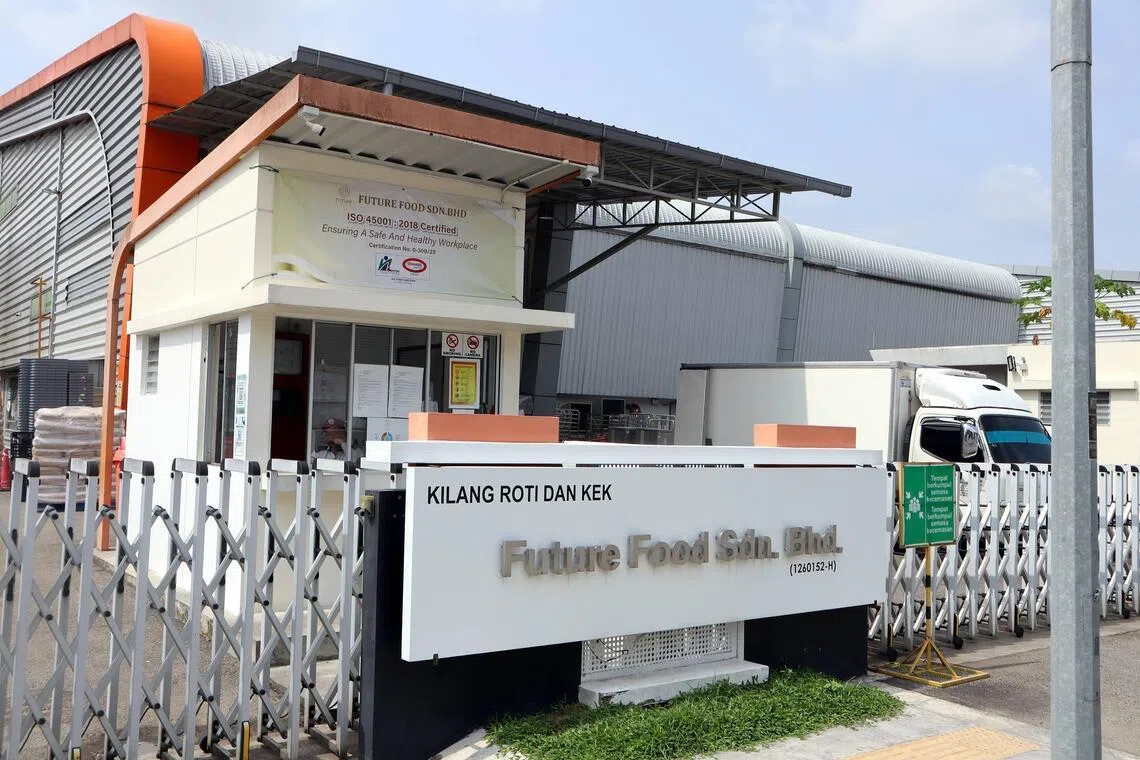
In 2022, the company relocated to Nusajaya Tech Park in Gelang Patah. Today, it produces about 100,000 pieces a day across roughly 400 stock-keeping units, from raw dough to ready-to-serve pastries, Tan said.
Since incorporation in December 2017, revenue has grown 100-fold, he added.
Most sales are domestic, with exports led by Singapore and smaller volumes to Australia, he said. Rather than pushing off-the-shelf frozen products, the company works to customer specifications. “We don’t do what we have. We do what the customer wants,” Tan said.
Future Food also supplies Verrona Hills – a premium bakery chain in Malaysia – and was among the 30 finalists at the Emerging Enterprise Awards 2025, which drew nearly 600 applications across the region.
Tan said he has avoided franchising. “The franchise model is a quick way to make money… It is better to nurture our own team,” he said.
Play dough
The transition from craftsman to leader did not come naturally. For years, he stayed close to production – “always played with the dough”, as he put it – because doing the work himself felt reliable. The harder lesson was learning to hand the work over without lowering standards.
“If you only focus on doing, you can feel proud. But what about your staff? Your partner? Your family? You enjoy your own shine,” he said.
“I needed to move on from not only focusing on doing the things, but focusing on how to let other people also do the things,” he continued.
His operating principle is focus. He cites Huawei founder Ren Zhengfei’s “four one” philosophy – meet 1,000 people, read 1,000 books, focus on one thing, and go 1,000 metres deep – as a reminder that scale is not built by constantly switching direction.
Tan says the company does not run on fixed revenue targets. “For sure, we worry we are poor, but we never mentioned how much we want to earn,” he said. “We only focus on what we continue to drive and do.”
Three questions with Future Food founder Sean Tan
Q: Was there a pivotal moment in your career or personal life that changed your approach to leadership?
Covid-19 was the turning point.
I remember we had over 60 staff in 2020, and we sat down with my management team facing this decision: either we shut down today or we change. That moment made me realise something: the more you chase profits, the more you lose.
You start asking different questions: Why can some people survive after Covid and some people can’t? And the answer isn’t about who had the biggest revenue or the fastest growth. It’s about who took care of their people.
Now, before anything else, I ask: Can my team grow from here? Will this make life better for the people we serve? If you do the right things, the result will come.
Q: What is one piece of “unconventional wisdom” you swear by that most business schools would tell you is wrong?
I believe a lot of businesses are chasing growth and profit. But it’s about taking care of people and letting your profit become a byproduct. Most business schools would disagree.
People ask about projections and targets. I focus on output. Keep producing and whatever the situation, it will take you somewhere.
It’s like farming. Plant, tend, feed – and eventually, harvest comes. If you’re calculating the ROI of every seed before you plant it, you’ll never grow anything.
Q: When you feel burnout creeping in, what’s your non-business-related “panic button” activity or routine that reliably resets your focus?
My panic button is very simple. I go back to being just a baker and a son. Not a managing director.
Sometimes that means waking up before dawn, going to a bakery alone, and making bread with my own hands. No meetings. No spreadsheets. Just the sound of mixing. The feel of the dough. The smell of the bread in the oven.
I can make coffee. I can make bread. I can make pastries. These are the things I love to do, even though people say it’s boring. Sometimes to master something, you have to keep doing the boring things – over and over again.
I’m very lucky. I do the thing that I like. When things feel overwhelming – when the numbers and the management and the decisions pile up – I remember: I’m still that person who loves the craft.
Just like the sourdough starter I’ve kept alive for years. You feed it. You tend it. You give it time. You can’t rush it. And it rewards patience with something alive, something that grows, something that nourishes.






