


Asean Business logo
SPONSORED BYUOB logo

From ghost town to potential wealth magnet: 6 family offices get green light to operate in Forest City

Malaysia hopes these SFOs can give the zone an economic purpose beyond a cautionary tale
Summarise
    • Questions remain over whether a handful of family offices can generate enough economic activity to revitalise the Forest City mega development.
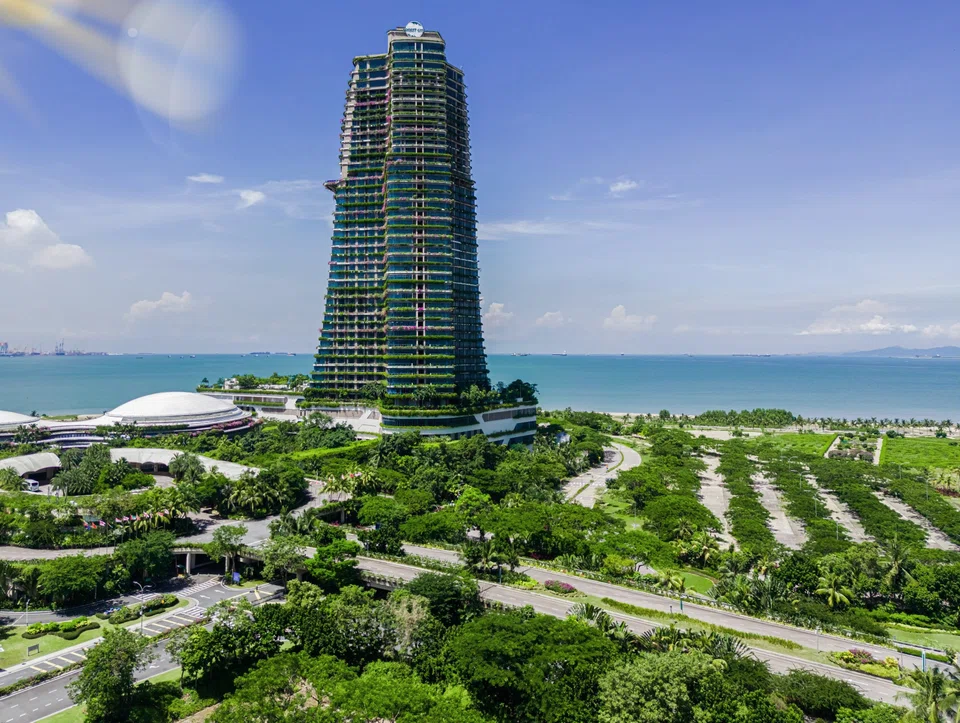
    • Questions remain over whether a handful of family offices can generate enough economic activity to revitalise the Forest City mega development. PHOTO: CGPV
    Published Wed, Dec 17, 2025 · 07:00 AM

    [GELANG PATAH, JOHOR] A small but noticeable stir of activity is emerging in Forest City, hints that the vast mega development in Malaysia’s Johor Bahru may be inching away from its “ghost town” reputation – or, at least, signalling the hope that it is. 

    A growing mix of eateries, including the popular Thai outlet Kampung Carabao, which opened a year ago, now occupies part of the retail strip, in one of the clearest signs that Forest City may be coming to life.

    A transport hub anchors part of the site, with Causeway Link buses connecting the development to multiple parts of Johor Bahru and Tuas in Singapore. Routes to Kuala Lumpur are also advertised.

    In the corridors, foot traffic remains light. Where three duty-free outlets once stood, a single anchor tenant now occupies nearly all the retail frontage they previously shared.

    The biggest changes are largely out of sight.

    Six families have secured conditional approval to establish a presence in the Forest City Special Financial Zone (SFZ) under the Single Family Office (SFO) Incentive Scheme, bringing in about RM400 million (S$126.2 million) in assets, the Securities Commission Malaysia said in an October briefing.

    The programme itself has received more than 30 expressions of interest, the regulator added.

    Malaysia is betting on this framework to reshape Forest City’s trajectory. These SFOs may be able to do what residential sales could not: give the project an economic purpose beyond its reputation as a cautionary tale.

    Samuel Tan, chief executive of Olive Tree Property Services, said the approvals are a starting point. He noted that the initiative remains in a “pilot phase”, and time is required for the policy incentives to prove they can pull Forest City out of its troubled legacy and build an ecosystem that is on a par with established financial centres.

    But can a handful of family offices generate enough economic activity to revitalise a development originally intended to serve as tens of thousands of homes?

    Old Street Coffee is among the growing number of eateries signalling that Forest City is slowly coming to life. PHOTO: CHUAH BEE KIM, BT

    Early movers

    Maybank, Malaysia’s largest commercial lender, opened its Forest City branch on Nov 10. It was the second bank to operate in the SFZ, after CIMB.

    Already, Maybank has helped two SFOs establish a presence in the zone: One KL Management – which is the first family office to set up in Forest City – and Beach Capital.

    One KL Management is a vehicle of Chua Ma Yu, a prominent figure in Malaysia’s capital markets scene and the co-founder of RHB Bank.

    Maybank said last month that there are 13 more SFOs in its facilitation pipeline.

    Another early mover is Yow Kee Family Office, which is owned by David Chong, the founder of regional trust and family office service provider Portcullis. He has been dubbed by the Singapore Academy of Law as “the guru of Asian family offices”.

    Three more banks have expressed interest in helping SFOs set up in Forest City, Country Garden Pacificview (CGPV), the zone’s master developer, said in response to queries from The Business Times.

    “Malaysian family offices are not competitors to Singapore, but rather, complementary and strategically synergistic partners,” it added.

    The developer also noted that Forest City’s location – adjacent to Singapore – offers cross-border convenience for family members and investment teams.

    A sales gallery in Forest City. PHOTO: CHUAH BEE KIM, BT

    Malaysia has set a target of RM2 billion in assets under management by end-2026 for the SFZ. It also described the interest thus far in the SFO scheme as “encouraging”, following its zero-tax gazette for family offices within the zone in early October.

    Seeing the forest from the trees

    Forest City was conceived as a four-island mega development with capacity for 700,000 residents. It was launched in 2016 to considerable fanfare. 

    So far, one island has been developed with infrastructure including a golf resort, an international school and residential towers. They represent just a fraction of the original master plan.

    Dominating the skyline is the 45-storey Finance Centre Phase 1, the project’s tallest block and home to the Invest Malaysia Facilitation Centre, a one-stop hub to bring together state and federal agencies for the Johor-Singapore Special Economic Zone.

    Forest City’s pitch to SFOs is simple: zero per cent income tax for up to 20 years and a RM30 million asset threshold – a combination that undercuts the incentives of regional rivals such as Singapore and Hong Kong. 

    The initiative gained firmer footing in October, when authorities officially confirmed the zero-tax rate, capital gains exemptions on initial asset injections, 50 per cent stamp duty cuts, and withholding tax relief.

    Securities Commission Malaysia said that to qualify for these tax incentives, SFOs must maintain a dedicated office and staff presence within the Forest City SFZ, although related management companies and service providers can be based elsewhere in Malaysia or offshore.

    Eligible SFOs are allowed to hold portfolios spanning listed securities, private equity, real estate and commodities.

    Forest City’s status as a duty-free zone also means certain imported goods can enter with reduced or waived duties. This can be attractive to families moving high-value items such as art or collectibles, but advisers noted that tax perks alone are unlikely to outweigh concerns about location and long-term policy stability.

    The stakes extend beyond one development. 

    Securities Commission Malaysia projected that family offices across the nation could generate RM3.4 billion to RM9.4 billion in economic benefits until the end of 2044 if the SFZ model succeeds and scales.

    It will test whether competitive tax policies alone can shift wealthy families’ location decisions in the increasingly crowded wealth management landscape of South-east Asia.

    Property prices perking up

    Tan of Olive Tree said the growing momentum coincides with the first signs of a property market recovery in Forest City.

    He estimated that average transaction prices have risen about 14 per cent from a low base, marking the first sustained upward movement since tighter policy measures in 2018 effectively froze the market.

    Even so, commercial rents remain well below those of established Johor Bahru locations at around RM3 to RM5 per square foot, compared with RM5 and above in prime city areas, he added. 

    Buyer interest spans multiple Johor locations as well, with Forest City having to compete against transit-oriented developments near the planned Rapid Transit System Link (RTS Link). 

    It is unclear if the activity from a few SFOs can move the needle for the development. 

    A transport hub links Forest City to other parts of Johor Bahru, Kuala Lumpur and Singapore. PHOTO: CHUAH BEE KIM, BT

    JLL Malaysia managing director Jamie Tan said Forest City’s family office scheme is a long-term repositioning play, rather than an immediate market catalyst.

    While ultra-wealthy families do need some property, even 30 family offices translate into modest demand – usually a single office suite and one or two residential units each.

    Similarly, 50 family offices each employing 10 to 15 staff would generate demand for 500 to 750 residential units – just a fraction of Forest City’s existing inventory, one observer said. 

    JLL’s Tan said the realistic path for the zone likely involves a multi-decade build-out targeting families seeking a South-east Asian location with favourable tax treatment and lower barriers, instead of competing with established financial centres.

    Moreover, Forest City’s location – about 30 km from the Johor Bahru city centre and the future RTS Link – limits its appeal to families seeking connectivity to Singapore or broader Malaysian business activity.

    Also weighing on their decisions is Malaysia’s wider regulatory environment, which can be uncertain.

    The government must now persuade wealthy families to establish permanent structures in Forest City – a task made all the more challenging by its tightening of property purchases by foreigners in 2018. This effectively cooled the once-bustling property market and led to the development’s ghost town moniker.

    One market observer said that while gazetted incentives help to narrow the credibility gap, a certain trust deficit persists.



