


Gold prices will fluctuate but unlikely to dip below US$1,500: traders
Tan Ai Leng
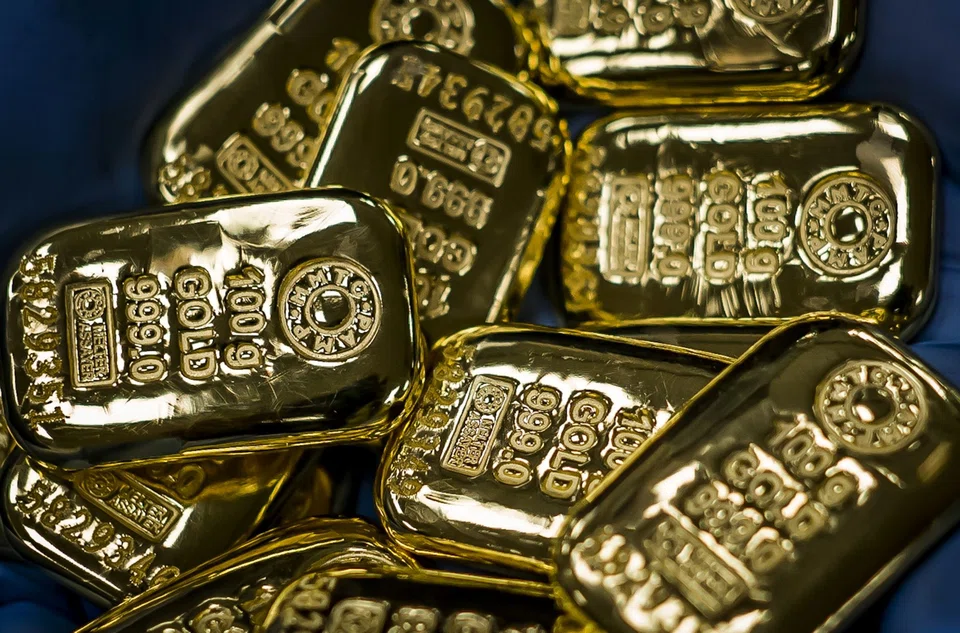
Gold prices will continue to fluctuate ahead of the US Federal Reserve’s expected interest rate hike later this week, but the cost per ounce of the precious metal is unlikely to dip below the US$1,500 level, traders said on Monday (Sep 19).
Speaking at an event organised by Bursa Malaysia in Kuala Lumpur, Singapore Bullion Market Association chief executive officer Albert Cheng said the current dip was driven by the high interest rate environment. He added that gold prices will stay at its current levels “for a while, but they will not go below US$1,500”.
Gold prices fell on Monday due largely to a stronger greenback as investors ready themselves for more interest rate hikes by the Fed and other central banks during the week as they seek to rein in higher inflation.
Spot gold was down 0.8 per cent at US$1,661.65 an ounce, while US gold futures fell 0.8 per cent to US$1,670.80. The gold price peaked at US$2,039 on March 8 after the US announced an import ban on Russian oil due to the Ukraine war.
“There will still be demand for gold by central banks around the world and consumers (for gold jewellery). Prices will recover and reach US$1,800 by the end of this year after the market stabilises in the coming quarter,” said Cheng.
Gold prices have hovered above US$1,700 since June 2020, said Philip Nova’s senior commodities manager Avtar Sandu in a report, adding that a break below US$1,700 would see a decline to the next support level of US$1,450.
Another gold futures trader, who did not wish to be named, noted that the current price fluctuation is mainly due to speculation as the market has already priced in the Fed’s next interest rate hike.
“The prices will rebound after the latest round of interest rate hikes this week, and the volatility will ease in the blank window in October before declining further in November. But the prices should stay at a support level of between US$1,600 and US$1,650. It will not drop below US$1,500 as suppliers will stop producing if the price is too low,” he said.
Cheng noted that global gold demand for the first 6 months of 2022 increased 12 per cent year-on-year to 2,189 tonnes. The World Gold Council said that the demand for gold jewellery is healthy in many countries in South-east Asia, especially Indonesia, Thailand, Vietnam, Singapore and Malaysia. As a whole, South-east Asia is the third largest market in the world after China and India.
He cited the reopening of international borders and the relaxation of Covid-19 restrictions as the main reasons for the stronger demand in the region. For instance, jewellery demand in Singapore rose 43 per cent year-on-year to 2 tonnes in the first 6 months of this year, while demand in Malaysia soared 35 per cent to 3 tonnes over the same period.
Separately, Cheng expressed optimism that Indonesia’s plan to set up a bullion bank would catalyse the regional market and drive more collaborations within the region.
Singapore, being Asia’s hub of precious metal trading, will be able to help on this front, he said, adding that Singapore’s bullion banks or related service providers could tap into the Indonesian market to facilitate bilateral or international trading.
Indonesia, home to one of the world’s largest gold mines, recently said it would establish a bullion bank by merging Bank Rakyat Indonesia and PT Pegadaian in a bid to end the country’s dependence on parking gold reserves in Singapore.



