Government incentives, rising fuel prices drive Malaysia’s EV sales

[KUALA LUMPUR] Electric cars seem to be all the rage in Malaysia these days, if the latest sales figures are any indication.
According to fresh government data, there were 7,500 electric vehicles (EVs) sold in the first nine months of 2023 – more than double the 3,400 that were sold for the whole of last year. From 2019 to 2021, EV sales were below 300 units a year.
Generous government incentives, hefty discounts from car dealers and the expectation that fuel costs are only going to go up further are among the main reasons why more drivers are switching to electric.
Among the incentives being dished out are full exemptions on road tax, and tax relief of up to RM2,500 (S$724.50) for the cost of installing chargers and servicing.
One of the EV converts, Michael Foong, the chief administration officer of a logistics company, installed a charger at home. With his car company offering a free charger when he bought his electric car, he only had to pay a one-time installation fee of about RM1,000.
While the 40-year-old does not know the exact cost of each charge, he admits it’s a fraction of what he used to pay for petrol or diesel. It’s estimated that using a home EV charger costs anywhere from RM15 to RM47 for a full charge, depending on the battery size and the motorist’s driving pattern.
Joyce Kay, a telco executive who bought an electric car earlier this year, said the rising petrol prices were her main consideration. The government is looking to remove the blanket fuel subsidy and introduce targeted subsidies sometime in 2024.
She uses a fast EV charging service near her condominium in Kuala Lumpur, and spends no more than RM200 a month. Previously, she had to pay nearly triple that, or RM560, for a month’s worth of petrol.
Billions in subsidies
Currently, the owners of Malaysia-registered vehicles enjoy a lower rate of RM2.05 per litre of RON95 petrol, which is much lower than what motorists in Singapore, Thailand and Indonesia pay for a similar grade of petrol.
Last year, the Malaysian government spent RM62.1 billion in subsidies, with nearly three-quarters (RM45 billion) allocated to subsidising petroleum products.
Malaysian Prime Minister Anwar Ibrahim unveiled a record Budget spending on Oct 13 with more fiscal reform measures including subsidy rationalisation.
He projects a budget deficit of 4.3 per cent of gross domestic product (GDP) for 2024, narrowing from an estimated 5 per cent in 2023.
The fuel subsidy rationalisation, coupled with the government’s initiatives in encouraging EV ownership, is part of the initiatives to realise the country’s net-zero greenhouse gas emissions target by as early as 2050.
Under the National Energy Transition Roadmap, which was launched in August, the government has raised the target of EV ownership to 15 per cent of the car sales by 2030. Currently, the 7,500 EV sales was just slightly over one per cent of the estimated total sales of 725,000 this year.
Bower Group Asia analyst Ahmad Mohsein Azman said that Malaysia’s EV industry has lagged behind its regional peers – Indonesia and Thailand – but the country still stands a good chance to compete with the collaboration with global players.
“Recent investment announcements by multinational companies such as Geely and Samsung SDI for EV-related investments are certainly encouraging as this will bring in more advanced technologies,” he told BT.
Ahmad Mohsein said the adoption of new technologies will provide Malaysia with a more level playing field in competing with other countries in the region.
“As the underdog, Malaysia must strike the right balance between policy and industrial development to enable the EV industry to flourish,” he added, noting that the sustainability of tax breaks for purchasers is equally important to continue generating demand for EV.
Malaysia is the third-largest automotive market in the Asean region and the automotive industry contributes around 4 per cent to the country’s GDP.
The government has identified the EV ecosystem as a key growth driver and aims to become an EV powerhouse in South-east Asia, leveraging its leading advantage of electrical and electronic manufacturing hubs in the region.
The Automotive High-Tech Valley project in Perak, a collaboration between DRB-Hicom and China’s Zhejiang Geely Holding Group, is set to be a hub where automotive industry professionals can live, work and develop new technologies that will be used in next-generation vehicles and energy-efficient vehicles.
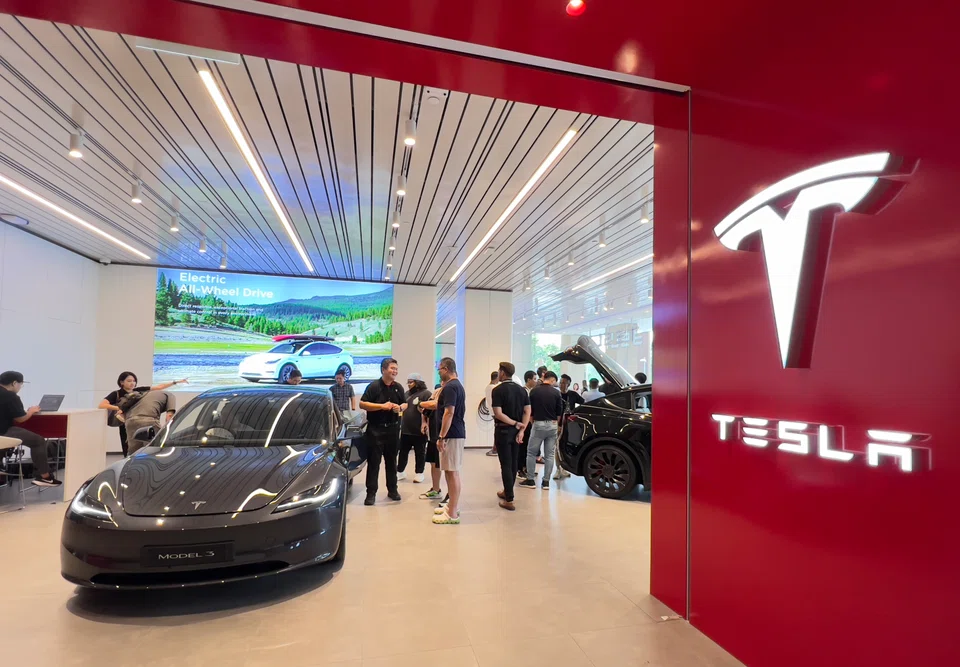
The opening of the first Tesla centre in Cyberjaya has fuelled the government’s efforts in driving the EV industry.
During the launch of the Tesla centre in early October, Malaysia’s Minister of Investment, Trade and Industry Zafrul Aziz said the presence of global players will spur the development of local EV supply chain and anticipate more innovations that will “put Malaysia on the global map of sustainable transportation”.
To complete the ecosystem, the government is also ramping up efforts to expand the country’s EV charging infrastructure and setting a target of building 10,000 EV charging stations by 2025, from the current 1,000 EV charging stations.
Companies that contribute to participating in EV infrastructure building will also enjoy tax breaks.
EV producers, meanwhile, can benefit from tax exemptions on imports, excise duty and sales of EVs.
Currently, all EVs in Malaysia are imported but the national car manufacturer Proton has started its EV journey, with the first Proton EV model expected to be launched as early as 2025.