Growing middle class, burgeoning startup scene in Thailand light paths for Singapore businesses: SBF
Business chamber chief notes untapped potential in digital economy, and chances to match demand for venture capital

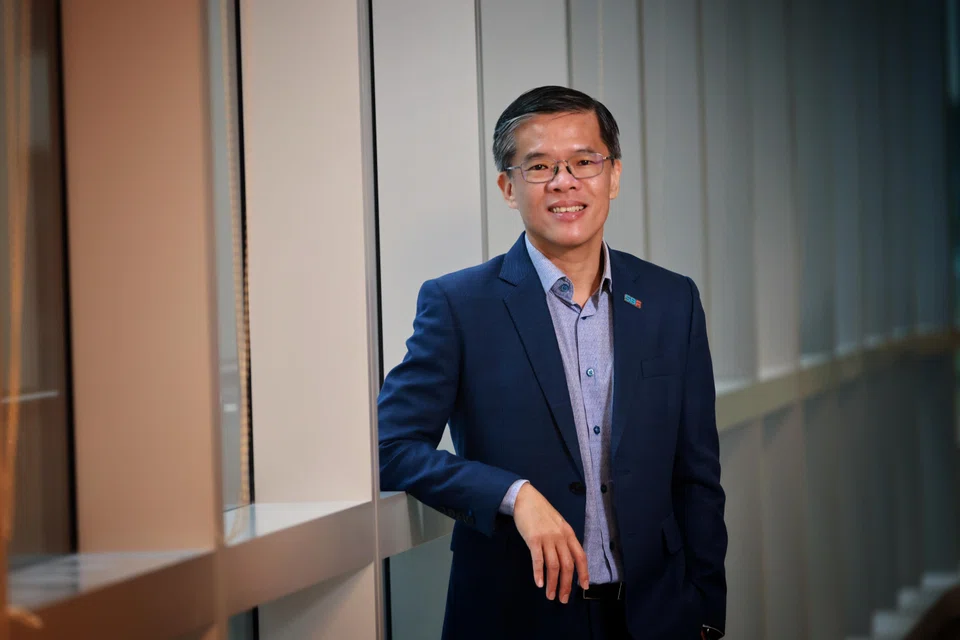
[BANGKOK] Tailwinds from government-led investments in key sectors, a structurally fertile consumer market, and strong avenues for financing have created more pathways for Singapore-based businesses to expand into Thailand.
Kok Ping Soon, chief executive of the Singapore Business Federation (SBF), told The Business Times that Singapore enterprises are increasingly seeking to invest, foster business relationships, or enter the market in Thailand.
He noted the two countries’ strong bilateral ties as a key driver. “Strong government-to-government relationships are even more important now than before because of current global uncertainties,” he added.
“With rising tariffs and protectionist policies, companies are more aware of how free trade agreements can help to configure their supply chains.”
Thailand’s Board of Investment (BOI) has been particularly active in courting foreign partners.
At the Singapore Regional Business Forum in Bangkok on Tuesday (Aug 19), BOI secretary-general Narit Therdsteerasukdi highlighted that the Thai government has rolled out programmes to help foreign joint ventures integrate into priority industries.
In supporting the electric vehicle (EV) transition, for instance, Narit said that incentives such as corporate income tax perks will be rolled out for jointly owned EV manufacturers that use locally sourced parts worth at least 40 per cent of raw material value.
“Traditionally, Singapore’s investments in Thailand have been in real estate, food and beverage and retail. But in the digital economy, we’ve barely scratched the surface.”
Kok Ping Soon, chief executive of the Singapore Business Federation
For Singapore-based Eigen Energy, a sustainable energy solutions provider which has been in Thailand’s EV and solar panel market since 2022, the kingdom has proven particularly fertile for regional expansion.
“While there’s still a number of bigger local players, the market in Thailand is large enough to ensure that smaller players with a good market strategy can still enter,” said Geraldina Koh, country manager for Thailand at Eigen.
She added that support from Singapore’s ecosystem has also been crucial. “Being a Singapore company, we were able to leverage grants from SBF and Enterprise Singapore for overseas expansion.”
Digital opportunities
Within the digital space, SBF’s Kok pointed out that many more opportunities for enterprises in both Singapore and Thailand could emerge, given the growing middle class and increased familiarity with digital services among professionals.
“Traditionally, Singapore’s investments in Thailand have been in real estate, food and beverage and retail,” he said. “But in the digital economy, we’ve barely scratched the surface.”
Rather than competing with Singapore’s digital industries, the space has unlocked new markets for the Republic’s enterprises to enter.
Skills upgrading, for one, is an emerging area for further investment, said Kok. Singapore companies could collaborate with Thai ministries to provide training to the domestic workforce in digital sectors.
He noted that some Singapore cloud-based service providers have carved out niches in helping Thai enterprises move business processes onto digital cloud systems.
“Beyond that, even in areas like sustainability and agrifood, there is still a lot of untapped potential. Singapore businesses can involve themselves in these trends,” he added.
Matching venture capital demand
Furthermore, these pathways between the two countries are helping to match financing demand from Thai enterprises with Singapore-based funding.
“Some of the startups in Thailand may not have access to the necessary pool of venture capital to provide financing,” Kok said. “In Singapore, there is a very established venture capital ecosystem that can amplify these opportunities in Thailand.”
Local players such as Bangkok Bank – one of Thailand’s largest lenders – are also positioning themselves to finance cross-border businesses within strategic sectors.
“This is where SBF has been quite effective in creating satellite units in countries like Thailand. Having the right networks and knowledge of the land is very helpful to Singapore companies.”
Geraldina Koh, country manager for Thailand at Eigen Energy
Nattika Kanpawong, general manager of Bangkok Bank’s Singapore branch, told BT: “We partner clients in Singapore and elsewhere through loans, project financing and connecting them with new technologies via our network.”
The bank has been operating in Singapore since 1957, and has broad local expertise through its branches across Asean, she added. “For instance, clean energy looks different across different sectors – we tailor solutions for clients to meet local and industry regulations.”
More paths still lie northward of the kingdom. Kok believes that Thailand can act as a gateway for Singapore companies to expand further into countries such as Vietnam, Laos, Cambodia and Myanmar.
“Expanding into Thailand could be a great opportunity for Singapore companies to make use of the infrastructure there, to support their projects and investments in these countries,” he said.
Yet, for Eigen’s Koh, such expansion in and beyond Thailand remains an intricate process, one which relies heavily on having key inroads – often simply by knowing the right people.
“A lot of opportunities in South-east Asia still rely on having these connections,” she said.
“But this is where SBF has been quite effective in creating satellite units in countries like Thailand. Having the right networks and knowledge of the land is very helpful to Singapore companies.”