



Hanoi bets its future on a riverside to rival world’s great cities
The plan to beautify the Red River is part of a US$2.5 trillion plan to remake Vietnam’s densely populated capital
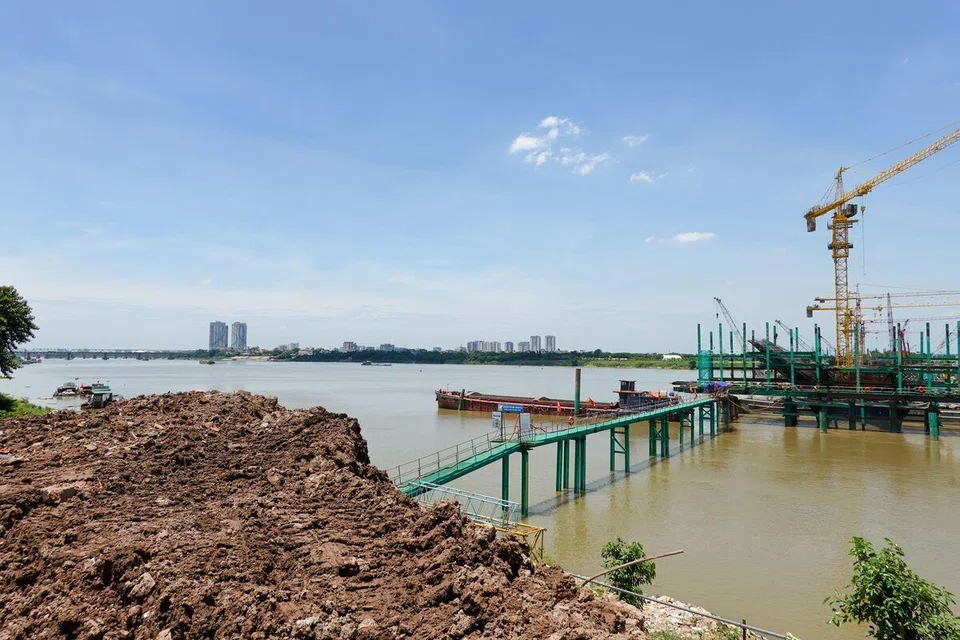
[HANOI] As Vietnam’s capital prepares for its biggest and most controversial redevelopment ever, anxieties over the project are plain to see in the village of Thuy Linh.
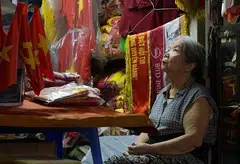
Red banners hang from nearly every house along its narrow lanes behind Hanoi’s Red River dike. Some call for preserving the village, while others urge authorities to listen to residents’ concerns. The language is carefully chosen, reflecting the rarity of opposition in the one-party state.
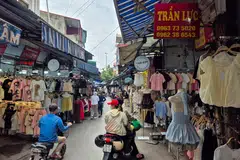
“We are worried and uncertain,” said Anh, a shopkeeper in Thuy Linh in her 50s who sells food and household goods, and who asked to be identified only by her first name as she was discussing a sensitive matter. “We don’t know whether we will be forced to relocate elsewhere or be allowed to stay nearby.”
The communities living along the Red River sit at the centre of Hanoi’s vision for its future – more than 11,000 hectares along the waterway is slated to become a vast urban corridor of parks, cultural venues and modern housing, aimed at replicating the gleaming riverbanks of cities such as Singapore, Shanghai and Seoul.
“In the longer term, the Red River axis could become a new symbolic space for Hanoi, much like the Seine for Paris or the Thames for London,” said To Van Truong, former director of the Southern Irrigation Planning Institute, a government research agency.
It’s one of the key elements of a broader US$2.5 trillion, 100-year plan to reposition Hanoi, whose name translates as “between the rivers”, as a globally competitive capital and accommodate a population that’s expected to almost double to up to 16 million in the next 20 years.
With the city targeting annual growth of 11 per cent over the next five years, it may also look to other Asian metropolises that have similarly tried to balance modernisation with conservation. Manila, for example, is also in the midst of an ambitious upgrade of its main river.
At the heart of the plan is an 80-kilometre boulevard designed to reconnect Hanoi with the river that gave birth to it, but that has largely remained outside its modern development.
“We do not view this as an infrastructure project. We view it as Hanoi’s Big Bang moment,” said Michael Piro, co-CEO of real estate developer Indochina Capital. “This completely flips the map” by transforming Hanoi from a city constrained by the river into one organised around it, he added.
SEE ALSO


The Red River, or Song Hong, originates in the mountains of China’s Yunnan Province and winds some 1,149 km across northern Vietnam, passing through Hanoi before emptying into the Gulf of Tonkin.
The river is currently “underused and underdeveloped”, said Michael Waibel, senior researcher at the University of Hildesheim in Germany, who has covered Vietnam’s development since the 1990s.
However, “the big challenge will be to deal with the existing population there”.
An estimated 200,000 people will be moved from their homes to make way for the nearly 737 trillion dong (S$36 billion) project, with completion due by 2038.
The Hanoi city chairman has said that new homes, alongside infrastructure, services and livelihood opportunities, should be built before trying to move people.
Vietnam’s tightly controlled political system gives authorities the ability to execute ambitious projects on a scale and timeline that might face greater hurdles elsewhere, though they can still encounter challenges on funding, land clearance and environmental concerns.
“As land belongs to the state, citizens have to accept it if the government decides to recover the land,” said Chuc, a Thuy Linh resident in his 40s who sells draft beer and fruit juice near a temple who asked only to use his first name. “We only expect fair compensation. If so, residents will happily accept it.”
His family, he said, has lived in the area for roughly 10 generations.
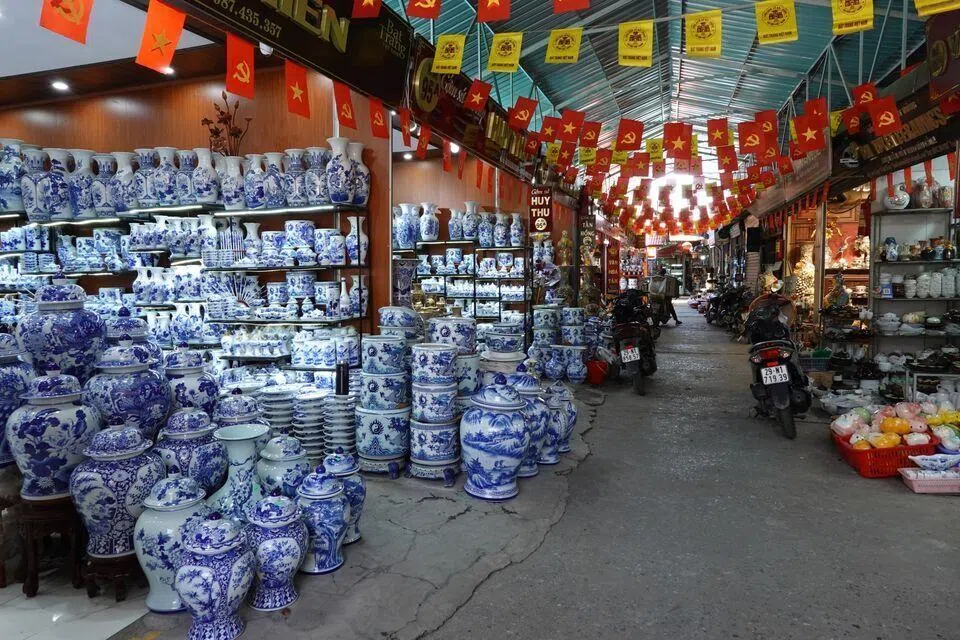
The decisions taken now will have a lasting impact on a capital renowned for its centuries-old shophouses and distinctive historical charm. Officials have pledged to preserve key cultural sites, but some residents fear that integrating them into newly built tourism and entertainment districts will dilute their character and compromise Hanoi’s heritage.
Thuy Linh is known for its annual, 1,000-year-old ball-wrestling festival, while the Bat Trang pottery village, whose ceramic traditions stretch back more than 700 years, also lies along the redevelopment route.
Hanoi’s residents are currently battling through massive construction projects that spew dust and fumes in one of the world’s most polluted cities, but the hope is that the inconvenience will result in a cleaner, more livable capital.
The introduction of public spaces along the waterfront with future amenities such as water parks and green areas will be a great chance for Hanoi, Waibel said, but it’s important that high-rise development does not block the city’s natural ventilation corridors.
The project could also provide a long-term fix for Hanoi’s chronic congestion. The capital currently has just two metro lines and limited bus routes, and motorbikes and private vehicles remain dominant.
Five new metro lines were recently launched, but they will not be ready until 2030 at the very earliest.
The “timing is right because investors are looking towards Vietnam now”, said Tony Chan, South-east Asia cities, planning and design leader at consultancy Arup. Transport is a priority with integrated planning needed, particularly for “last-mile connectivity to the metro stations”.
However, with much of the land tagged for redevelopment sitting on areas that traditionally act as floodplains, there are big questions about Hanoi’s flood defences, particularly as climate change makes northern Vietnam more susceptible to stronger storms. In 2025, severe rains left much of the city flooded for weeks.
“Planning must be based on extreme flood scenarios under climate change conditions and must ensure long-term safety factors for the entire dike system,” said the Southern Irrigation Planning Institute’s Truong.
Years later, once all the drilling and demolition is done, Vietnam’s government hopes to have a capital that better reflects the trajectory of one of Asia’s fastest-growing economies. Long-time residents like Chuc, the beer seller, want to make sure that they get to share in the new Hanoi.
“People wish to be resettled” in Thuy Linh, he said. “We should be able to enjoy the fruits of many generations of families building and cultivating this area.” BLOOMBERG
Decoding Asia newsletter: your guide to navigating Asia in a new global order. Sign up here to get Decoding Asia newsletter. Delivered to your inbox. Free.
Share with us your feedback on BT's products and services
TRENDING NOW

Once staunchly pro-China, Malaysian Chinese businesses are now distancing themselves from Beijing

Britain’s mansion tax shows the difficulty of targeting wealth
Three hats, one goal: How Ng Kian Swan runs sustainability at NUHS
COE review: The gap between luxury and mass-market cars isn’t the only one worth bridging

