Hanoi scales back petrol-powered bike ban on infrastructure gaps
Government prioritises vehicle emission cuts as city air quality frequently hits hazardous levels
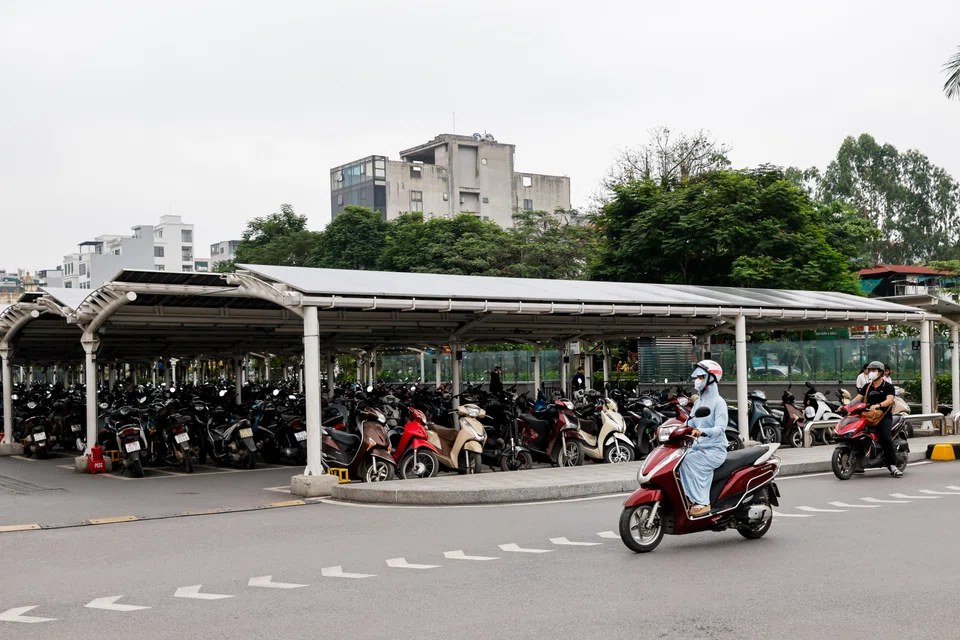
[HANOI] Vietnam’s capital is dialling back plans for a sweeping ban on petrol-powered motorbikes as gaps in charging networks and public transport force a shift to more limited, time-based restrictions.
Hanoi authorities propose the ban, due to take effect Jul 1, will now cover just 11 streets in the city centre, an area of about 0.5 square km. That’s far less than the initial plan of an outright ban covering roughly 26 square km within Ring Road 1.
“The public shows little support for the restrictive measures, including fees, restrictions or bans on private vehicles, unless viable alternatives are in place,” the local authorities’ proposal said, citing a survey of more than 1,000 people. The adoption of EVs and public transport remains limited due to a lack of infrastructure, it said.
Tackling vehicle emissions has become a key priority for the government as air pollution levels in the major cities frequently reach hazardous levels. Hanoi was briefly named the world’s most polluted city last year. In July, the government ordered the capital to phase out gas-powered motorbikes in central districts within a year.
Hanoi has more than 6.5 million motorbikes and 1.1 million cars, with vehicle numbers growing by as much as 15 per cent a year. Traffic accounts for up to 59 per cent of emissions in the capital, according to agriculture ministry research. With the introduction of the ban, the government aims to cut fine particulate pollution, or PM2.5, from transport by about 20 per cent by 2030.
Under the new plan, petrol motorbikes will be banned in the Hoan Kiem low-emission zone on Friday nights and weekends. Gas-powered motorbikes used for ride-hailing services will be prohibited. Trucks and certain cars will be restricted or banned during designated hours. The plan will expand to other streets in 2027 before extending to the entire Ring Road one area in 2028.
Part of the challenge is the lack of public transport. The capital has just two metro lines in operation, with two more under construction. Limited dedicated bus lanes means slow and unpredictable travel, particularly during rush hour.
Vietnam currently offers incentives to switch to electric cars, such as a 0 per cent registration fee until the end of February next year. But planned subsidies to encourage more motorbike riders to make the transition have yet to be enacted.
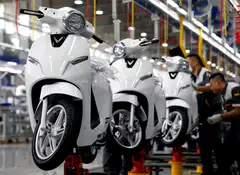
Still, sales of electric motorbikes in the first quarter rose 8.3 per cent year on year to 729,121 vehicles, according to data from the Vietnam Association of Motorcycle Manufacturers.
SEE ALSO

Businesses have urged authorities to announce a clear road map and introduce support mechanisms, according to the proposal. The measures include preferential credit, fee reductions and charging infrastructure to ease transition costs. BLOOMBERG
Decoding Asia newsletter: your guide to navigating Asia in a new global order. Sign up here to get Decoding Asia newsletter. Delivered to your inbox. Free.
Share with us your feedback on BT's products and services