



From heady highs to desperate lows: inside Thailand’s return to medical-only cannabis
After Thailand’s u-turn to reclassify cannabis as a controlled herb, many shops and farmers are now counting their losses
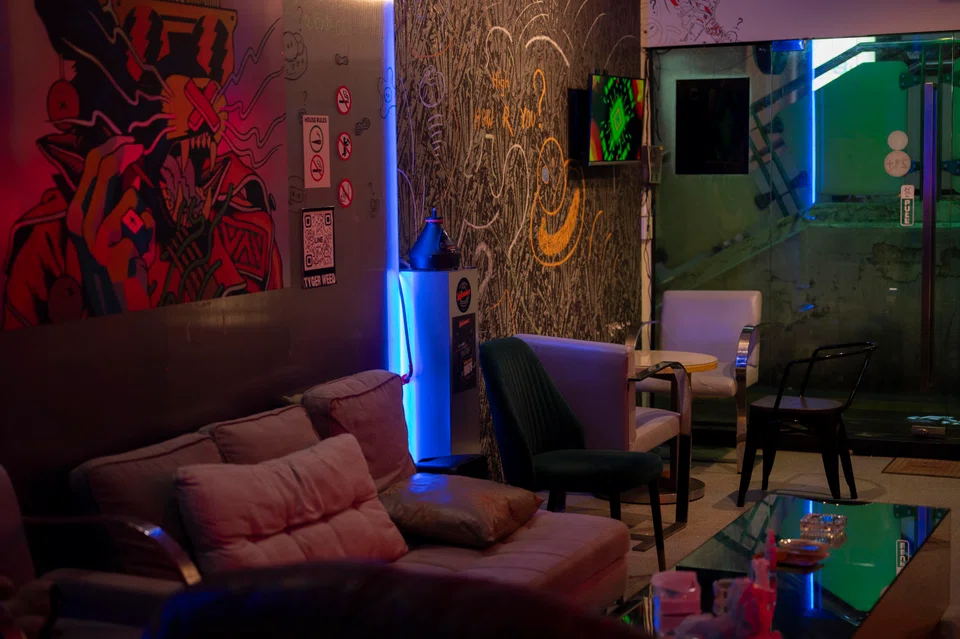
[BANGKOK] In June 2022, Thailand became the first country in Asia to decriminalise marijuana. What followed was a “gold rush” of sorts as entrepreneurs, farmers and investors rushed to open shops, plant fields, and invest in what then seemed like a booming new industry.
Just seven months later, over 18,000 cannabis shops lined Thailand’s streets. Tourists flocked to the country for a taste of what was banned back home, while locals in rural communities cultivated cannabis alongside rice and corn.
Today, the cannabis shops that once rolled out the welcome mat now display signs such as “Medical licence only” and “No entry under 20”. Some have even turned tourists away entirely.
This shift follows the country’s abrupt policy reversal in June this year after the Bhumjaithai Party – which had pushed for legalisation – left the ruling coalition at the time.
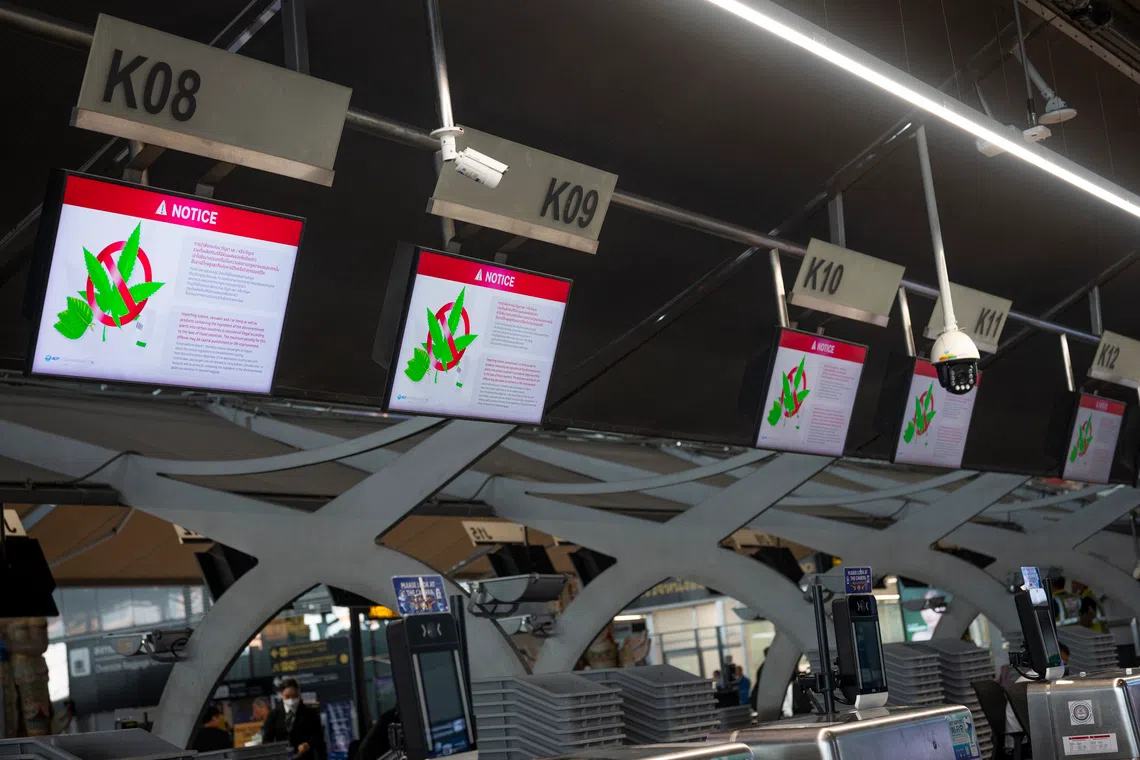
Under new rules that entered into force, cannabis has since been reclassified as a controlled herb, with all purchases requiring a doctor’s prescription.
Anyone caught using or possessing cannabis without a prescription faces up to one year in jail or a 20,000 baht (S$827.60) fine, while illegal sellers risk similar penalties and possible licence suspension.
From boom to bust
Before the policy changes took effect, Thailand’s cannabis industry was valued at about US$1.3 billion, with some estimates putting the recreational market to be worth US$253.6 million in 2025.
The policy reversal has hit cannabis shops hardest. Officials estimate that up to 90 per cent of existing marijuana shops will fold, reducing the number of establishments from over 18,000 to just 2,000.
At OT Dispensary, a recreational cannabis supplier located along a popular tourist alley in Chiang Mai, monthly sales have since dropped by up to 100,000 baht – an 80 per cent loss compared to 2024, when the shop made 500,000 baht in monthly profits. The losses stem largely from the ban on edibles and hash products, which had been top sellers among tourists, who made up 90 per cent of the shop’s customers.
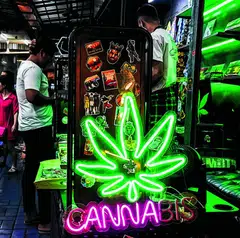
“We wouldn’t be suffering in any type of way if (the government) didn’t give us the opportunity to invest and then take it away from us,” said Dejcha.
Impact on farmers
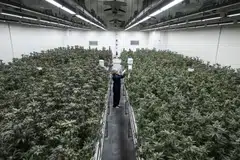
The crackdown has also hit Thailand’s rural heartlands. In Mae Sot, a town on the Thai-Myanmar border that’s known for its fertile soil, many farmers who banked heavily on cannabis are now facing financial ruin.
Bunchai Pongthippitak, a former scientist turned cannabis entrepreneur, runs the Phop Phra Model – a network of 2,000 cannabis farmers, investors and researchers. Today, half of them have left, withdrawing investments of up to 10 million baht or returning to traditional crops like corn.
At the height of the cannabis boom, Pongthippitak earned nearly 200,000 baht a month from cannabis alone.
“Most days now I do nothing; I just hope the government might reverse the policy,” he said, adding that he has been living off his savings since.
In the meantime, he has turned to growing hemp, working with local farmers to experiment with the crop as an alternative source of income.
“It has potential, but production is only at a local level for now and appeals mainly to local buyers,” he said.
Medical reasons only
Under the current rules, only patients with medical prescriptions can purchase cannabis products. Marijuana shops must partner with a physician or require customers to bring prescriptions, adding a costly barrier.
In Mae Sot, much of this responsibility falls on Natthanitcha Thaweekum – the town’s only doctor authorised to provide such prescriptions.
She runs a traditional Chinese medicine clinic with shelves of cannabis products claiming to offer a spectrum of health benefits.
“Most come for insomnia or loss of appetite,” Dr Thaweekum explained, pointing to a stack of 60 prescription forms that had accumulated in the two months following the enactment of the new policy.
Being assigned the role of a gatekeeper also often requires making difficult medical judgments. She refuses anyone with heart disease or very low blood sugar. Prescriptions are now capped at 30 grams per month under strict controls.
She shared that a patient who was “clearly addicted” had once tried to negotiate for the maximum prescription.
Since the policy change, every prescription she has issued has gone to patients from Myanmar.
“The Thais don’t need it. Many grow their own cannabis at home or rely on local networks of suppliers,” she notes, highlighting a quiet irony of the new medical-only system.
Rise in home growers
Despite the rough clampdown on the retail of recreational cannabis, homegrown planters remain largely untouched for now.
When Thailand decriminalised cannabis in 2022, the government allowed citizens to register online with the Food and Drug Administration (FDA) to grow cannabis at home to reduce the need for patients to rely solely on commercial dispensaries.
By late 2023, there were 1.1 million registered home growers, with an allowance of six pots of cannabis plants per household.
For many, this has become a loophole in the system. While cannabis shops struggle or shutter altogether, individuals can seemingly grow their own supply with ease from the comfort of their own homes.
Two registered growers – Daniel, 62, and his wife Phee, 40 (not their real names) – have cultivated over 50 pots of cannabis plants for over two years, far beyond the six-pot limit set by law.
Yet, they say, no authorities have come to inspect their house so far. The couple said that many growers, licensed or not, seem to flout the rules, knowing there will not be consequences due to the lack of enforcement.
Uncertain paths ahead
According to a spokesperson from the FDA, the reason behind the government’s decision to re-regulate the use of cannabis was due to numerous reports of its inappropriate or improper use.
Data from Thailand’s Health Ministry showed that the number of patients seeking help for mental illnesses linked to cannabis use grew from 37,000 in 2022 to over 63,000 in 2023.
However, Pascal Tanguay, a drug policy researcher who has worked in Thailand and other parts of Asia for over two decades, argued that the new policy was actually doing more harm than good.
Despite recreational sales being curtailed and medical access restricted, demand will not disappear overnight. Rather, it will simply change its shape, he said. Unlicensed sellers could pivot to supplying counterfeit doctor’s notes or bogus patient records, while compliant cannabis shops may face pressure to look the other way, he added.
“What will happen is we will see a shift of the black market from illicit cannabis, which will possibly continue to be available, and it will create a new black market for fake prescriptions,” he said.
The writers are final-year communications students at the Nanyang Technological University’s Wee Kim Wee School of Communication and Information. This report is the second in a two-part series from their recent trip to Thailand, produced as part of the school’s Go-Far overseas reporting programme.
Decoding Asia newsletter: your guide to navigating Asia in a new global order. Sign up here to get Decoding Asia newsletter. Delivered to your inbox. Free.
Share with us your feedback on BT's products and services
TRENDING NOW

Once staunchly pro-China, Malaysian Chinese businesses are now distancing themselves from Beijing

Looking beyond looming CEO succession, should UOB potentially pursue a transformative merger?

Could stablecoins be the future of money?

Grab CEO’s wife Chloe Tong on life with Anthony Tan and finding her purpose

