



Household spending could take years to rebound in Indonesia, Philippines, Thailand: ANZ
 Add BT as a preferred source
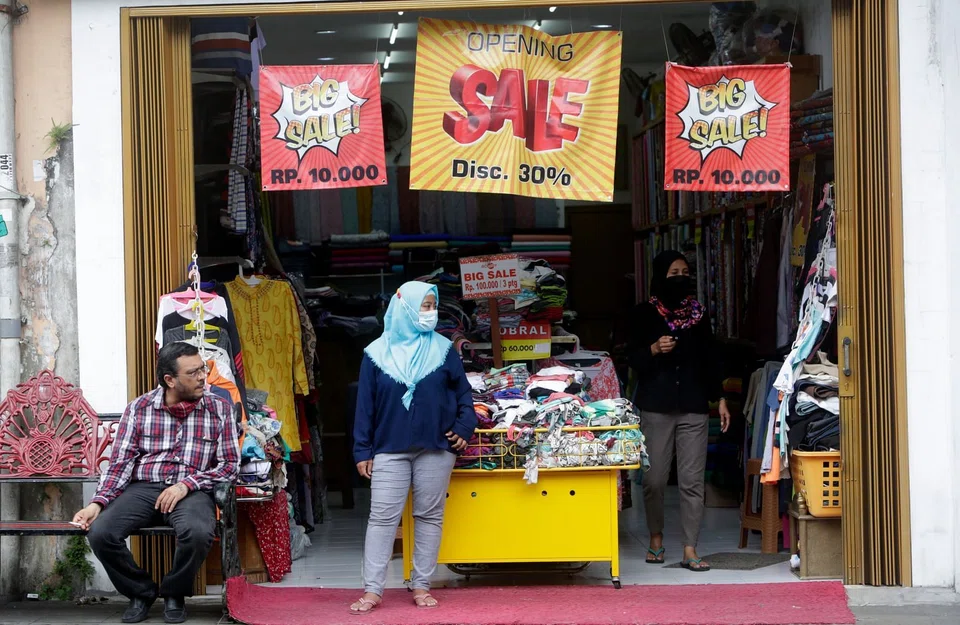
HOUSEHOLDS in Indonesia, the Philippines, and Thailand will take a few years to rebuild their savings before consumption can be restored to pre-pandemic levels, ANZ chief economist for Southeast Asia and India Sanjay Mathur said in an Oct 14 note.
Strains on household incomes and finances have become more entrenched, with the risk of "a durable suppression" in household demand in those countries, he said. "The scope and scale of pent-up demand waiting to be unleashed upon re-opening could disappoint."
The duration of the Covid-19 pandemic has become similar to the Asian Financial Crisis, with ongoing uncertainty about when economies will fully re-open, he noted. "This has made a lasting dent on the financial position and incomes of households, in our view."
ANZ expects that the household savings rate spiked in the initial stages of the pandemic, when spending was curbed due to movement restrictions, but has since declined as households draw down on savings amid the prolonged pandemic and lower income growth.
In Indonesia, household savings as a share of incomes have fallen from 19.5 per cent pre-pandemic to less than 15 per cent in August 2021, the lowest rate on record.
In the Philippines, the share of households with savings has fallen from over 37.5 per cent pre-pandemic to just over 25 per cent as of Q3 2021.
While ANZ does not have comparable survey data for Thailand, household debt as a share of gross domestic product (GDP) has risen nearly 10 percentage points to 90 per cent, with households likely to be allocating a larger share of their incomes to servicing debt.
The pandemic has taken a toll not just on household finances, but potentially on incomes as well. The report observes "persistent slack in the labour markets of each of these economies", as seen in indicators such as unemployment and underemployment, hours worked and labour force participation rates.
"To sum up, the household sector is in a difficult situation, so much so that we can no longer be sanguine about a robust rebound in private consumption upon re-opening," Mathur concluded.
This calls for "a more durable shift in the policy framework", he added, with governments running larger budget deficits for a longer time, and tepid monetary policy normalisation.
While policymakers in the Philippines are not in a rush to reduce the budget deficit to an earlier target of 3 per cent of GDP, Indonesia's government still aims to cut their deficit to 3 per cent by 2023 - "a target that will be challenging to attain", said Mathur.
As for monetary policy, normalisation is expected to be slow and independent of the course taken by the United States Federal Reserve. The terminal policy rate may also settle as lower than pre-pandemic levels, he added.
Decoding Asia newsletter: your guide to navigating Asia in a new global order. Sign up here to get Decoding Asia newsletter. Delivered to your inbox. Free.
Copyright SPH Media. All rights reserved.
TRENDING NOW

Yeoh Pei Xien: YTL’s third-gen scion with a pastor’s heart

Singapore banks’ battle for wealth talent goes beyond private bankers

Car dealer charged in S$1.1 million tax evasion case involving Porsches, Ferraris, Rolls-Royces

Vietnam’s island megaproject races towards Apec deadline, but demand test looms

