



How the hit show The White Lotus is booking out Thailand’s luxury hotels
High-end hotels are cashing in on the effect by the popular HBO series; flights to and from the island are also harder to come by
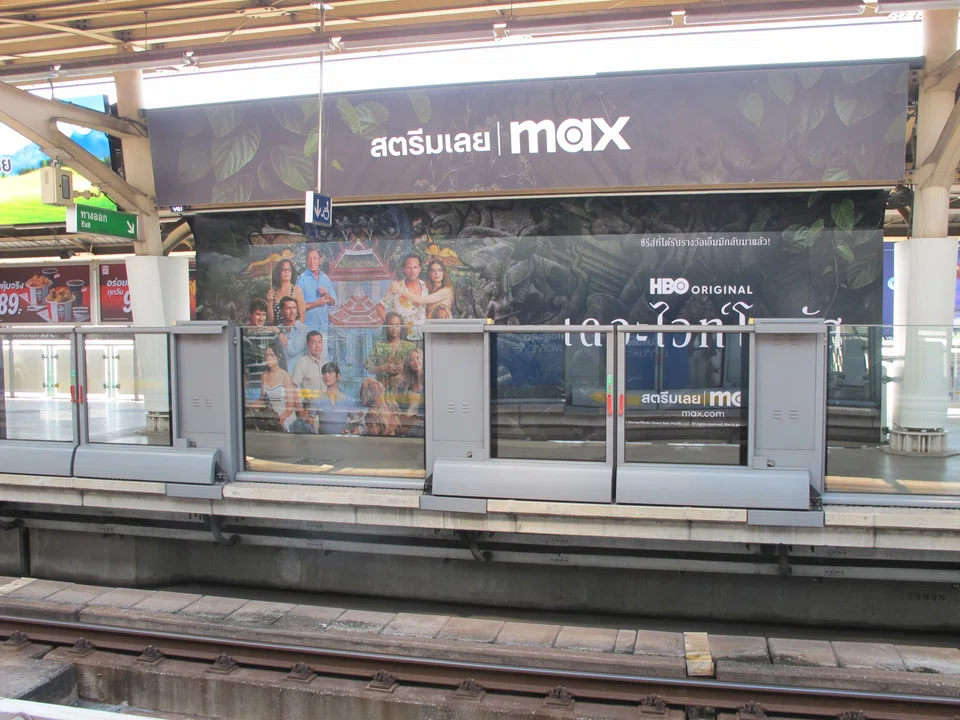
[BANGKOK] Luxury hotels across Thailand’s Koh Samui island are riding a wave of soaring bookings and skyrocketing room rates, thanks to the so-called “White Lotus” effect.
Since the hit HBO series rolled out its third season last month – filmed primarily on the country’s second-largest island – Koh Samui’s luxury hotels have been flooded with bookings, sending demand for five-star stays rocketing up to 40 per cent year on year, some tour agents confirmed.
Room rates at some four-star and five-star hotels on Koh Samui have also reportedly jumped by 40 to 50 per cent shortly after the release of the latest season of The White Lotus on Feb 16, and it has become difficult to book rooms and even flights to the island.
“Many five-star hotels have actively raised rates by 20 to 30 per cent, with some increasing by up to 40 per cent during the island’s high season (July to August) based on dynamic pricing,” said Surapon Vutivakinsakul, product manager for tour agency Asian Trails.
The frenzy has spilled over to Phuket and Phang Nga, the Andaman Sea’s postcard-perfect beach havens, where resorts are seeing their rooms snapped up and flights filling up fast.
“Hotels in Koh Samui have said they have 40 per cent more bookings, compared with Dec 2023,” said Thienprasit Chaiyapatranun, president of Thai Hotels Association (THA), referring to a December 2024 survey by the association.
With some high rollers even resorting to private jets, the once-tranquil Gulf of Thailand retreat is transforming into a tourism goldmine, echoing Thailand’s past blockbuster-driven booms.
“At the moment, flights to and from Koh Samui are often difficult to find, resulting in increased requests for private jet charters,” said Luzi Matzig, director of VIP Jets, a private jet charterer.
But nationwide, room rates still appear to be reasonable despite the soaring demand, said Matzig, who is also chairman of Asian Trails.
“We are seeing hotel rate increases ranging from 3 to 8 per cent for the 2025-2026 high season, which I feel are acceptable,” he said. “We are looking forward to a very good year – (the) best ever.”
Tourism booms led by shows
The so-called White Lotus effect is not new to Thailand’s tourism scene.
In 2013, millions of Chinese tourists flocked to Chiang Mai in northern Thailand, after the release of the Chinese comedy Lost in Thailand, which was largely filmed in the city.
The movie’s success helped fuel a surge in Chinese tourism to Thailand, culminating in a record 11 million Chinese visitors in 2019, or nearly 27 per cent of the country’s 40 million total arrivals that year, based on official statistics.
Visitors from the second-largest economy in the world also dominated Thailand’s tourism market in 2024, making up 6.7 million of 35.5 million international arrivals.
Chinese tourists continued to lead arrivals in the first two months of 2025, but signs of a slowdown are emerging, partly due to security concerns following the alleged kidnapping of Chinese actor Wang Xing, who was reportedly taken through Thailand to a scam centre in Myanmar in January.
The incident prompted a swift crackdown on illegal scam centres in neighbouring Myanmar following well-coordinated efforts of the Thai, Chinese and local Myanmar authorities.
While the Chinese boom may be diminishing, other nations are picking up some of the slack, including Malaysia, Russia, India and South Korea.
Rising stars elsewhere
“The rising stars are the countries of South-east Asia – Vietnam, Myanmar, Indonesia and Singapore,” said Thienprasit. “We call these short-haul visits, mostly repeat tourists who have been to Thailand two or three times before.”
Tourists are shifting their spending, splurging more on accommodation and cutting back on shopping – a trend that began in 2023. It’s a boon for the hotel industry, especially for high-end four and five-star establishments.
Another trend seen in the post-Covid era is a shift away from group tours to foreign independent travellers – not so good news for one to three-star hotels.
“The one, two, three-star hotels used to get group tourists, but there are less and less group tours, because it is easier to be a foreign independent traveller now,” said Thienprasit. “You can book flights and hotels now on your mobile phone that offer a flexible itinerary for everyone.”
These independent travellers, especially Chinese tourists known for their avid social media sharing, are increasingly prioritising experiences over shopping. This shift is driving higher spending on hotels and dining, as they seek Instagram-worthy stays and culinary indulgences.
Hospitality stocks
This trend is particularly good news for Thailand’s major hotel chains Minor International, Central Plaza Hotel or Centel, Dusit Thani, The Erawan Group and Onyx Hospitality Group – some of which are listed on the Stock Exchange of Thailand.
With the broader market struggling, the travel boom may offer a bright spot for investors eyeing hospitality stocks.
Minor is up nearly 6 per cent this year as it rides on the tourism surge. The group owns over 560 hotels with more than 80,000 rooms and operates in 58 countries.
Notably, Minor reportedly operates the four hotels in Samui and Phuket where much of The White Lotus was filmed – a strategic move that’s proving to be a marketing win.
Airports of Thailand, once the go-to stock for Thailand’s tourism boom, has taken a hit after February’s revelations that King Power – which holds the renewed monopoly on the country’s duty-free operations – owes Airports of Thailand some five billion baht (S$198.5 million) in overdue payments.
The news sent the stock tumbling, dampening its status as a top tourism play. The counter is down a whopping 34 per cent this year.
The renewal of the King Power monopoly in 2019 was criticised by economists, retail operators and political observers, who noted that the more diversified duty-free operations at Changi Airport and South Korea’s Incheon Airport were more competitive and profitable.
“King Power’s woes suggest poor management because it is a monopoly and yet still loses money,” said Thitinan Pongsudhirak, a political science professor at Chulalongkorn University.
In a recent report, Bualuang Securities advised investors to steer clear of Airports of Thailand amid its financial headwinds and instead pivot to Centel – set to benefit from a hotel revenue surge in Thailand – and Minor, which stands to gain from lower interest costs due to debt repayment.
“Both are primed to ride the summer tourism wave in Thailand and The White Lotus tourism buzz,” said the research house.
TRENDING NOW

Once staunchly pro-China, Malaysian Chinese businesses are now distancing themselves from Beijing
Looking beyond looming CEO succession, should UOB potentially pursue a transformative merger?

Could stablecoins be the future of money?

Grab CEO’s wife Chloe Tong on life with Anthony Tan and finding her purpose

