Indonesia annual Q1 GDP growth slowest in more than three years
Analysts expect slower expansion this year, as weakening domestic demand and ongoing trade wars threaten to dampen exports

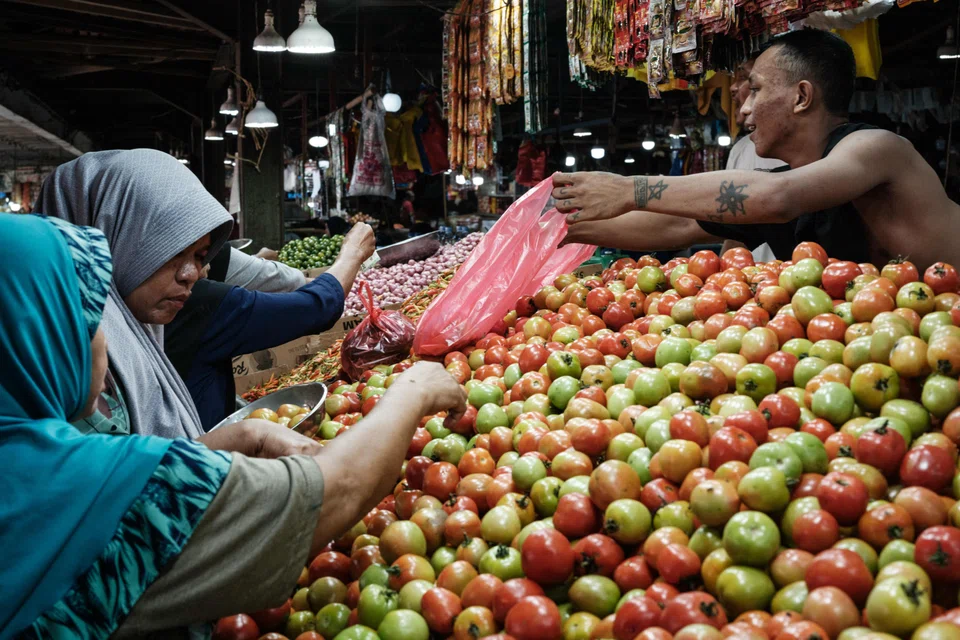
[JAKARTA] Indonesia’s economy hit the brakes in the first quarter, as sluggish consumer spending and tightened government purse strings cast a shadow over growth.
The country’s gross domestic product grew 4.87 per cent year on year in Q1 – its weakest performance since 2021, Statistics Agency data showed on Monday (May 5). That figure fell short of both the previous quarter’s 5.02 per cent expansion and the 4.93 per cent median forecast in a Bloomberg survey.
On a quarter-to-quarter basis, the economy shrank by 0.98 per cent, reflecting a soft start to the year for South-east Asia’s largest economy.
Analysts expect Indonesia to experience slower growth this year, as weakening domestic demand, coupled with lingering global uncertainty driven by escalating trade wars, threatens to dampen exports from the resource-rich nation.
Maybank forecasts the country’s full-year expansion to slow to 4.7 per cent this year, down from 5 per cent in 2024. The economic outlook is dimming, weighed down by declining consumer confidence and the headwinds of US tariffs.
Slow start
Indonesia has found itself stuck in the slow lane, with growth hovering just below the 5 per cent mark in recent years – well short of President Prabowo Subianto’s bold ambition to rev up the economy to 8 per cent within the next five years.
Teuku Riefky, an economist at the University of Indonesia, said the country’s economic performance continues to reflect worrying signs that it is struggling to sustain 5 per cent growth.
“In recent years, Indonesia’s structural growth engines have been losing strength,” he noted, citing weakening purchasing power, a shrinking middle class, and a persistent decline in sectoral productivity as key indicators.
The Muslim-majority nation saw a modest 4.89 per cent increase in consumption during Q1, driven by the Ramadan and Idul Fitri period in March – a time when household consumption, the main driver of Indonesia’s economy, typically receives a boost from festive spending and holiday bonuses from employers.
Consumer growth has remained below the 5 per cent threshold since Q3 2023, highlighting a subtle yet persistent slowdown in economic momentum that may point to underlying challenges in sustaining robust expansion.
Meanwhile, public spending got off to a sluggish start, contracting by 1.38 per cent following Prabowo’s Budget efficiency measures earlier this year.
Investment growth slowed to 2.12 per cent in Q1, the lowest rate in two years, while ongoing tariff-related uncertainties continued to dampen investor appetite for new capital investments.
Tariffs jab
Indonesia, like many of its Asian peers, has landed in the crosshairs of US trade policy under President Donald Trump, with tariffs looming as high as 32 per cent. For now, a 10 per cent baseline tariff remains in place, buying both sides time to strike a deal.
But analysts warn the road to resolution will not be swift – talks to dial back the steep tariff could stretch on for at least two months.
Riefky from the University of Indonesia said that, given the latest developments in the domestic economy and global economic pressures, Indonesia is not well-positioned to capitalise on the potential benefits of the looming trade war.
“Domestic economic conditions continue to show no significant signs of a (recovery in) productivity,” he added.
However, Samuel Sekuritas senior economist Fithra Faisal noted that some tailwinds remain, with government capital spending expected to pick up in the second half of the year – particularly in infrastructure and downstream industrial development.
“A clearer direction on trade and tariff negotiations with the US could also help lift investor sentiment,” he said.
Room for a cut
Indonesia has experienced low inflation in recent months, with April’s rate recorded at just 1.95 per cent, slightly below the central bank’s target. Analysts believe Bank Indonesia (BI) will seize the opportunity presented by low inflation to stimulate economic growth through a rate cut at its upcoming meeting on May 20 and 21, supported by the recent stability of the rupiah.
Radhika Rao, a senior economist at DBS, noted that despite the expected moderation in growth, BI focused on maintaining financial market stability in Q1, aided by a favourable inflation environment.
“We expect this cautious approach to continue amid ongoing tariff developments and their ripple effects across the region, with BI likely to take an opportunistic approach to timing its rate cuts,” she said.
The USD/IDR has gained about 2.5 per cent over the past week, buoyed by a calmer global risk sentiment. Hints of easing tariffs and encouraging progress in trade talks between the US and its key partners are helping to calm the waters.
Brian Lee, an economist at Maybank, suggested that BI could take advantage of the situation to cut policy rates in the next meeting, provided rupiah pressure remains contained throughout the month.
“We expect BI to reduce its policy rate by 25 basis points to 5.5 per cent in Q2, given slowing growth and benign inflation. However, the exact timing remains uncertain due to rapidly evolving foreign exchange market conditions,” he wrote in a note.