Indonesia books larger-than-expected US$4.3 billion trade surplus in March
This is the country’s highest in four months and nearly double the US$2.6 billion forecast by analysts in a Reuters poll

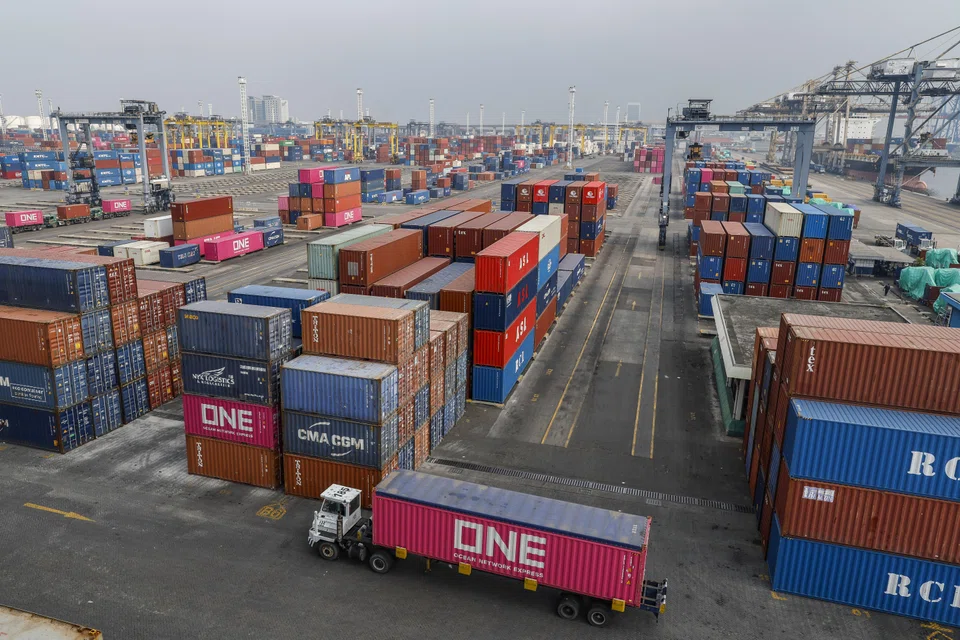
[JAKARTA] Indonesia recorded an unexpected trade surplus in March, driven by a notable increase in iron and steel exports, according to data released by the country’s statistics agency on Monday (Apr 21).
South-east Asia’s largest economy posted a trade surplus of US$4.3 billion in March – its highest in four months and nearly double the US$2.6 billion forecast by analysts in a Reuters poll.
While the trade surplus provides a welcome boost to foreign-exchange reserves, analysts warn that maintaining such surpluses may be challenging for Indonesia, particularly with the ongoing pressure on the rupiah.
The uncertainty surrounding US President Donald Trump’s tariff policies continues to loom over the global trade outlook, potentially reshaping Indonesia’s trade dynamics with the US and complicating its longer-term trade performance.
Fithra Faisal, senior chief economist at Samuel Sekuritas, stated that the outlook for Indonesia’s trade surplus remains uncertain, with global trade risks and shifting domestic demand expected to influence trade dynamics this year.
“Caution is warranted,” he noted, “as the March figures do not yet reflect the potential impact of possible new tariffs from (the) Trump administration. These could dampen export growth in the coming months, especially amid softening commodity prices.”
Growth seen
The resource-rich country’s exports rose 3.2 per cent year on year in March, defying the typical Ramadan slowdown, when domestic consumption often takes priority over international trade.
Driving the momentum was a notable 11.8 per cent annual increase in iron and steel exports, which emerged as the country’s top export commodity for the month – overtaking longstanding leaders such as crude palm oil and coal.
The prices of metals, minerals, and precious metals also saw gains, providing a further lift to export values amid a shifting global commodities landscape.
Meanwhile, imports in March reached US$18.9 billion, up 5.3 percent year on year, driven by seasonal domestic demand during Ramadan, with consumer goods leading the increase.
Tariff effects
The US, Indonesia’s second-largest trading partner after China, imposed a 32 per cent tariff on Indonesian goods in early April, citing not only a widening trade deficit but also longstanding non-tariff barriers, such as protectionist policies that hinder investment. Trump then granted temporary relief by lowering the rate to a “baseline” 10 per cent for 90 days from Apr 9.
In response, the Indonesian government is engaged in high-level negotiations with US officials in Washington, set to conclude on Apr 23. As part of a preliminary understanding, the South-east Asian country has pledged to boost imports of American products, including liquefied natural gas and horticultural goods.
Trump’s tariff hikes took Indonesian industry players by surprise, particularly in the textile and garment sectors, which are key export commodities to the US. Indonesia’s exports of footwear, and knitted apparel to the US saw a strong annual growth of more than 15 per cent, reaching nearly US$2 billion in the first quarter of this year.
Indonesia’s overall trade surplus reached US$10.9 billion in the January to March period. Its trade surplus with the US came to US$4.3 billion during this quarter. While trade with the US accounts for only about 2 per cent of Indonesia’s gross domestic product, economists caution that the impact of higher tariffs could still pose a risk to its economic growth.
An impact analysis by DBS Group Research suggests that the re-imposition of high tariffs could directly reduce growth by 0.5 per cent of GDP this year, with a similar impact expected in the following year. This comes alongside the broader effects of slower global growth.
“In a fragile global economy, we anticipate that domestic policymakers will ramp up efforts to stimulate demand,” wrote Radhika Rao, senior economist at DBS.
Josua Pardede, chief economist at Bank Permata, warned that if trade tensions with the US continue to escalate and negotiations fail to produce a favourable outcome, Indonesia’s current account deficit could widen further – by an estimated 0.2 to 0.3 per cent of GDP.
“An expanding current account deficit could limit Bank Indonesia’s ability to ease monetary policy, especially as heightened global uncertainty puts pressure on capital inflows,” said Pardede.
Bank Indonesia is set to announce its policy rate decision this Wednesday, against the backdrop of the rupiah hovering around 16,800 per US dollar – its weakest level since the Asian financial crisis.